
What to Do and See in Naples: Main Sights and What to Eat
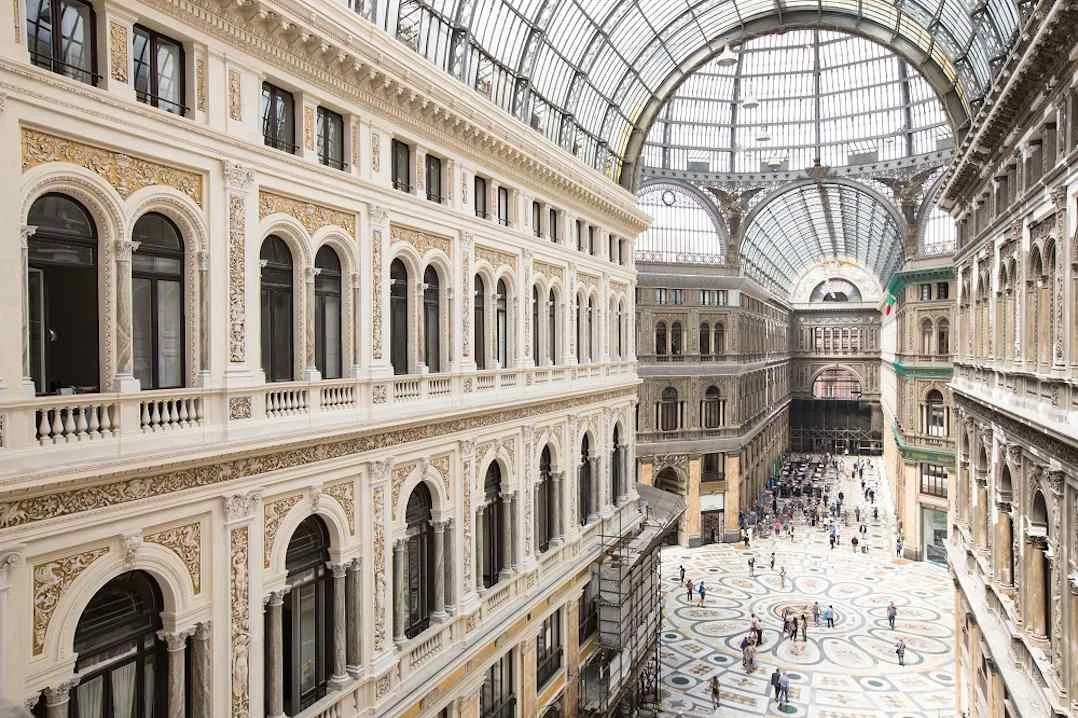
Photo by requadro.com
Naples doesn't organise itself the way Florence or Milan do. There's no single loop that connects every major sight in a tidy line — the historic centre, the waterfront and the hill above it pull in three different directions, and the city's most famous export, pizza, is as much a reason to visit as any monument on the list. The practical question isn't just what to see, but how to fit sightseeing and eating into the same day without one crowding out the other.
This guide covers the sights that make up the core of a Naples visit, a section on what to actually eat and where that habit comes from, and an honest read on how much of it fits into a single day.
In this guide:
The Sights That Anchor a Visit to Naples
What to Eat in Naples
Is One Day Enough to See Naples?
A different way to walk the centre
What to Add With More Time
Getting Around Naples
Frequently Asked Questions
The Sights That Anchor a Visit to Naples
Spaccanapoli and Via dei Tribunali

Photo by campania.info
Spaccanapoli isn't one street but a nickname for a nearly 2-km straight line of connected streets — Via Benedetto Croce, Via San Biagio dei Librai, Via Vicaria Vecchia — that cuts through the historic centre along the route of the ancient Greek city's lower decumanus, laid out when Neapolis was founded around the 5th century BC. A block north, Via dei Tribunali runs the central decumanus and is where most of the well-known pizzerias cluster. Together they form the spine that almost every other sight in this list sits close to.
Cappella Sansevero and the Veiled Christ

Photo by ilgiornaledellarte.com
A couple of minutes off Spaccanapoli, this small 18th-century family chapel holds the Veiled Christ, a marble sculpture by Giuseppe Sanmartino carved in 1753, where the shroud over the figure appears to be a separate piece of cloth despite being cut from the same block of stone. Booking online in advance is not optional — the museum's own site states there's no walk-up entry to rely on, and slots for weekends and the March–November season routinely sell out days ahead, more in December. The visit itself takes 30 to 45 minutes. Official hours are daily 9:00 to 19:00, closed Tuesdays, last entry 30 minutes before closing.
Naples Cathedral (Duomo di San Gennaro)
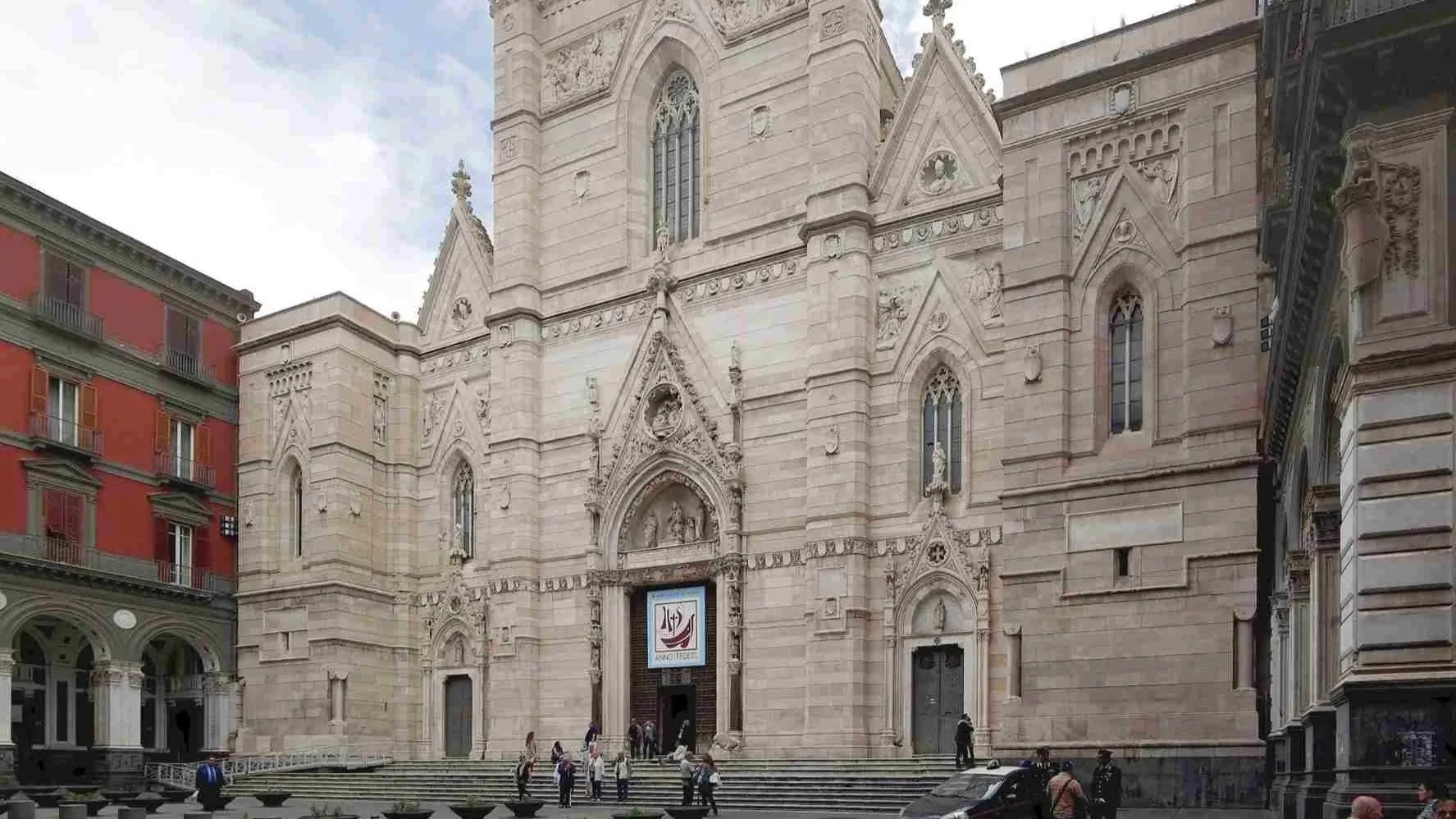
Photo by wikivoyage.com
Ten minutes' walk from the chapel, the Duomo holds the relics of San Gennaro, the city's patron saint, and the ampoules of blood that are said to liquefy several times a year during public ceremonies. Entry to the nave is free. The church runs Monday to Saturday 9:30–17:00 and Sunday 9:00–17:00, but the Chapel of San Gennaro inside splits into a morning and afternoon block with a midday closure that varies slightly by day — worth checking before you plan to see it in one continuous visit rather than two separate stops.
San Gregorio Armeno
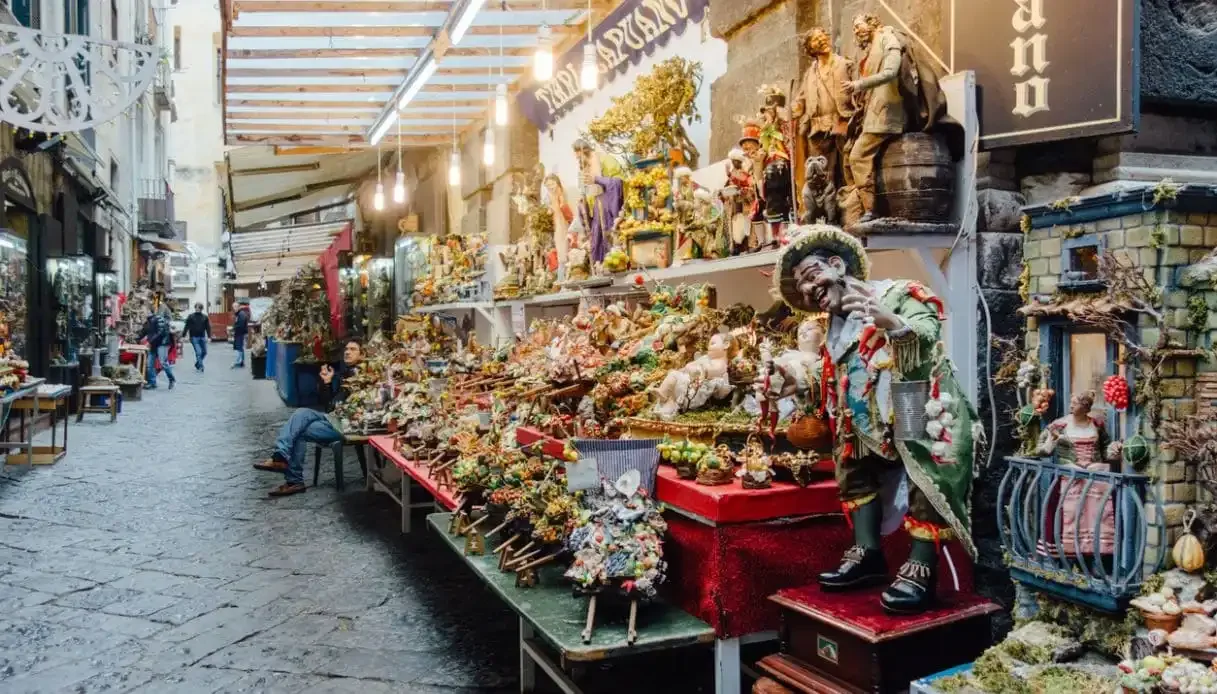
Photo by siviaggia.it
A narrow side street off Via San Biagio dei Librai, San Gregorio Armeno is lined year-round with workshops making presepi — traditional nativity-scene figurines — a craft that in Naples extends well beyond religious use into satirical figures of politicians, footballers and whoever's in the news that year. It's a five-minute stop rather than a destination in itself, but it sits directly on the route between Spaccanapoli and the Duomo.
Piazza del Plebiscito and Galleria Umberto I
Photo by requadro.com
West of the historic centre, Piazza del Plebiscito is Naples' largest square, framed by the Royal Palace and the church of San Francesco di Paola. A short walk away, Galleria Umberto I is a 19th-century glass-domed arcade built on the same model as Milan's Galleria — free to walk through, and useful as a covered route between the palace area and Via Toledo if the weather turns.
Castel dell'Ovo and the Waterfront
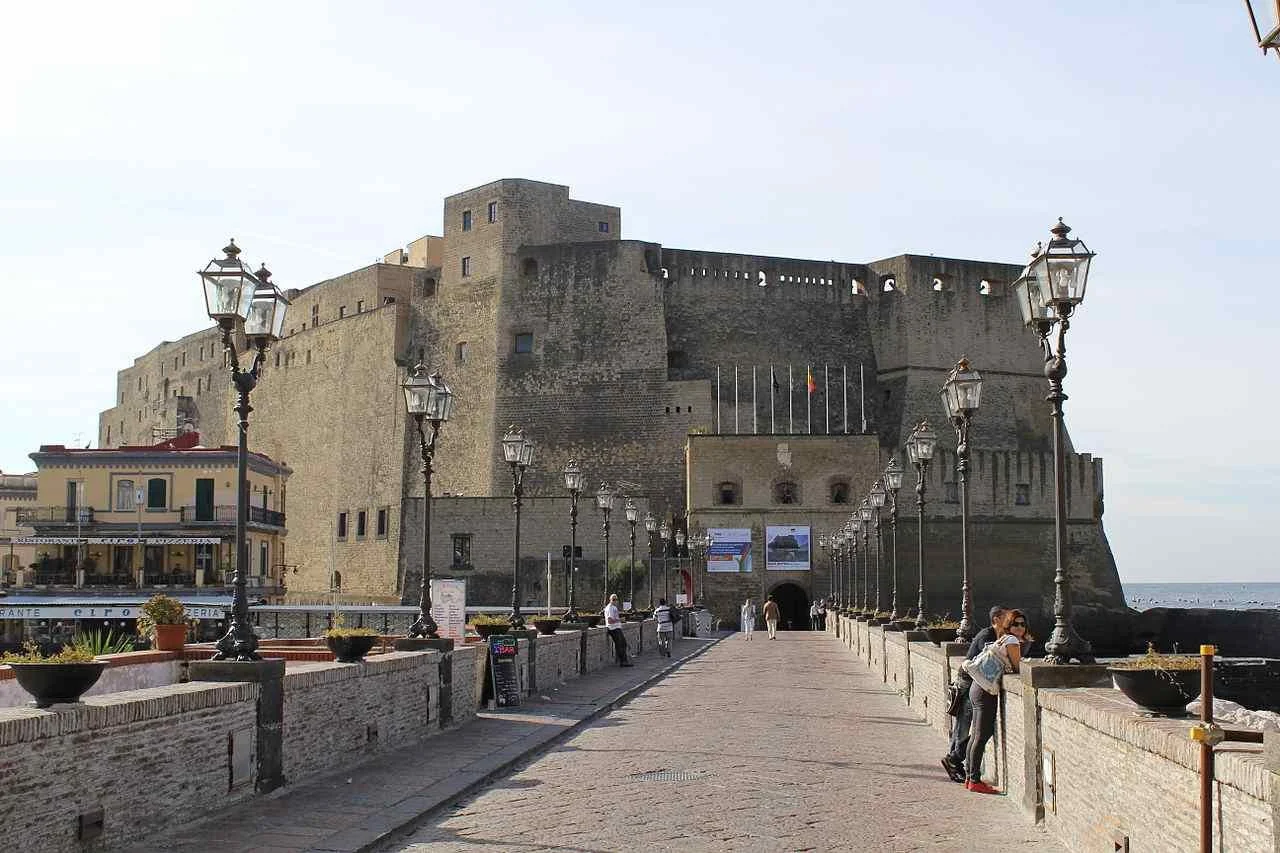
Photo by napolidavivere.com
Naples' oldest fortress sits on a small islet connected to the mainland by a causeway, with the Borgo Marinari fishing harbour at its base and the Lungomare Caracciolo promenade running along the bay from there. This is the sight furthest from the historic centre core — a genuine destination for a slower afternoon or an evening walk with Vesuvius across the water, rather than a quick add-on to the Spaccanapoli route.
What to Eat in Naples

Naples is where pizza as it's known today was invented, and the city treats the fact with the seriousness of a craft rather than a marketing line. In 2017, UNESCO added the Art of the Neapolitan Pizzaiuolo — the pizza-maker's skill and technique, not the pizza itself — to its Representative List of the Intangible Cultural Heritage of Humanity. The dish's own defining moment is usually traced to 1889, when pizzaiolo Raffaele Esposito is said to have made a version topped with tomato, mozzarella and basil in honour of Queen Margherita of Savoy, giving the Margherita its name and its red-white-green colours. Antica Pizzeria Port'Alba, which opened in 1738 and is widely considered the oldest pizzeria in the world, still operates today on the street of the same name.
What actually makes a pizza "verace" (true Neapolitan style) is codified rather than a matter of opinion: the Associazione Verace Pizza Napoletana, founded in Naples in 1984, sets rules covering dough hydration, a wood-fired oven running at 430–485°C, and a bake time of 60 to 90 seconds. Via dei Tribunali and the surrounding blocks hold the highest concentration of pizzerias following this standard, which is also why queues there can run long at lunch and dinner regardless of season.
Beyond pizza, two pastries define the city's café counters: sfogliatella, which comes in two distinct forms — riccia, with crisp layered shell-like pastry, and the softer, shortcrust frolla — and babà, a yeasted cake soaked in rum syrup, according to a tradition widely told among Neapolitan bakers as tracing back to the 18th-century Bourbon court's French and Central European influences. For something to eat on the move rather than at a table, a cuoppo is a paper cone of fried street food — small fish, vegetables, or pieces of fried pizza dough — sold at stalls through the historic centre. And in Naples cafés, ordering un caffè sospeso means paying for two coffees but taking only one, leaving the second for whoever can't afford it — a genuinely local custom, not a tourist-facing gimmick.
A Different Way to Walk the Centre: ClueGo Riddle Tour

Building a Naples day around one fixed booking and several loosely-timed stops usually means switching between a map, an opening-hours page and whatever article you used to plan the route, checking each one every time you reach a new corner.
ClueGo Naples is a self-guided route that removes that step: the stops are already chosen and sequenced, so instead of deciding where to go next, you're following a route on your phone that tells you, with a puzzle to solve at each stop along the way. The Naples trail covers about 4.5 km over ten stops, starting at Girolamini Church and finishing at Castel dell’Ovo, passing through the same central loop this guide has already walked — Sansevero, Spaccanapoli, Piazza del Plebiscito, and the historic core around it — connected into one continuous route instead of several separate decisions.
It also reveals hidden gems, secret spots, fun stories, and local eateries that you would most likely miss otherwise.
It runs as a web app with no download and no fixed start time: buy a code, open the link on your phone, and begin whenever suits your day. A group of one to five people takes 3 to 4 hours to finish without stopping, though the code stays valid for six months, so pausing partway through and picking it up later is built into how it works.
Along the way it points out details a straightforward walk past the same buildings would miss — among them, the skulls of the Church of the “Good Death”, the Bourbon King’s underground escape route and a church with a musical gate. The route is entirely outdoors and doesn't include admission to any museum or monument.
If you'd rather have the centre's route already mapped out than build it stop by stop, ClueGo Naples trail is worth a look before you go.
Is One Day Enough to See Naples?
For the historic centre, yes, with a caveat that has more to do with booking than geography. Spaccanapoli, the Cappella Sansevero, the Duomo and San Gregorio Armeno all sit within a compact, walkable cluster — most guides put the whole loop at around 6 to 7 km on foot, largely flat. The complication is that the Cappella Sansevero requires a reservation booked in advance, which means the one stop that anchors most people's reason for coming to Naples has to be locked in before the rest of the day gets planned around it, not the other way round.
Castel dell'Ovo and the waterfront sit further out and change the day's shape if included — they're walkable from the centre but add real time rather than a quick detour. A realistic one-day plan covers the historic centre's core in the morning and early afternoon, once the Sansevero booking is confirmed, and treats the waterfront as an optional add-on for whatever daylight remains rather than a fixed stop. What one day in the centre does not comfortably include is Napoli Sotterranea, which only runs as a 90-minute guided tour on a fixed hourly schedule, or a day trip to Pompeii, which needs a dedicated day of its own.
What to Add With More Time
Napoli Sotterranea (Naples Underground) runs guided-only tours, hourly from 10:00 to 18:00, departing from Piazza San Gaetano on Via dei Tribunali, and takes about 90 minutes through Greek-quarried tunnels, Roman cisterns and WWII shelters — worth a dedicated slot rather than squeezing between two other stops.
Certosa di San Martino and Castel Sant'Elmo, up on the Vomero hill, give the clearest overview of how Spaccanapoli actually cuts through the city below — a genuinely different vantage point from anything at street level, reachable by funicular from the centre.
Pompeii, Herculaneum and Vesuvius sit outside Naples entirely and need their own day: Pompeii alone is large enough that a rushed half-day visit undersells it, and combining it with the city centre on the same day means shortchanging both.
Getting Around Naples
The historic centre described above is entirely walkable, and flat. Reaching Vomero (for Certosa di San Martino and Castel Sant'Elmo) or the waterfront from the centre is easier by funicular or metro than on foot given the elevation change — Naples' hills are real, not a figure of speech. The metro's Line 1 Duomo station, opened in 2021, sits close to the cathedral and connects toward Vomero and the museum quarter, useful if a day's plan spans both the historic centre and the hill above it.
FAQ: What To Do and See in Naples
-
Spaccanapoli and the historic centre, the Cappella Sansevero's Veiled Christ, Naples Cathedral, San Gregorio Armeno, and the waterfront around Castel dell'Ovo cover the sights that come up on nearly every list of Naples highlights.
-
Neapolitan pizza at a pizzeria on or near Via dei Tribunali, a sfogliatella (riccia or frolla) and a babà from a historic pastry counter, and a cuoppo of fried street food if you want something to eat while walking rather than sitting down.
-
For the historic centre's core sights, yes, provided the Cappella Sansevero is booked in advance. Napoli Sotterranea, the Vomero hill viewpoints, and any day trip to Pompeii or Vesuvius need additional time beyond that first day.
-
Yes, without exception. There's no reliable walk-up entry, and tickets for weekends and the high season (March to November, especially December) can sell out days or weeks ahead.
-
The historic centre is, and it's flat. Reaching the Vomero hill or moving between the centre and the waterfront over any distance is easier by funicular, metro or bus given the city's terrain.