
What to Do in Venice: Main Sights & Things to See (+ extra tip for an unusual tour)
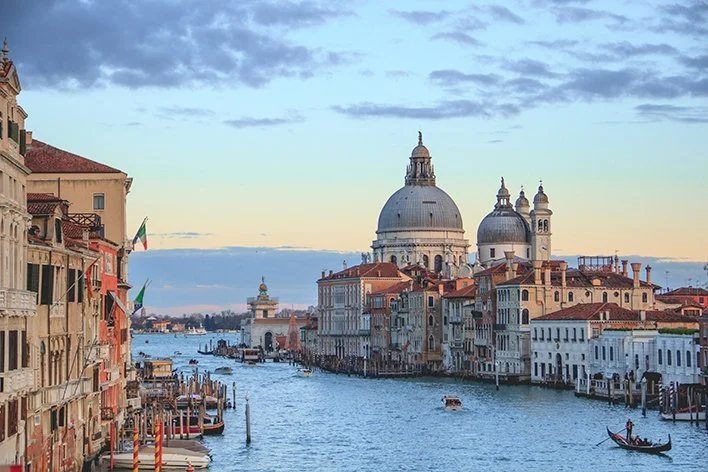
Photo by Enrique Ferreira
Venice is small. The historic centre measures barely 5 km across at its widest, and on paper that sounds easy. In practice the walking is slow: there are no straight lines, no cars, and roughly 400 bridges with steps on both sides. A distance that looks like ten minutes on a map often takes twenty.
That changes how you plan. Deciding what to do in Venice is less about how many sights you can reach and more about which ones sit close enough together to string into a sensible walk, and which ones lock you into a timed ticket. Two of the big ones, St Mark's Basilica and the Doge's Palace, share the same square and work on entirely different booking systems.
What follows splits the answer in two: the monuments and buildings worth seeing, then the things to actually do, which in Venice are often the parts people remember. After that, a realistic read on what fits into one day, what needs longer, and how the boats and fares work.
In this guide:
How Venice Is Laid Out
What to See in Venice: The Main Sights
Things to Do in Venice Beyond the Monuments
Top Things to Visit in Venice If You Only Have One Day
Are you a hidden gem hunter? Try a self-guided riddle trail
Getting Around: Boats, Bridges and Fares
The Access Fee: What Changed in 2026
Frequently Asked Questions
How Venice Is Laid Out
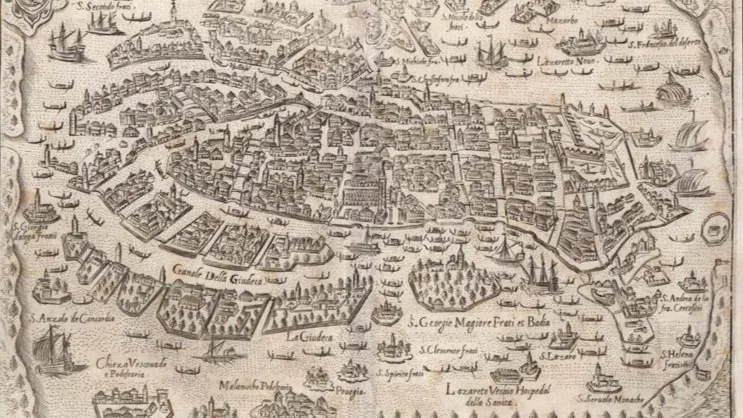
The historic centre sits on a cluster of small islands in a lagoon, divided into six districts called sestieri: San Marco, Castello, Cannaregio, San Polo, Santa Croce and Dorsoduro. Nearly everything on a first visit falls into San Marco, San Polo or Dorsoduro.
Trains arrive at Santa Lucia station, and cars and buses stop at Piazzale Roma. Both sit at the northwestern edge, which means every arrival starts from the same corner and works inward toward St Mark's. Walking that route end to end takes around 40 minutes without stops, and it crosses the Grand Canal, the wide S-shaped waterway that splits the city in two. Only four bridges cross the Grand Canal along its 3.5 km, a detail that explains a lot of otherwise baffling detours.
What to See in Venice: The Main Sights
St Mark's Basilica: Book It, or Don't Count On Seeing Inside
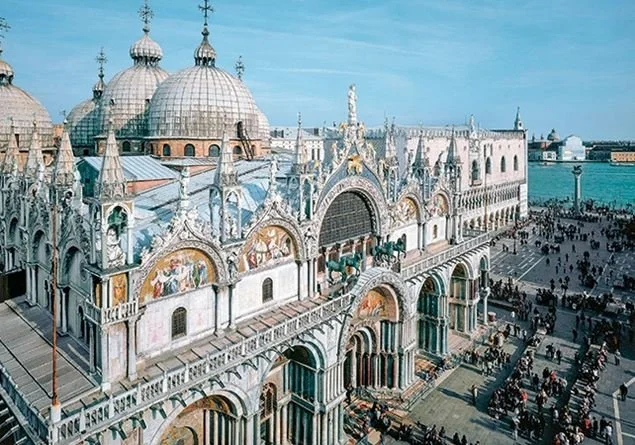
Photo by famigliacristiana.it
The basilica has been Venice's central church since the 9th century, built to house the remains of St Mark, and its interior is covered in roughly 8,000 square metres of gold-ground mosaics. Online pre-booking has been required since July 2025, with standard entry at €10 through the official site, tickets.basilicasanmarco.it. Booked visitors enter through the side door, Porta dei Fiori, which skips the main queue.
Hours run Monday to Saturday 9:30 to 17:15, with last admission strictly at 16:45. On Sundays and religious holidays tourist access doesn't begin until 14:00, since the morning is reserved for mass. The museum and Loggia dei Cavalli upstairs, where the original bronze horses are kept, stay open on Sunday mornings when the nave doesn't. Plan on 45 to 90 minutes. Shoulders and knees must be covered, and large backpacks aren't allowed inside.
The Campanile: St. Mark Bell Tower
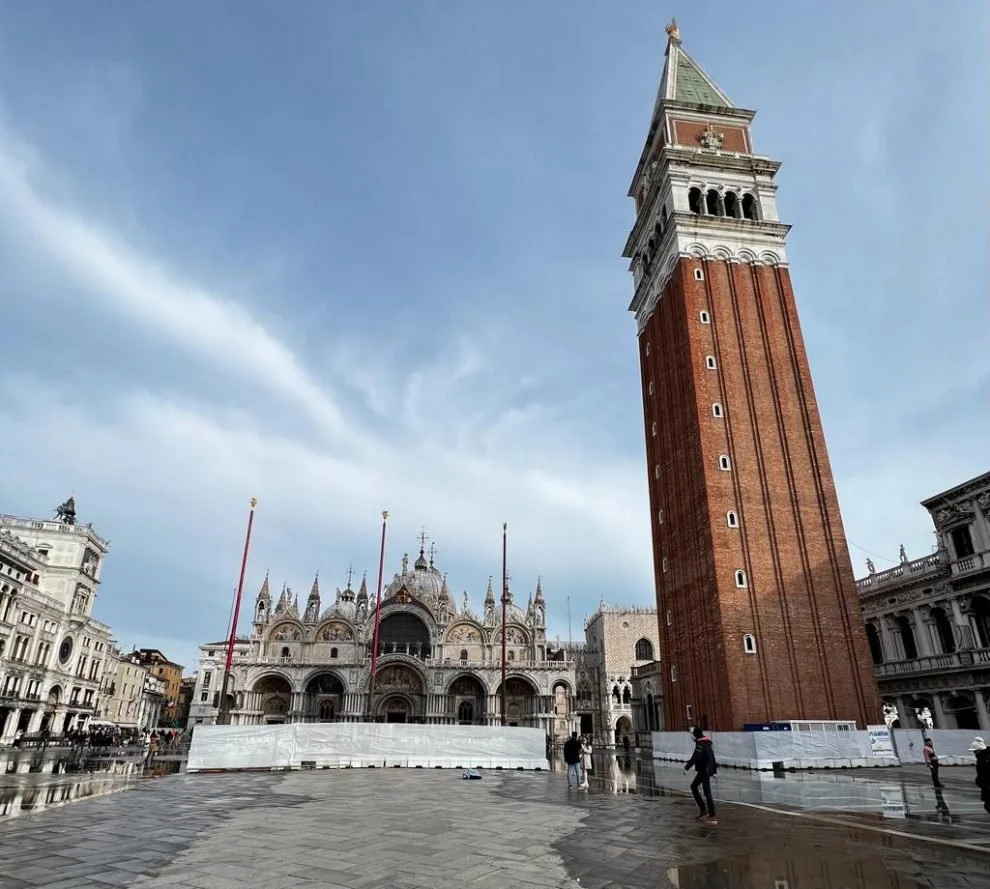
Photo by veneziaeventi.com
St Mark's bell tower stands 99 metres above the square, and there's a lift, so no stairs. What you get from the top is the one view that makes sense of Venice's shape: the islands, the lagoon, the Grand Canal curving through the middle. Opening runs daily from 9:30, closing at 21:15 between April and October and 18:45 from November to March. It shuts without warning in strong wind or fog.
Doge's Palace: Government, Courtrooms and the Prison
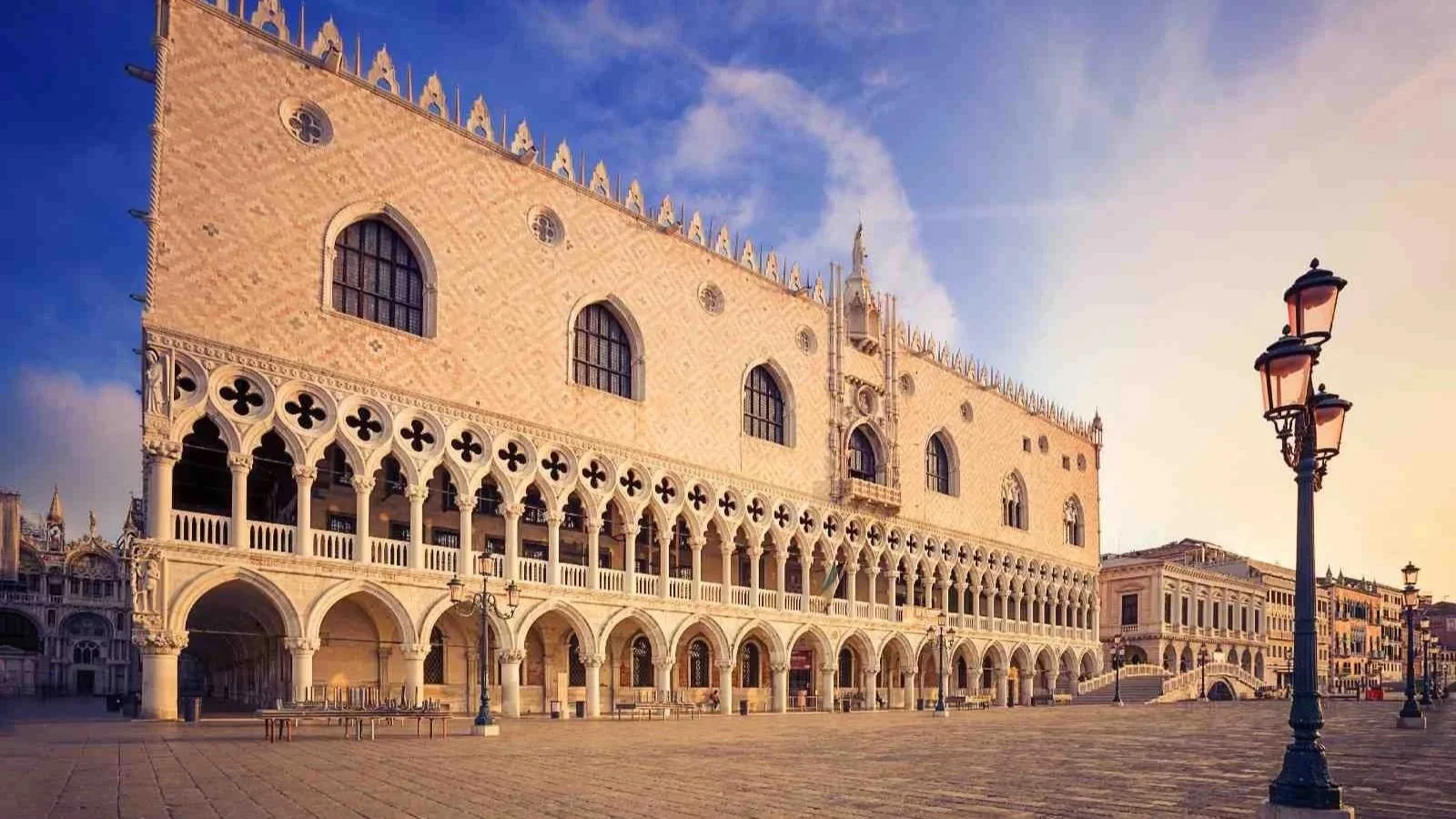
Photo by veneto.info
For a thousand years this was the seat of the Venetian Republic: the Doge's residence, the council chambers, the law courts and, across the Bridge of Sighs, the prisons. The route through it is long, and the Sala del Maggior Consiglio holds one of the largest oil paintings in the world, Tintoretto's Paradise.
Hours are 09:00 to 19:00 from 1 April to 31 October (last admission 18:00) and 09:00 to 18:00 from 1 November to 31 March (last admission 17:00), closed 25 December and 1 January. One detail that catches people out: holders of the "St Mark's Square Museums" ticket without a specific entry time are only admitted from 12:00, so a morning visit needs a timed slot. Between 1 May and 26 September 2026, the palace stayed open until 23:00 on Fridays and Saturdays, with last admission at 22:00. A Museum Pass at €40 covers the palace plus the other civic museums, is valid six months and needs no reservation.
Rialto Bridge and Market: The Older Centre of Gravity
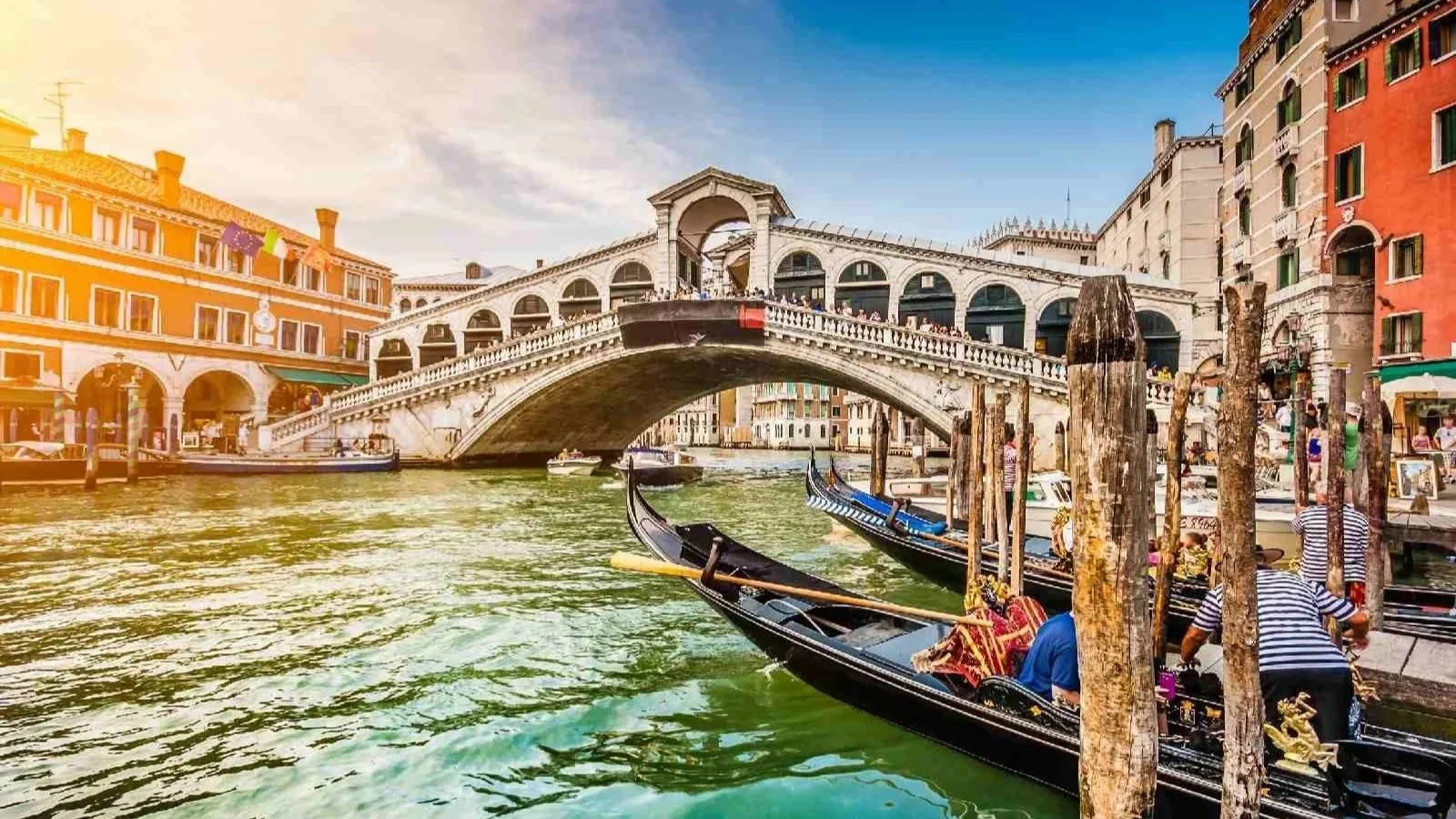
Photo by veneto.info
Before St Mark's became the tourist centre, Rialto was the commercial one. Until 1854 this was the only bridge across the Grand Canal, which is why the streets funnel toward it from both banks. The current stone version dates from the 1590s and the shops built into it have been there since.
The market beside it still trades in the morning only, and the produce and fish stalls are a working market rather than a display. Crossing the bridge costs nothing and takes two minutes, though on summer afternoons the crowd on the steps makes it feel longer.
Scala Contarini del Bovolo: An External Spiral Staircase
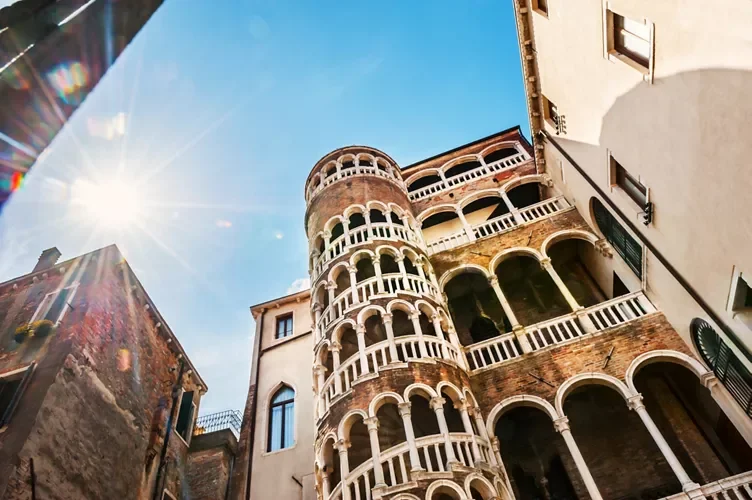
Photo by italia.it
Tucked into a small courtyard a few minutes from Campo Manin, this late-15th-century spiral staircase climbs the outside of a palazzo in a series of open arches. The courtyard itself is free to enter and the staircase is visible from the ground; climbing it and reaching the belvedere at the top needs a ticket, around €8. Hours and access have changed more than once in recent years, so check the current situation before making a detour.
Santi Giovanni e Paolo: Where the Doges Are Buried
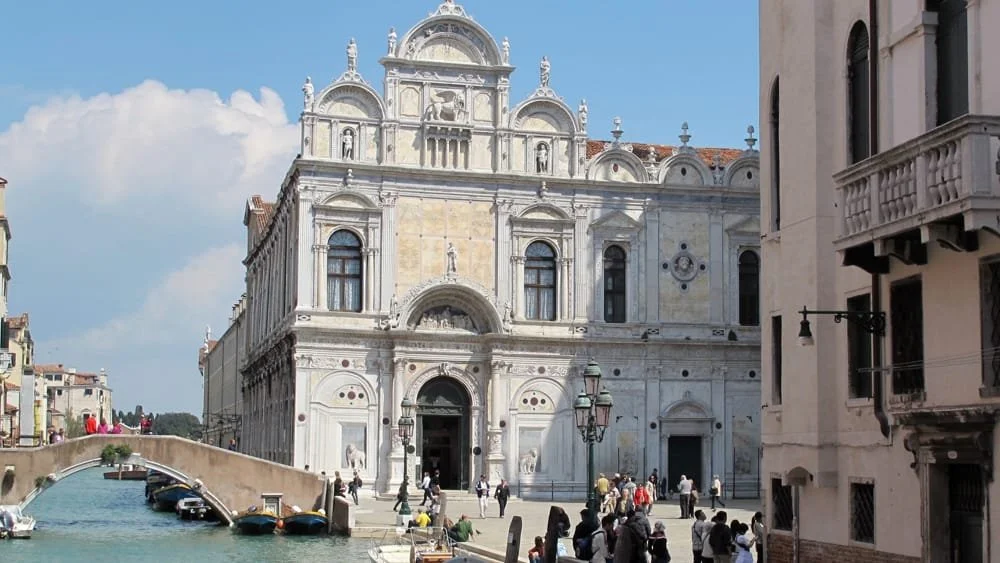
Photo by veneziatoday.it
In Castello, ten minutes northeast of Rialto, this vast Dominican church holds the tombs of around 25 doges. The square outside, with its canal and the Renaissance façade of the Scuola Grande di San Marco next door, is one of the few large open spaces in Venice that isn't packed.
Things to Do in Venice Beyond the Monuments
Ticking off buildings covers maybe half of what a Venice visit is. The rest is made of things you do rather than look at.
Ride Line 1 Down the Grand Canal
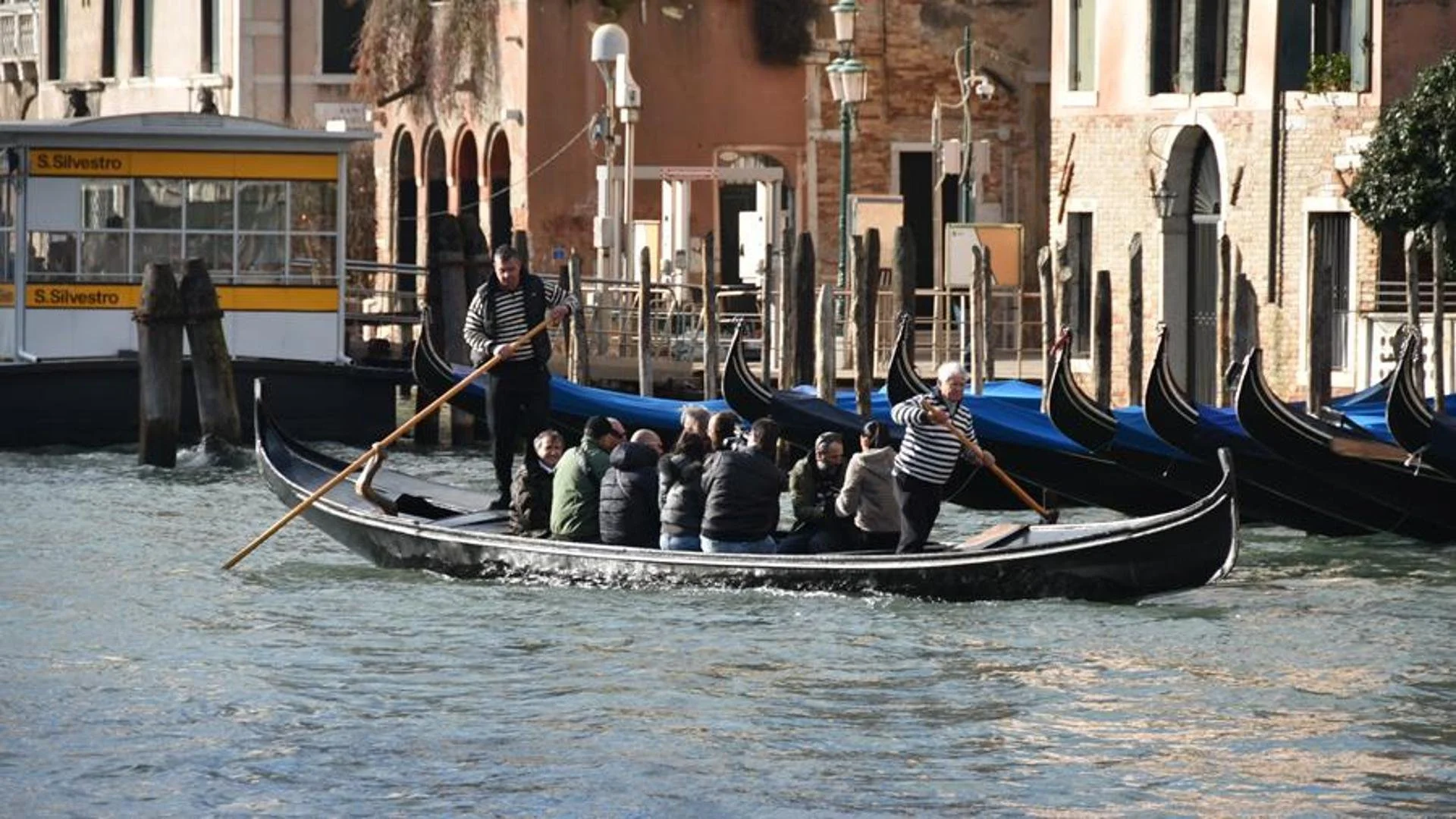
Photo by lanuovavenezia.it
The vaporetto Line 1 runs the full length of the Grand Canal, stopping almost everywhere, and costs the same as any other water bus: €9.50 for a single 75-minute ticket. Board at Piazzale Roma or Santa Lucia heading toward San Marco and you pass the palace façades from the water, which is the angle they were built to be seen from. The trip takes 35 to 45 minutes depending on traffic. Sit outside at the stern if there's space.
Are you a hidden gem hunter? Try a ClueGo riddle trail

Venice punishes improvised navigation more than most Italian cities. Streets change name every fifty metres, the same campo is signposted three different ways, and phone GPS drifts badly between tall buildings and narrow calli. Working out the next stop and the way to reach it becomes its own small task, repeated all afternoon.
ClueGo Venice takes that task off the table. The stops are already selected and put in order, and the trail walks you from one to the next with a riddle to solve when you arrive, so the decisions about where to go and how to get there are already made. The route runs 11 stops over about 4 km, starting at Ponte delle Tette in San Polo and finishing at Campo SS. Giovanni e Paolo in Castello, taking in the Rialto Bridge and market, Piazza San Marco, the Doge's Palace and the Scala del Bovolo along the way. It was built by Beatrice Zancanaro, one of ClueGo's co-founders.
Practically: it's a web app with no download and no booking, played by a group of 1 to 5 people, available in English and Italian, and it takes 2 to 4 hours without breaks. The activation code stays valid for six months, so stopping for a spritz halfway through and resuming the next morning is built into how it works. The whole trail is outdoors and includes no admission to anything, so the basilica and the Doge's Palace still need their own tickets, booked separately.
Worth knowing before you start: the trail passes the Rialto market, which is at its best in the morning, and the riddles rely on spotting details on buildings, so daylight matters.
Cross on a Traghetto
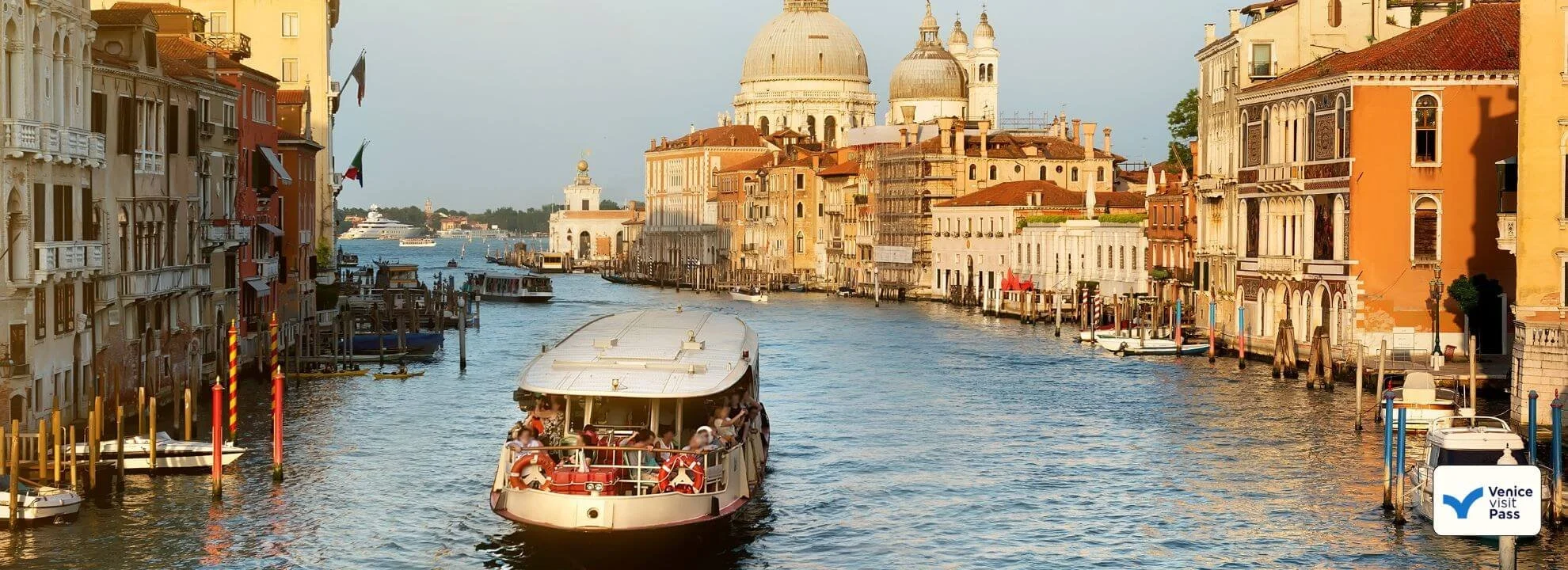
Photo by venicevisitpass.com
At several points along the Grand Canal where there's no bridge nearby, gondola-style ferries called traghetti row passengers across. The crossing lasts a couple of minutes and costs €2 per person for visitors, against €0.70 for residents. Locals usually stand. It's the cheapest way to be in a gondola by a wide margin: the official city tariff for an actual 30-minute gondola ride is €90 during the day and €110 after 7pm, per boat for up to five people.
Eat Standing Up in a Bacaro
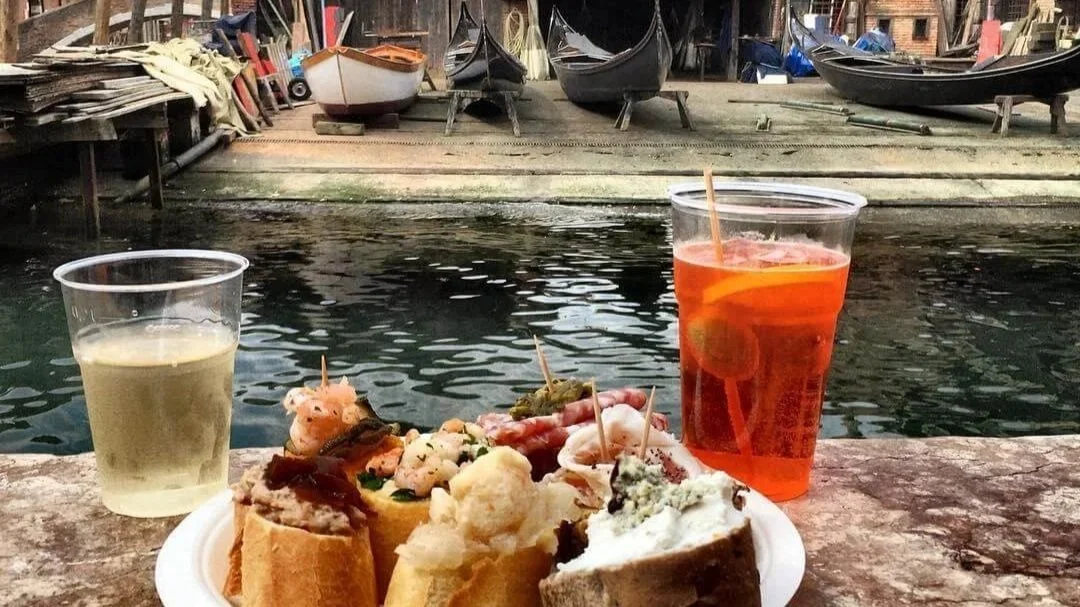
Venetian bars called bàcari serve cicheti: small plates eaten at the counter, usually alongside a small glass of wine known as an ombra. Baccalà mantecato (whipped salt cod) and sarde in saor (sardines with onion and vinegar) are the two most closely tied to the city. This is an early-evening habit rather than a late-night one, and the clustering of bàcari around the Rialto market and in Cannaregio is not accidental.
Walk Cannaregio or Dorsoduro in the Evening
The crowd in Venice is concentrated in a narrow corridor between the station and St Mark's, and it thins sharply outside it. Cannaregio, north of the main route, holds the Jewish Ghetto, established in 1516 and the origin of the word itself. Dorsoduro, across the Accademia bridge, is quieter and holds the university. Both are more interesting after the day-trip boats have gone.
Top Things to Visit in Venice If You Only Have One Day
One day covers the central core, but not comfortably and not the islands. Here's the honest arithmetic.
The main cluster works because St Mark's Square, the Doge's Palace, the Campanile and Rialto sit within a 15-minute walk of one another. Chain them and the walking barely registers. The difficulty is that the basilica and the palace both consume time in fixed blocks, and the basilica's Sunday afternoon opening can wreck a plan built around a Sunday morning start.
A version that holds up: arrive and take Line 1 down the Grand Canal rather than walking, which turns transit into sightseeing. Do the basilica on a booked morning slot, the Doge's Palace after it, break for cicheti near Rialto around midday, cross the bridge and walk the San Polo side, then come back east through Campo Santi Giovanni e Paolo in the late afternoon.
What that leaves out is everything in the lagoon, and both major art collections. Murano, Burano and Torcello are not day-trip add-ons to a single day in Venice: Burano alone is roughly 45 minutes each way by boat from Fondamente Nove. Trying to fit them in means seeing the centre at a jog and the islands from a boat window.
Getting Around: Boats, Bridges and Fares
Walking is the default and covers most of the centre. Where it doesn't, the vaporetto network run by ACTV is the public transport, and the fares are steep by Italian standards.
A single ticket costs €9.50 and is valid 75 minutes with unlimited changes, though not for a return journey. Passes run €25 for 24 hours, €35 for 48, €45 for 72 and €65 for a week. The maths is simple: three single rides cost €28.50, so from the third boat of the day the 24-hour pass wins. Airport routes are operated separately by Alilaguna and standard ACTV tickets are not valid on them.
Two practical notes. Bridges have steps, which makes wheeled luggage and pushchairs genuinely awkward between the station and accommodation. And street numbering runs by sestiere rather than by street, so an address like "San Marco 4299" tells you the district and nothing about where in it. Navigate by campo and church name instead.
The Access Fee: What Changed in 2026
A lot of currently published advice about Venice's day-visitor access fee is out of date, so here is the position as it stands.
During 2026 the Contributo di Accesso applied on 60 days between 3 April and 26 July, between 08:30 and 16:00, to day visitors aged 14 and over who weren't staying overnight. It cost €5 if paid at least four days ahead and €10 within the three days before the visit. Overnight guests were exempt from payment but still had to register for a free QR code.
That trial period has ended. The official portal, cda.ve.it, states that from 27 July 2026 the access fee is no longer in effect and Venice can be visited with no payment and no exemption request. Whether it returns in 2027 is a decision for the City of Venice's governing bodies and has not been announced. Check the official portal against your own travel dates rather than relying on articles written mid-season.
FAQ
-
St Mark's Basilica, the Doge's Palace, the Campanile, the Rialto Bridge and the Grand Canal itself form the core that appears on essentially every list. Beyond those, the Gallerie dell'Accademia, the Frari and the lagoon islands of Murano and Burano are the most commonly added.
-
One day covers the central cluster around St Mark's and Rialto, provided the basilica is pre-booked. It doesn't stretch to the lagoon islands or to either of the major art collections without cutting the centre short.
-
Online booking has been mandatory since July 2025. Entry for prayer through the Porta dei Fiori remains free and unbooked, but that isn't a sightseeing visit.
-
A single ride is €9.50 and lasts 75 minutes. Day and multi-day passes start at €25 for 24 hours, and become cheaper than singles from the third journey onward.
-
The 2026 trial ended on 27 July and the fee is not currently in effect. Any decision about 2027 rests with the City of Venice, so check cda.ve.it for your specific dates.
-
It's a self-guided riddle trail through the city centre, played on a web app with no download and no reservation. You buy a code for the group, go to the starting point at Ponte delle Tette, and each stop unlocks by solving the previous riddle. The Venice trail has 11 stops across roughly 4 km and takes 2 to 4 hours.
-
One code covers a group of 1 to 5 people, and the riddles include hints and can be skipped, which keeps it moving when one stumps you. Since the whole route is outdoors and has no fixed start time, it fits around the timed tickets for the basilica and the Doge's Palace rather than competing with them.