
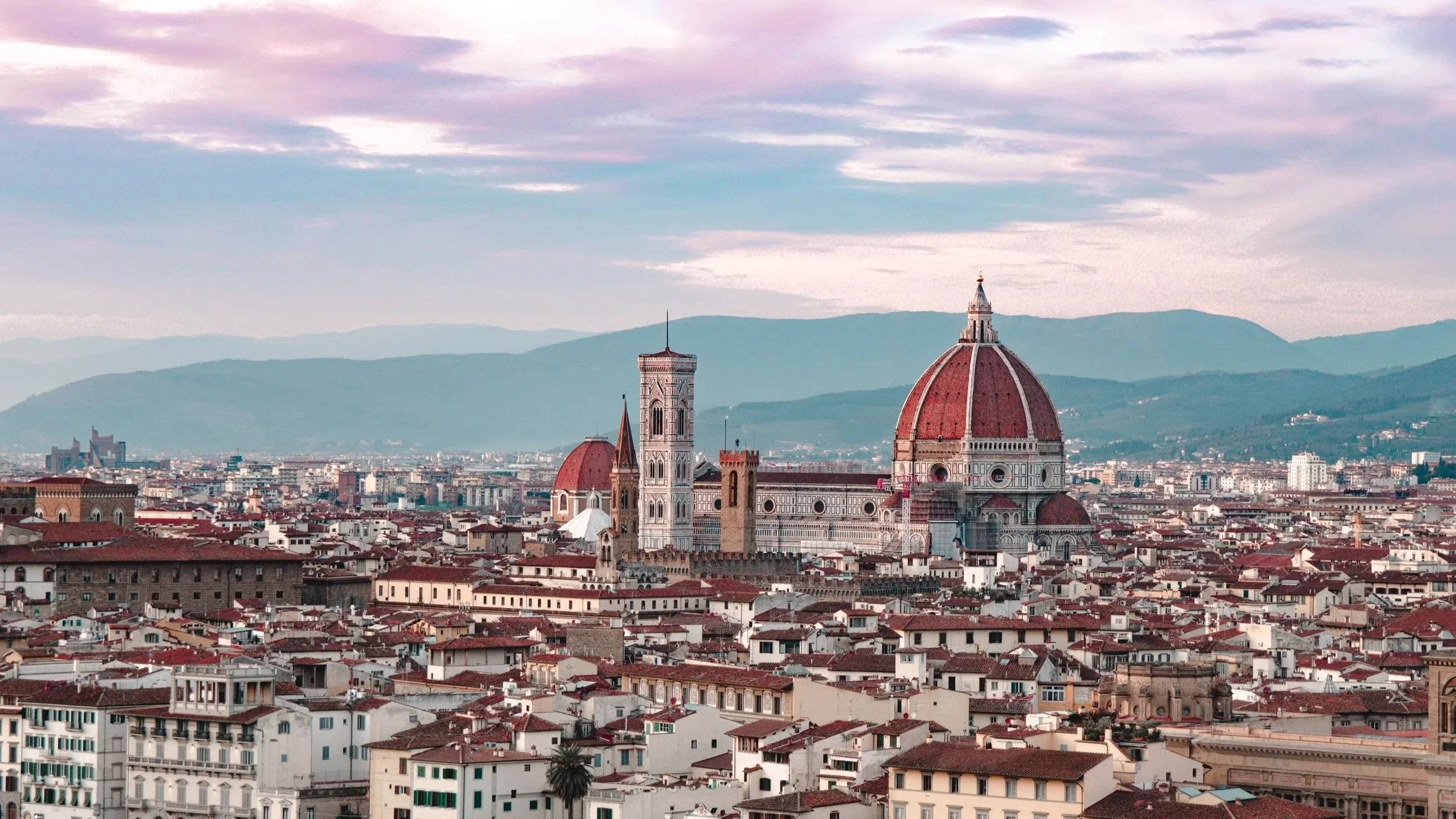
Photo by Nicola Pavan
Florence has a reputation for being one of the most expensive cities in Italy to sightsee in, and the ticket prices back that up: €25 for the Uffizi in high season, similar for the Accademia, more again if you add the dome climb at the Duomo. If you're trying to see the city without burning through your budget in the first two days, it helps to know exactly what costs nothing, what costs nothing only under specific conditions, and what's being sold as "free" when it really isn't.
This guide sticks to what's genuinely free to enter or experience in Florence, with the exact conditions attached to each one — because in this city, "free" often comes with an asterisk. A church might be free to walk into but charge for the sacristy. A museum might be free once a month but require you to queue for hours to get a ticket that's still, technically, a ticket. None of that makes these places less worth knowing about. It just means you should know what you're walking into.
The list below isn't exhaustive, and it isn't ranked by importance. It's organised by what kind of thing you're looking for — churches, the one free museum day, viewpoints, squares, markets — with enough detail to build a walking route out of it if you want one.
Free Churches Worth the Detour
Florence's churches are a mixed bag when it comes to free entry. Santa Croce and Santa Maria Novella both charge admission for the main basilica. A handful of others don't, and they're not lesser stops for it.
Basilica di San Miniato al Monte: Free Every Day, and Worth the Climb
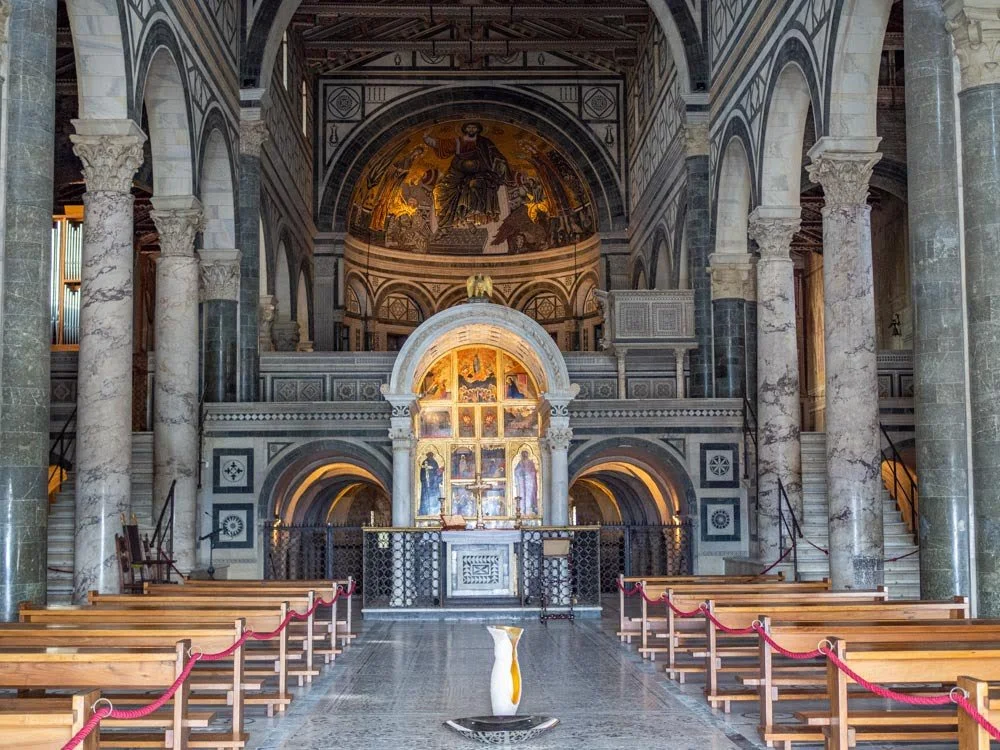
Photo by guidemeflorence.com
San Miniato al Monte sits on the hill above Piazzale Michelangelo, about 1.5km from the centre on foot, mostly uphill after you cross the Arno. The basilica itself is free to enter every day, with no ticket and no booking required. Opening hours are split into a morning and afternoon block and shift slightly by day: roughly 9:30am–1pm and 3:30pm–7pm Monday to Saturday, and 8:15am–1pm and 3:30pm–7pm on Sundays, though the church closes to visitors during Mass.
The one part of the complex that isn't free is the sacristy, where the walls are covered in frescoes by Spinello Aretino — a small contribution, a few euros, gets you in. If you're there in the late afternoon, the Benedictine community sings vespers in Gregorian chant, usually around 6:30pm; it's not staged for tourists, and the church empties out noticeably once the singing starts because most day-trippers have already left by then.
Basilica di Santo Spirito: Brunelleschi's Church, No Ticket Needed
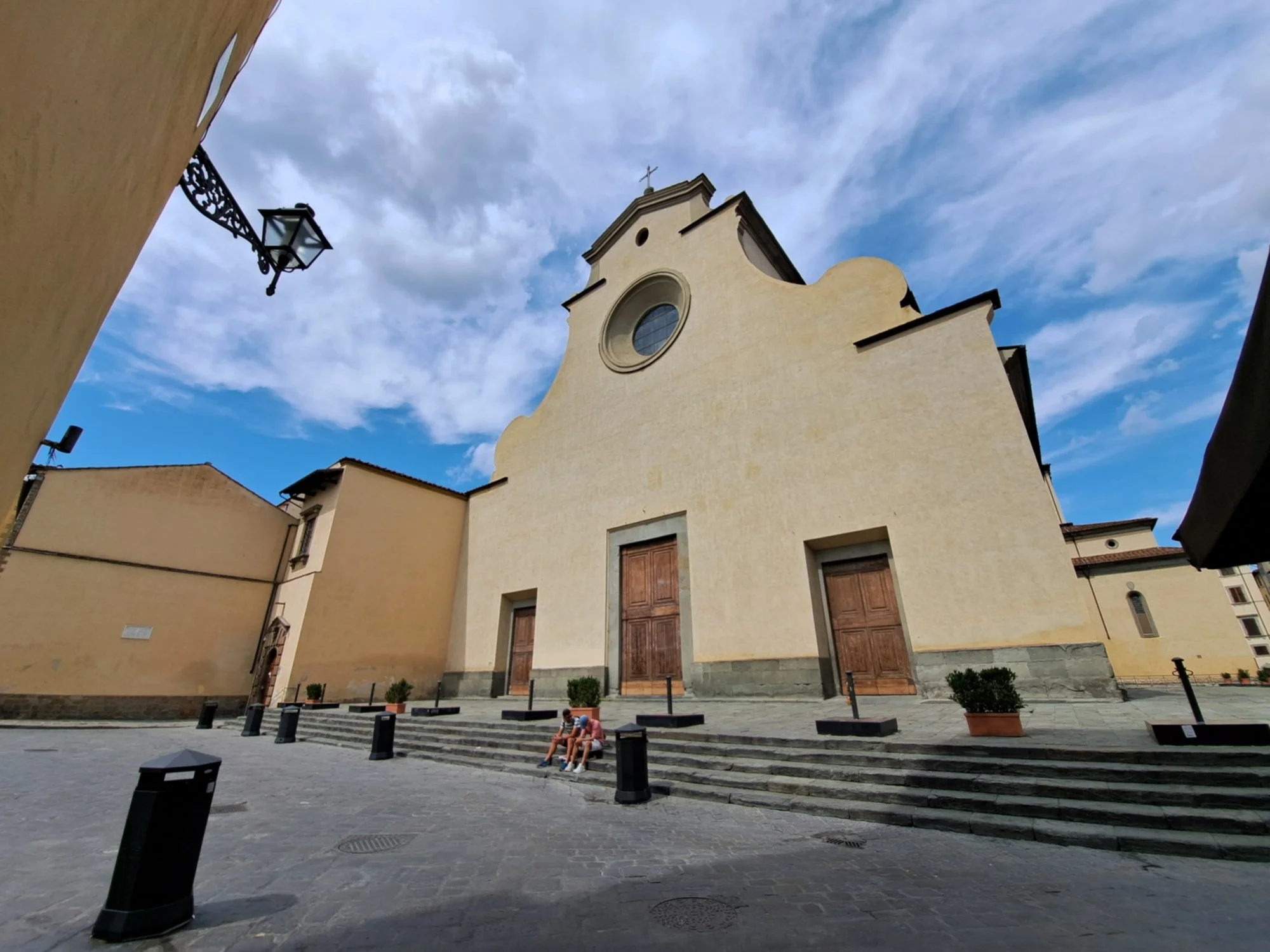
Photo by visittuscany.com
Santo Spirito, on the Oltrarno side of the river, is one of Filippo Brunelleschi's last projects, left unfinished at his death in 1446. According to the church's own visitor information, entry to the basilica is always free when there's no service in progress, which takes priority over visits. It's closed on Wednesdays. Hours are 10am–1pm and 3pm–6pm Monday, Tuesday, and Thursday to Saturday, and 11:30am–1:30pm and 3pm–6pm on Sundays.
What isn't free is the "museum route" — the sacristy, where Michelangelo's early wooden crucifix is kept, and the cloister. That's a €2 contribution, paid at the entrance, no advance booking needed. The square outside, Piazza Santo Spirito, has its own small market most mornings and is one of the few central piazzas in Florence that isn't overrun with tour groups.
The Cathedral of Santa Maria del Fiore: Free, But Only Some Days and Some Hours
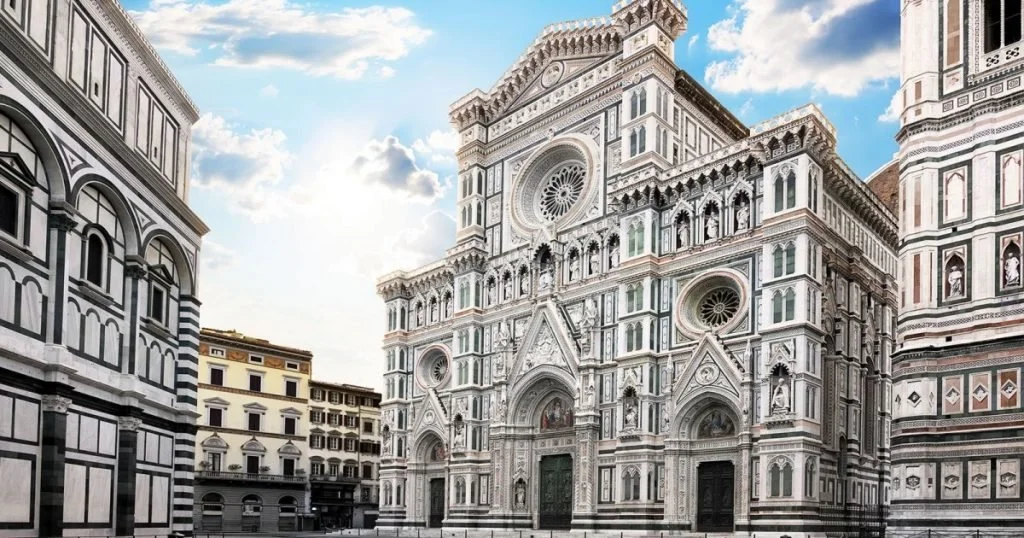
Photo by italiani.it
This is the one that trips people up. The nave of the Cathedral is free to enter, with no ticket and no reservation, according to the Opera di Santa Maria del Fiore's own FAQ. But it's open to visitors Monday to Saturday only, roughly 10:15am to 3:45pm, and it's closed on Sundays and during religious holidays. Everything else in the Piazza del Duomo complex — Brunelleschi's dome, Giotto's bell tower, the Baptistery, the crypt, the Opera museum — needs a paid, timed ticket, and the dome specifically requires booking a slot in advance.
Dress code is enforced at the door: shoulders and knees covered, no large bags. If you only want to see the nave and the frescoed interior of the dome from below, this costs nothing. If you want to climb it, that's a separate, bookable, paid experience.
Domenica al Museo: Florence's Free Museum Sunday, Explained Honestly
Italy's Ministry of Culture runs a national initiative called Domenica al Museo — free entry to state-run museums, monuments and archaeological sites on the first Sunday of every month. In Florence, that covers some of the city's biggest names: the Uffizi Gallery, Palazzo Pitti (all of its museums), the Boboli Gardens, the Galleria dell'Accademia (home to Michelangelo's David), the Museo Nazionale del Bargello, and the Cappelle Medicee.
Here's the part that matters more than the headline: free doesn't mean walk-in. At the Uffizi, the free ticket is nominative — it has your name on it, checked against ID — and it can only be collected in person at the ticket office on the day itself. It isn't issued through the online booking system. Multiple sources describe waits of three to four hours at the Uffizi on free Sundays, and the popular rooms inside, like the Botticelli room, get packed shoulder to shoulder once you're in. If your goal is actually looking at the art rather than saving €25, a regular weekday ticket in low season is a genuinely better use of your time.
Where the free Sunday works well is for sights that are less of a magnet: the Cappelle Medicee, for instance, or a first look at the Boboli Gardens without the entry fee, if you're prepared for the crowds around the more famous rooms elsewhere in the same complex.
One correction worth flagging: Orsanmichele, the granary-turned-church near Piazza della Signoria, is often listed online as permanently free. It isn't anymore — the current ticket price through Musei del Bargello is €10, with free entry only for under-18s, the first Sunday of the month, and a handful of specific dates through the year (25 April, 2 June, 4 November in 2025; check the Bargello Musei site for the current year's list). If you're going anyway, the exterior tabernacles with statues by Donatello and Ghiberti are visible from the street at any time.
The View That Costs Nothing: Piazzale Michelangelo and the Gardens Below It
Piazzale Michelangelo
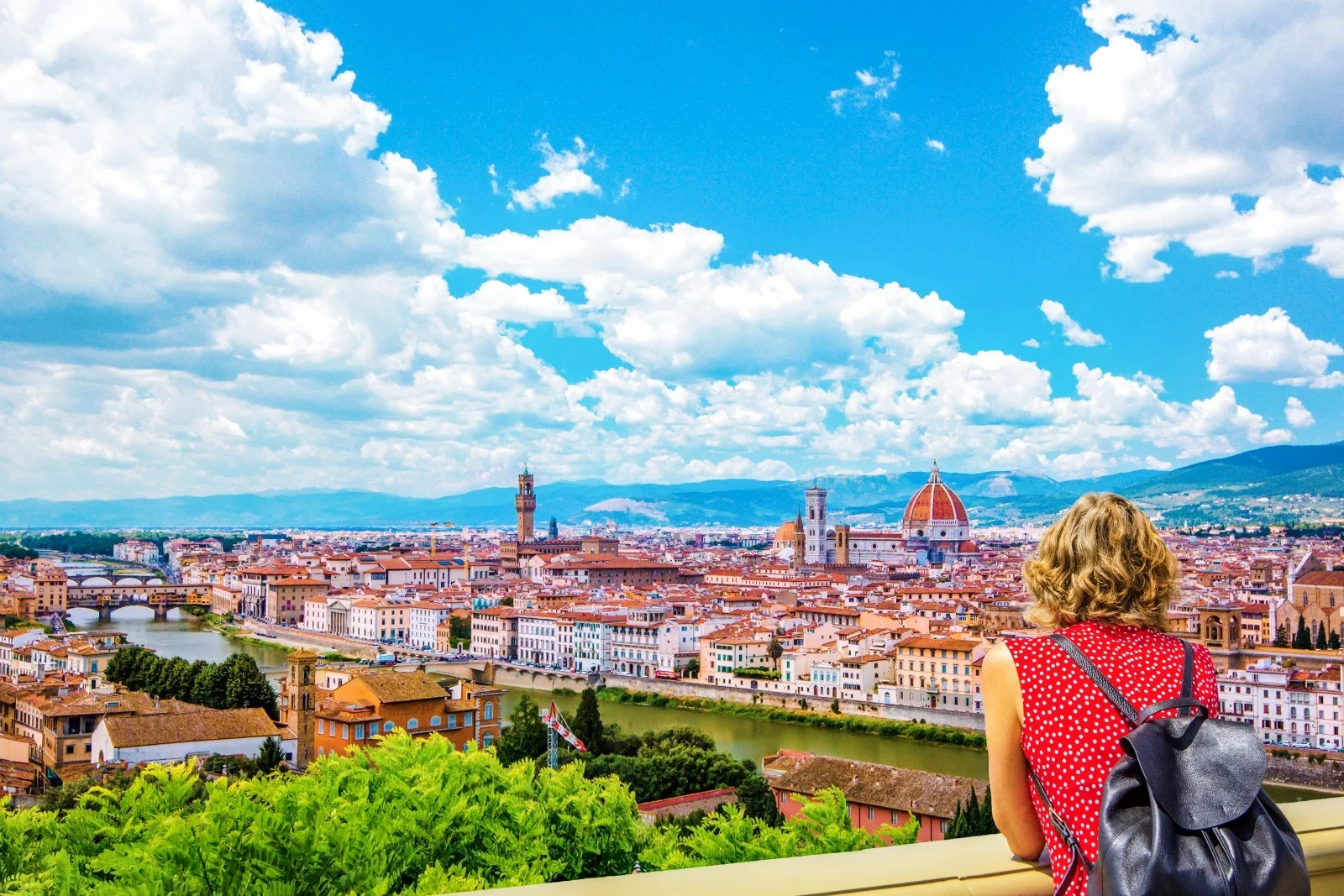
Photo by toscana.info
This is the wide terrace above the Oltrarno with the postcard view over the whole city, the Arno and the hills beyond. It's a public square, not a monument — no ticket has ever been required, and there's no closing time. Half the terrace doubles as a car park, so it's less pretty up close than in photos, but the view itself doesn't change. It's about a 20-minute uphill walk from Ponte Vecchio, or a short ride on bus 12 or 13.
Giardino delle Rose
Just below Piazzale Michelangelo, on Viale Giuseppe Poggi, this rose garden is free every day of the year except Christmas and New Year's Day, open from 9am until sunset (later in summer, closer to 8pm). It holds around 1,200 roses across more than 350 varieties, plus a dozen bronze sculptures by the Belgian artist Jean-Michel Folon, added in 2011. Peak bloom is late April into May, but the garden stays open year-round.
Right next to it, the Giardino dell'Iris is also free — but only during a short seasonal window, roughly late April to mid-May, when the irises are in flower. Outside that window, it's closed. Don't plan a visit around it unless you're checking the current year's dates first.
Parco delle Cascine
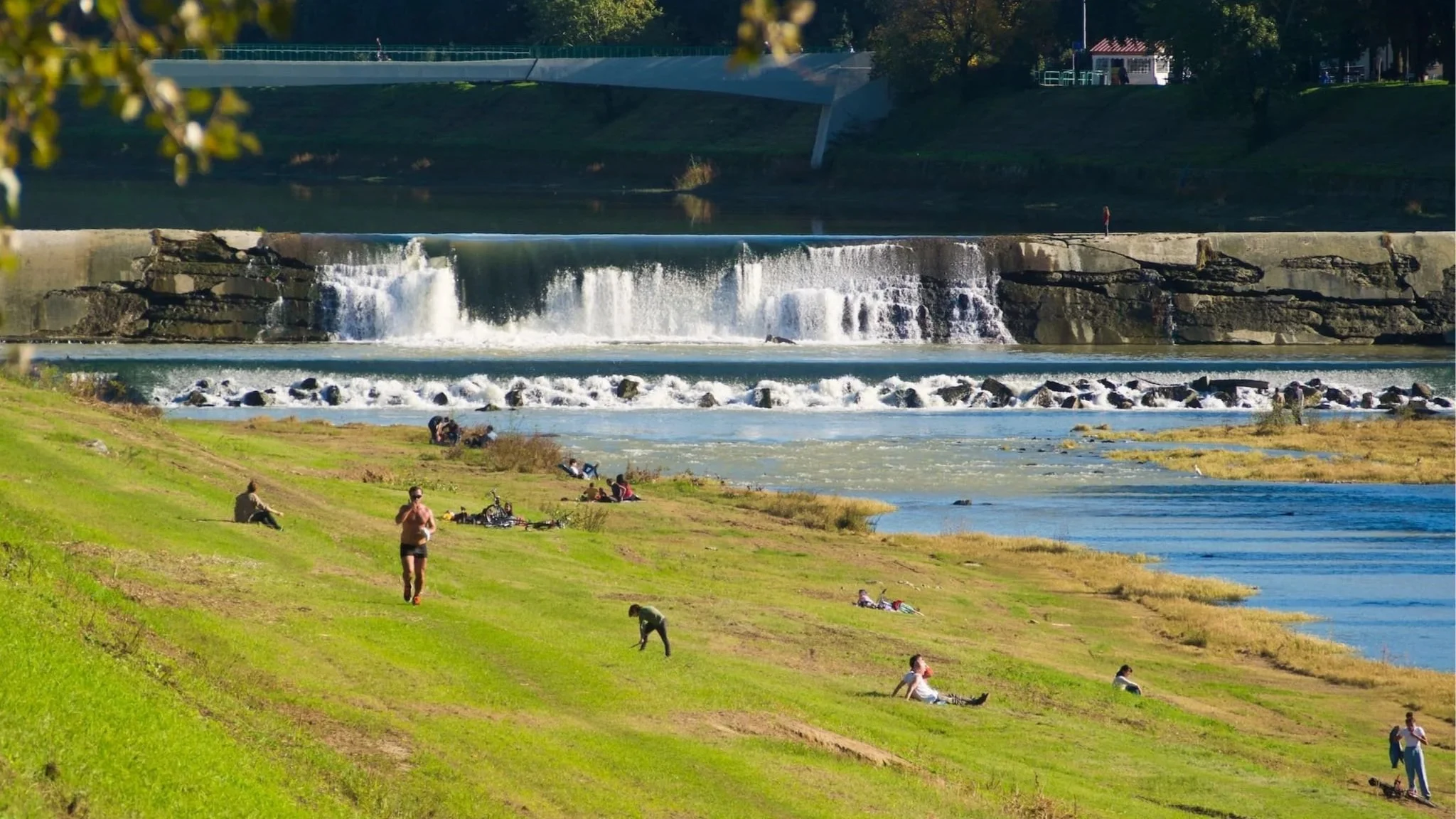
Photo by firenze.huopenair.com
Florence's largest park runs along the Arno west of the centre, reachable on foot in about 15 minutes from Santa Maria Novella station or by the T1 tram line. It's free and open at all times, with running paths, a Tuesday market, and enough space to actually sit down away from the tourist density of the historic centre.
Free Squares, Courtyards and Open-Air Sculpture
Piazza della Signoria and the Loggia dei Lanzi
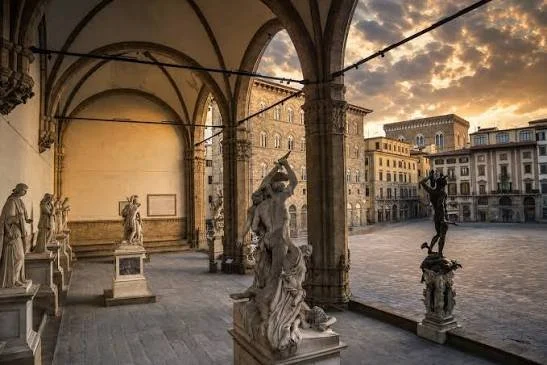
Photo by @visiteguiatefirenzetoscana
The square outside Palazzo Vecchio functions as an open-air sculpture gallery, and none of it requires a ticket: a copy of Michelangelo's David stands where the original once did, alongside Cellini's bronze Perseus and Giambologna's Rape of the Sabine Women under the Loggia dei Lanzi's arches. Some of the statues under the loggia were cast partly from melted-down household bronzeware during wartime shortages, according to local guides — worth knowing before you assume they're all original Renaissance bronze straight through.
The Courtyard of Michelozzo, Inside Palazzo Vecchio
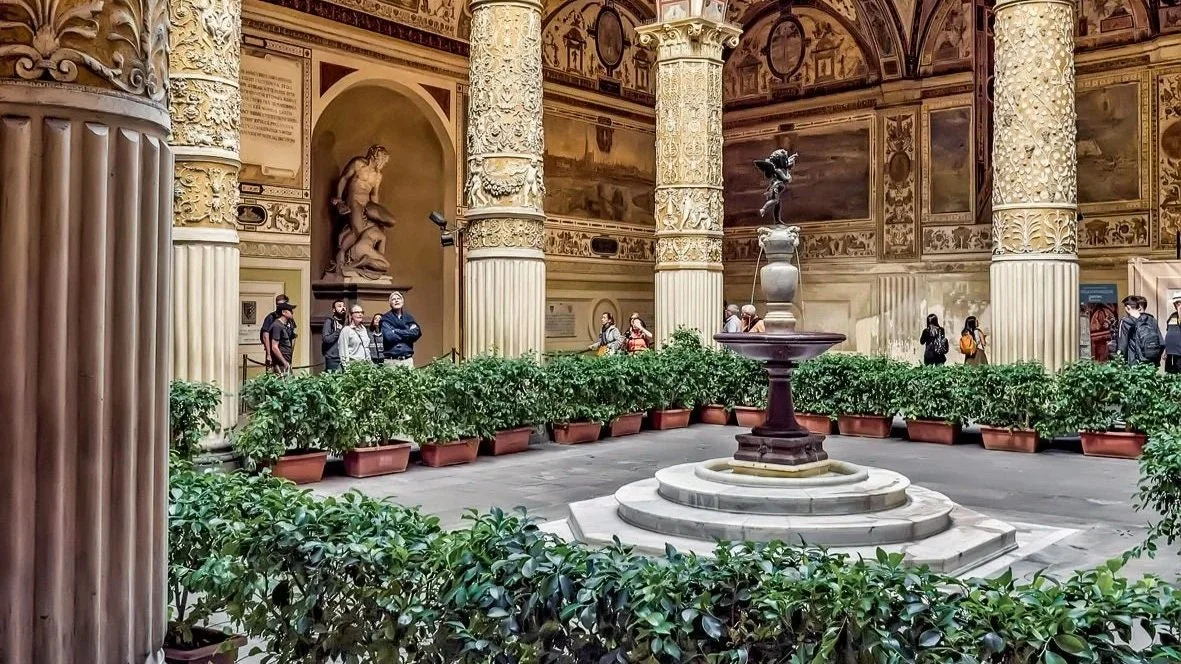
Photo by visit-florence-italy.com
Most visitors assume Palazzo Vecchio is a paid museum from the front door onward. It isn't, entirely. The ground floor — the Cortile di Michelozzo, the first of the building's three courtyards, decorated by Vasari for a Medici wedding in 1565 — is free to walk into, with no ticket required, according to the palace's own visitor information. It's only the upper floors, with the Salone dei Cinquecento and the private apartments, that need a paid ticket. If you just want to see the courtyard's frescoed arcade and fountain, you can do it on the way past.
Ponte Vecchio
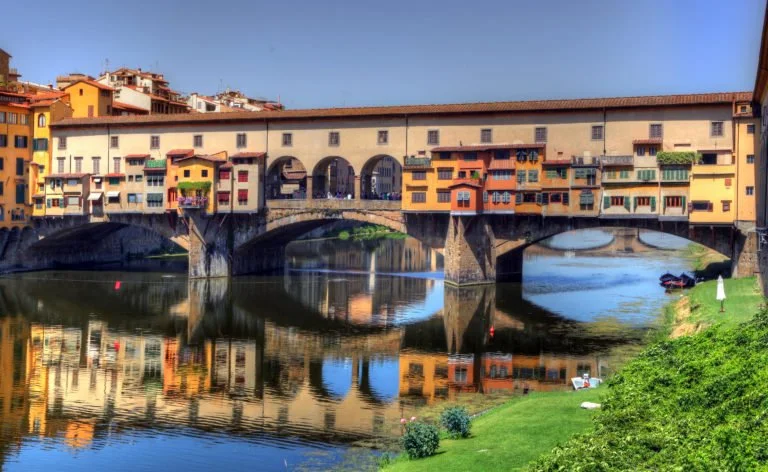
Photo by 10cose.it
Florence's medieval bridge, lined with jewellers since the Medici moved the butchers out in the 16th century, is free to cross at any hour. It's also one of the most crowded points in the city during the day — early morning or after dark are the times it's actually possible to see the shopfronts without being pressed into the railings by a tour group.
Markets You Can Just Walk Through
The ground floor of the Mercato Centrale, in the San Lorenzo district, is Florence's working food market — butchers, fishmongers, cheesemongers, fresh pasta stalls, in a cast-iron-and-glass hall built in 1874. Entry is free, but it's a shopping market for locals, not a food court, and it runs Monday to Saturday roughly 7am to 2pm, closed Sundays. The upstairs food hall, added in 2014, is open every day until midnight; entry there is free too, though obviously you pay for whatever you eat.
Outside the market building, the streets around Piazza San Lorenzo are lined with leather and souvenir stalls that are free to browse, no obligation to buy. Across the river, the smaller Sant'Ambrogio market in the Santa Croce district is a quieter, more residential version of the same idea, with fewer tourists and lower prices on produce.
Low-Cost Things Worth the Small Price
Florence doesn't have as long a list of purely free attractions as some Italian cities, and stretching that list to look longer than it is would misrepresent what a visit here actually costs. A few things fall just short of free but are worth flagging separately, because the price is small and the trade-off is clear:
The sacristy at San Miniato al Monte (a few euros): the Spinello Aretino frescoes, inside the free basilica.
The museum route at Santo Spirito (€2): the sacristy with Michelangelo's wooden crucifix and the cloister, inside the free basilica.
Orsanmichele (€10, unless you're under 18 or visiting on a free date): worth it mainly for the Donatello and Ghiberti sculptures inside; the exterior tabernacles are visible for free from the street.
None of these are "free things with a footnote." They're paid experiences attached to free buildings, and it's worth knowing which part of the price applies to what.
ClueGo Florence: For After You've Done the Free Round

Once you've walked the free churches, caught the view from Piazzale Michelangelo and worked out which museum day is actually worth the queue, you might have a few hours left and want something less passive than another walk through the centre. That's a different problem from "what's free," and it's the one ClueGo Florence is built for.
ClueGo isn't free — it's a paid, self-guided puzzle trail, and it's worth being upfront about that rather than folding it into a "free" list where it doesn't belong. The Florence route runs 3km from Piazza SS. Annunziata to Piazza de' Pitti, with 9 stops and 9 riddles to solve along the way, and takes 2-3 hours depending on how quickly your group works through the clues. It's a Web App, so there's nothing to download and no fixed start time: you buy the code online, show up whenever you're ready, and start from your phone.
Stops and puzzles are available in Italian and English, and you can pause partway through and pick back up later without losing progress. Pricing is per group rather than per person — 19.99€ covers up to 5 people, which puts it well under the cost of a couple of museum tickets if you're travelling with others.
It suits a specific moment in a Florence trip better than others: families with kids who've had enough of walking past monuments without stopping, couples who want an excuse to notice details they'd otherwise miss (a hidden escape route, a disguised portrait, an irreverent angel carved into a facade), or anyone who's already seen the big-ticket sights and wants a reason to slow down in the streets between them instead of speeding through to the next landmark. If that's where you are in the trip, the Florence trail page has the current route details and starting point.
Frequently Asked Questions
-
The big-name attractions are: Uffizi and Accademia tickets both sit around €25 in high season, and the Duomo's dome climb is a separate paid booking on top of the otherwise-free cathedral. Outside those specific tickets, a day built around the free churches, Piazzale Michelangelo, the gardens below it and a market walk costs nothing beyond food and transport.
-
Not by default. The main state museums — Uffizi, Palazzo Pitti, Boboli Gardens, Accademia, Bargello, Cappelle Medicee — are free only on the first Sunday of each month, through the national Domenica al Museo scheme, and even then a ticket (nominative, collected in person on the day for some museums) is required. Expect long queues, especially at the Uffizi.
-
The state museums listed above, plus Orsanmichele on that same day. It's worth checking each museum's own site the week before, since opening hours and any temporary closures can change the practical value of the free day.
-
Yes — the historic centre is compact enough to cross on foot in under half an hour, and most of what's covered in this guide sits within that core or a short uphill walk away on the Oltrarno side. The main exception is Piazzale Michelangelo and the gardens below it, which involve a genuine climb; comfortable shoes help more than a bus ticket would.