
Hidden Gems in Bologna: Discover the Secrets of the City
Walk from Piazza Maggiore to the Due Torri and you'll pass within a few metres of a devil's face, three arrows stuck in a wooden ceiling, and a tower wedged between two buildings, without ever knowing they're there. These are six real hidden gems in Bologna's historic centre, and where to actually find them.
In this article:
The Whispering Corners of Voltone del Podestà
The Three Arrows of Corte Isolani
The Diavolessa of Via d'Azeglio
Torre Uguzzoni: Wedged Into the Ghetto
The Devil's Face on Palazzo Bolognini
Street Art in Pratello: Ericailcane and Bastardilla
Discover Bologna with ClueGo
FAQ
The Whispering Corners of Voltone del Podestà
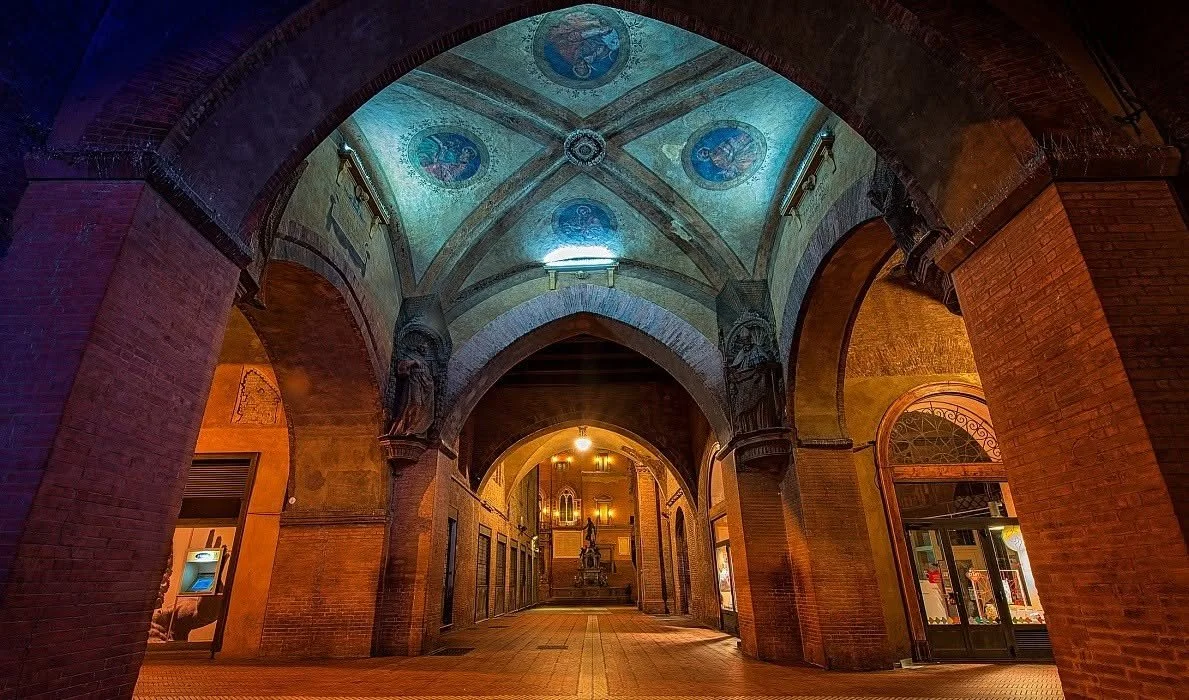
Phto by Isolani World
Under the Palazzo del Podestà in Piazza Maggiore, an archway does something odd: stand in one corner facing the column, have someone else do the same in the opposite corner, and a whisper carries across the room as clearly as if you were standing face to face. It's one of Bologna's "seven secrets," and it's free, with no set hours.
The Three Arrows of Corte Isolani
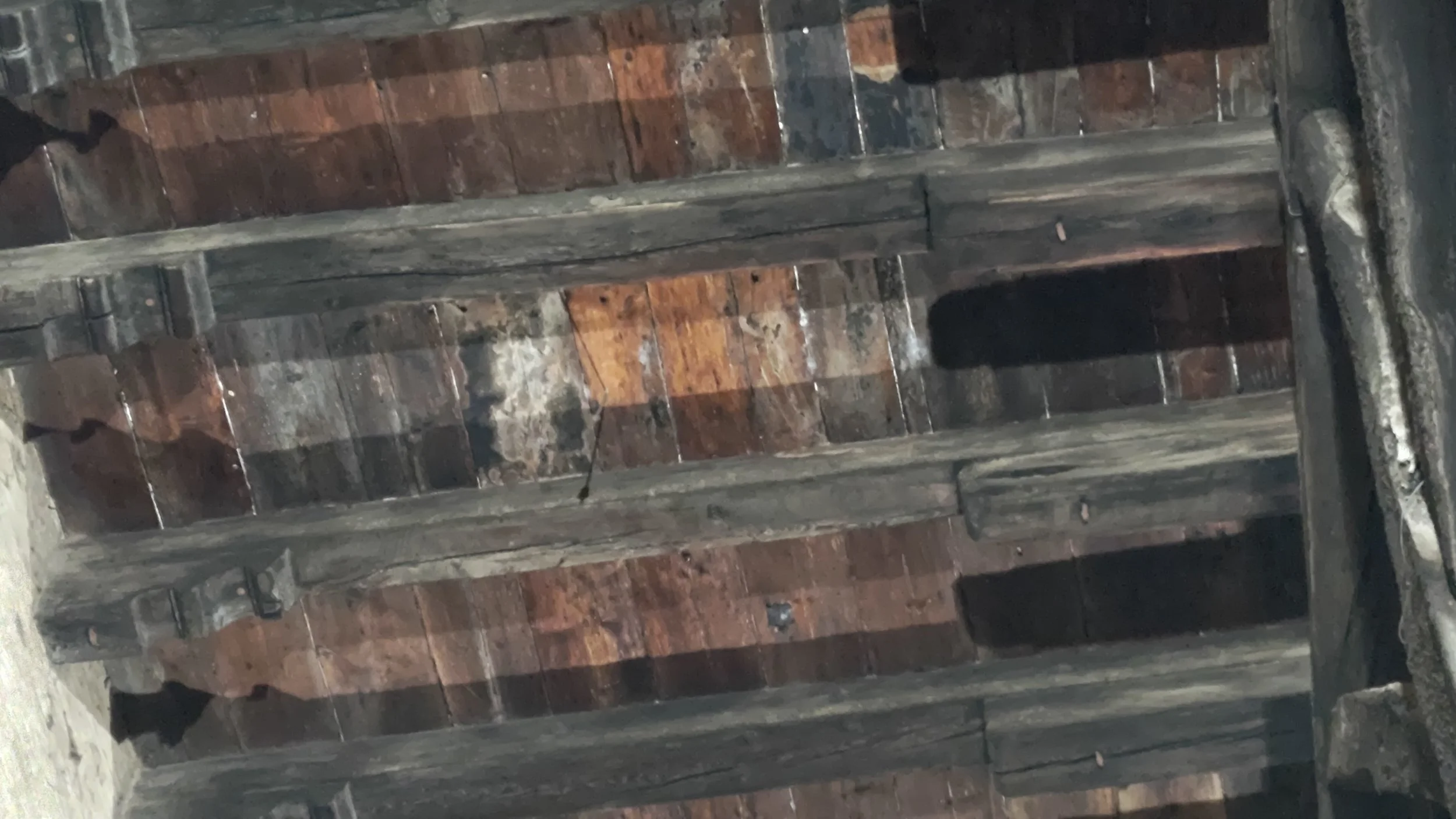
At Strada Maggiore 19, the covered wooden portico of Casa Isolani is held up by 13th-century oak beams nine metres tall, among the highest in the city. Look straight up and, if you're patient, you'll spot three medieval arrows still lodged in the wood — locals link them to a story about hired killers distracted mid-ambush by a woman at a window. They're genuinely easy to miss; most people walk under them without looking up at all.
The Diavolessa of Via d'Azeglio
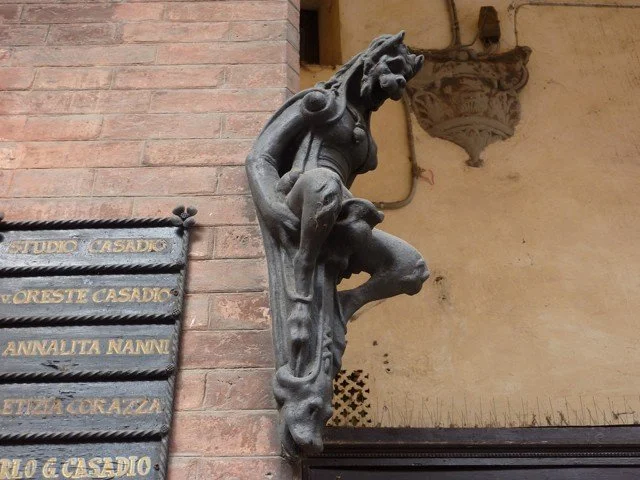
Photo by bibliotecasalaborsa.it
Under the portico at Via d'Azeglio 41-47, a wrought-iron statue with a female body and a dog's head has watched the street for over a century. It's a copy of a Florentine gargoyle by Giambologna, placed at the entrance of what was once the city's foundling hospital: a Madonna and Child carved nearby, on the same wall, was meant to balance it out.
Torre Uguzzoni: Wedged Into the Ghetto
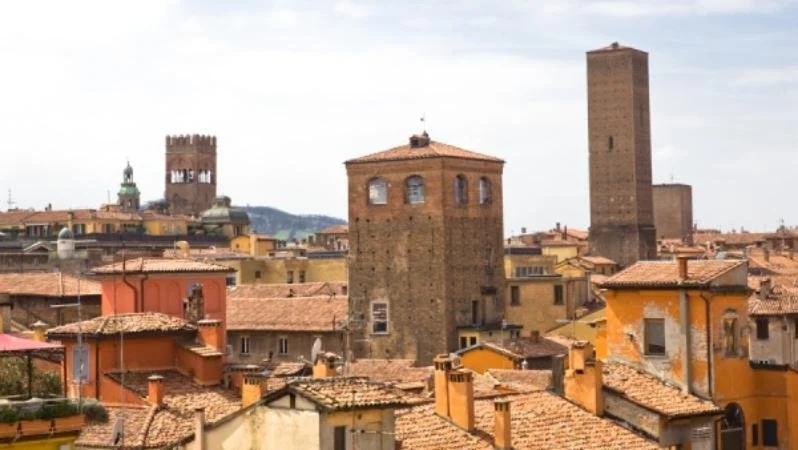
Photo by bolognawelcome.com
In Vicolo Mandria, inside Bologna's former Jewish ghetto, a 32-metre tower from the 12th or 13th century stands welded to the buildings on either side by two overpasses added in the 1500s. You can only see it from the outside, and you have to go looking for it: it's tucked off a lane most people never walk down.
The Devil's Face on Palazzo Bolognini
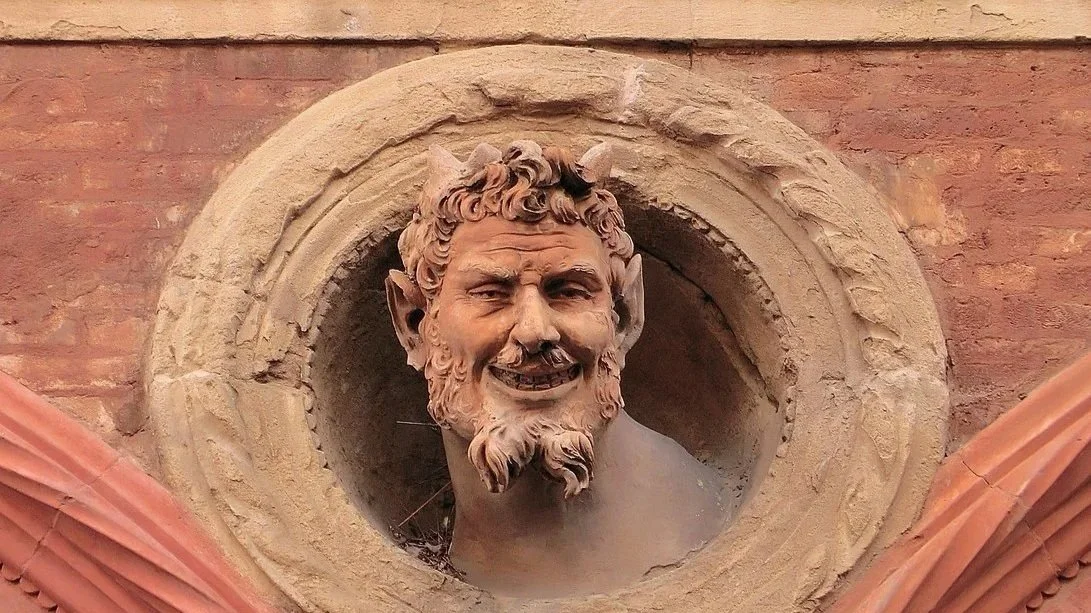
Photo by atlasobscura.com
Piazza Santo Stefano's Renaissance facades are lined with terracotta busts, carved in the 1520s. On Palazzo Bolognini Amorini Salina, among the classical faces, one head breaks the pattern completely: horns, a snarl, and an expression that doesn't belong with the rest. Nobody agrees on why it's there, just that whoever carved it wanted it noticed.
Street Art in Pratello: Ericailcane and Bastardilla
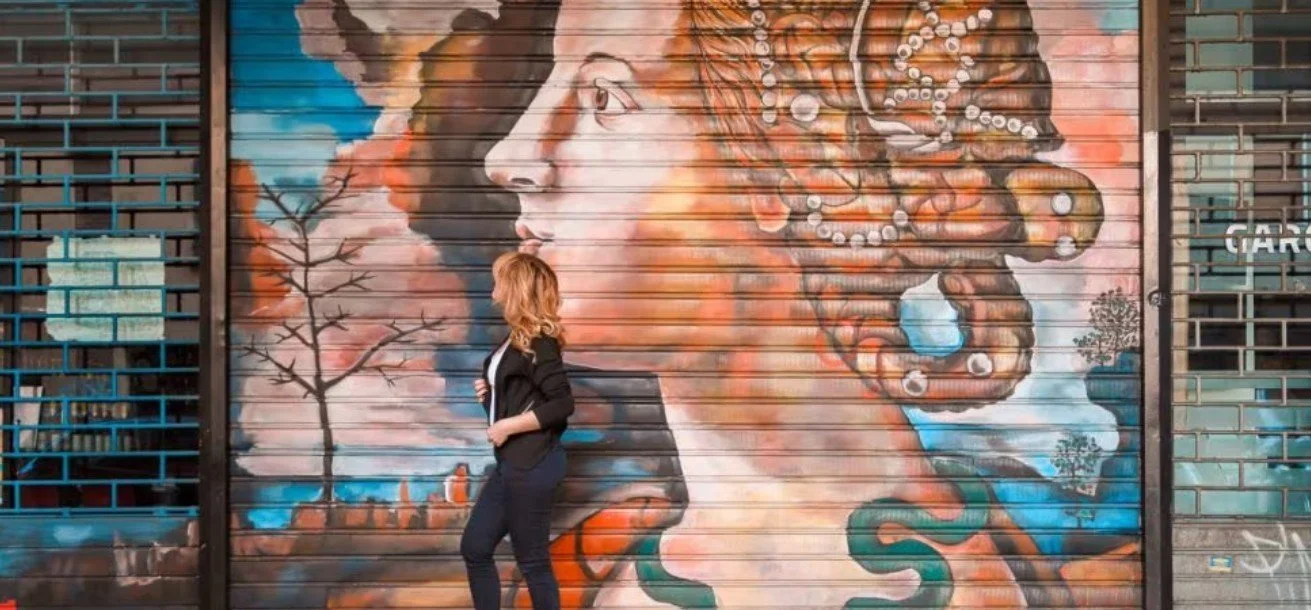
Photo by letygoeson.t
At the far end of Via Calari, next to the church of San Rocco in the Pratello district, two murals face each other on opposite walls. Bastardilla painted a woman using a face mask as a slingshot to launch balloons; Ericailcane painted mice defending themselves with cotton swabs and coins. The pieces went up in 2020, paid for by shopkeepers and residents of the street rather than a public grant.
Discover Bologna with ClueGo
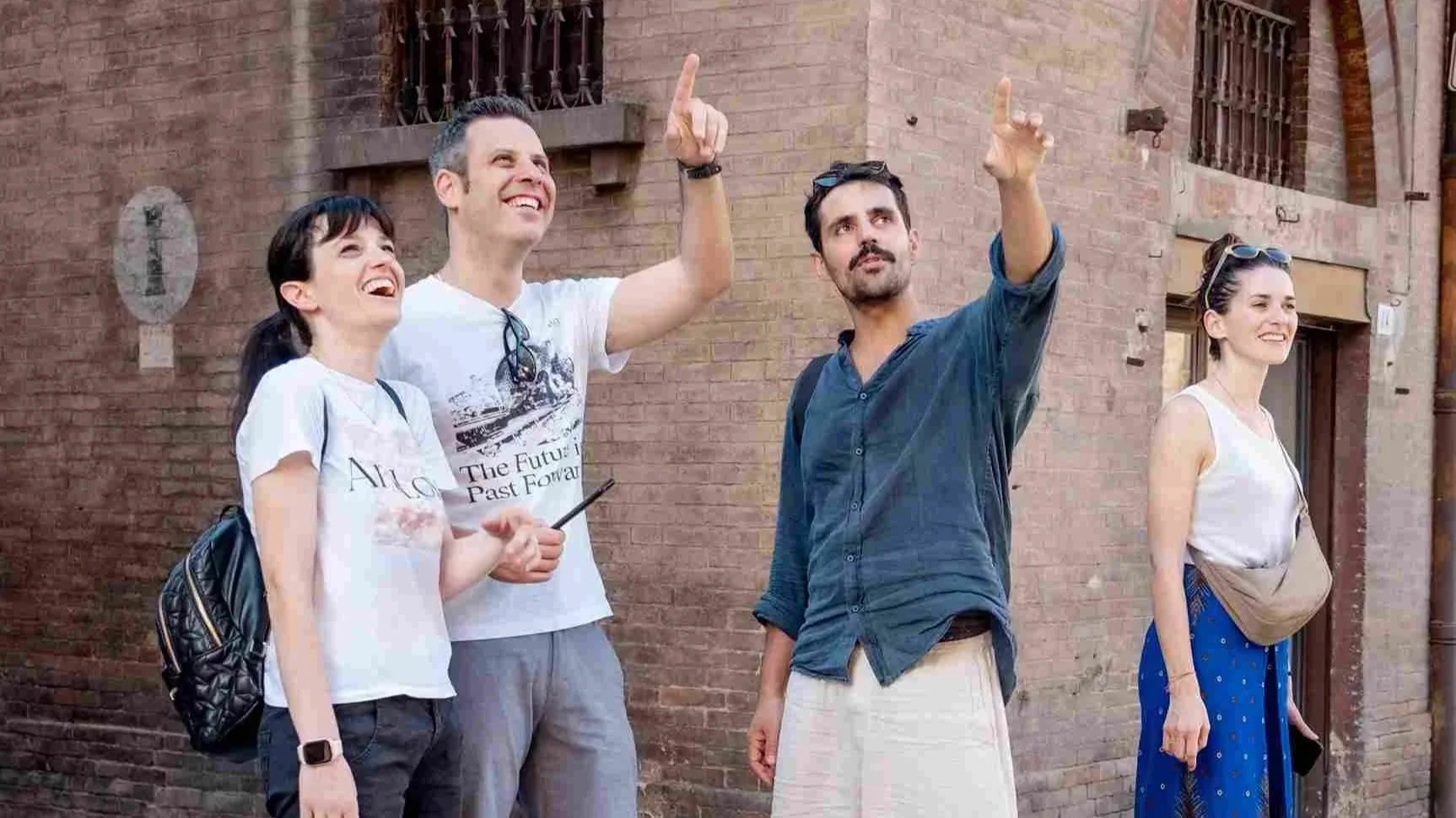
If you've made it through all six of these and want to see how many more details you'd find on your own, there's a way to turn the hunt into a game instead of a checklist.
ClueGo is a self-guided riddle trail played through a web app, no download, no booking, no guide to wait for. Buy a code online, start whenever you're ready, and solve one clue at a time to unlock the next stop. The Bologna trail runs 3 km across 12 stops, about 2-3 hours, from around age 9 up, and the code stays valid for 6 months, so you can pause and pick it up again if it rains or the kids get tired.
👉 Start the ClueGo Bologna trail
Curious to see how many of these secrets you can find, and headed to Emilia-Romagna next? Modena has its own set of fun facts and hidden gems worth a look.
-
Bologna is one of Italy's most historic cities, known for its porticoes, its university and its food. It has a more local, less crowded atmosphere than some of Italy's better-known destinations.
-
Bologna is known for its medieval architecture, the world's oldest university, its UNESCO-listed porticoes (added to the list in 2021), and its food traditions. It carries three nicknames: La Dotta (the learned one), La Grassa (the fat one, for its cuisine) and La Rossa (the red one, for its terracotta rooftops).
-
The Finestrella di Via Piella and its hidden canal, the optical illusion built into Neptune's Fountain, the city's bricked-up windows, and the Portico di San Luca are among the details most visitors walk past.
-
Bologna is very walkable, and many of its main attractions and hidden corners sit close together in the historic centre.
-
ClueGo is a self-guided trail played through a web app: no download, no booking. You solve riddles tied to real spots in the city to unlock each next stop, at your own pace.
-
The Bologna trail works from around age 9 up. Children take part actively in solving the riddles instead of following behind a guide.