
Siena Free Walking Tour: What to Know Before You Book
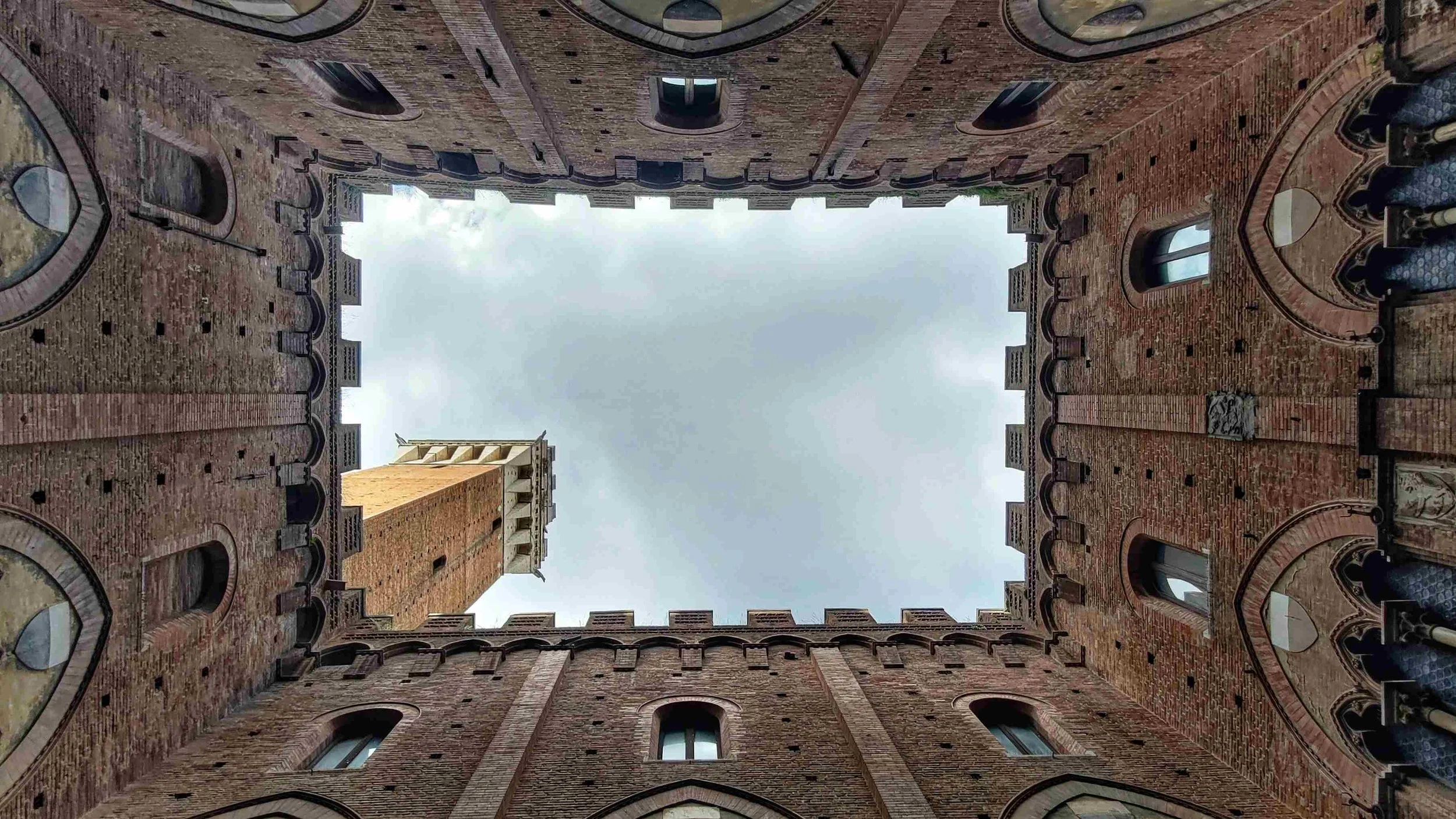
Most people reach Siena on a tight schedule — a day trip out of Florence, a stopover between San Gimignano and the Chianti hills — and a free walking tour is the obvious first move when you're trying to keep costs down. It gets you oriented in a city whose medieval street plan can genuinely throw off a first-time visitor, without locking in a price before you've even landed.
The word "free" carries some fine print, though. This guide covers how Siena's free walking tour actually runs, what it asks of you in return, and what your options look like if a fixed departure time doesn't fit your plans.
In this guide:
What You're Actually Signing Up For
Where the Format Runs Into Limits
Skipping the Schedule Altogether
A self-guided alternative: ClueGo Riddle Tour
Doing the Math on "Free"
FAQ
What You're Actually Signing Up For
Free Walking Tour Italia runs the only free walking tour with a verifiable, active listing in the city, and it operates on tips: no charge to reserve a spot, and whatever you hand the guide afterward is entirely your call. Nowhere on the booking page does the company suggest a figure (although it normally ranges from 10€ to 20€ per person).
The listing puts the tour at 1.5 hours, though a review on that same page describes finishing closer to two — worth factoring in if you've got a lunch reservation right after. It runs in English or Spanish, departing from Piazza della Posta near the Galleria Metropolitan, a short walk from Basilica San Domenico. The route then moves through the Basilica of Santa Caterina, into the Contrada dell'Oca for the Palio backstory, down to Fontebranda, past Santa Maria della Scala and the Duomo, ending in Piazza del Campo.
Reservations go through a Fareharbor system on the operator's own site, so you're booking a real time slot in advance — payment just doesn't happen until the tour is over, in whatever amount you decide on the spot.
Where the Format Runs Into Limits
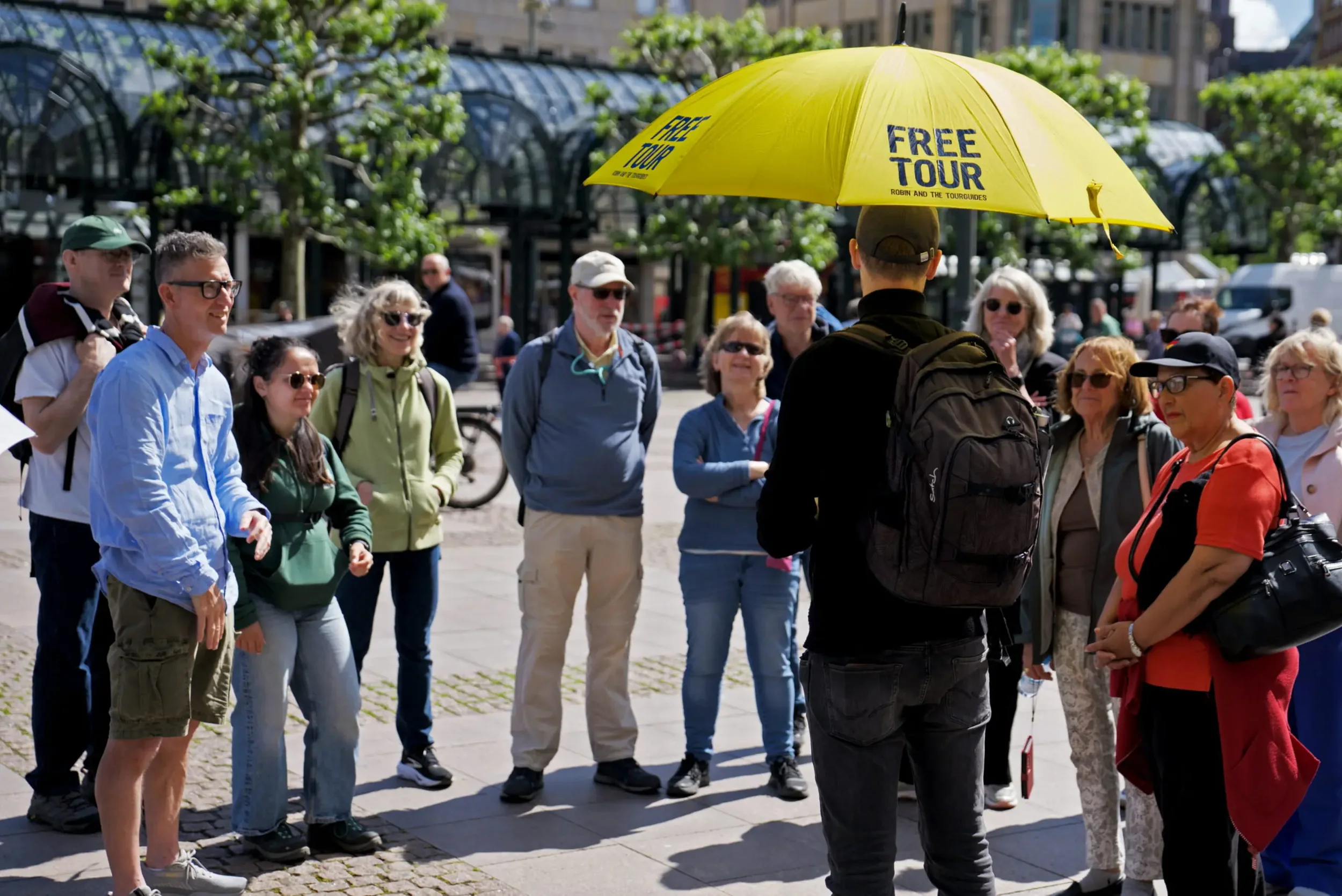
Photo by robinandthetourguides.de
None of this is a knock against the tour. Two things are worth knowing before you commit to that time slot.
There's one departure, no backup option. Miss it — a delayed train, a trattoria lunch that ran long — and there's nothing on the booking page suggesting you can join late or catch a second slot that day; it's rebook for another visit. And once you're on it, you move at the group's pace, through the group's route, which is standard for any scripted tour and isn't hidden anywhere — the tip structure is stated plainly, not buried in terms and conditions. It just means less room to linger at Fontebranda for a better photo, or to breeze past Contrada dell'Oca if contrada history isn't what you came for.
Skipping the Schedule Altogether
If the fixed start time is what gives you pause, there's a format that sits between joining a scheduled group and wandering the vicoli with a paper map and no context: a route someone else has already built, that you walk on your own clock.
Siena has one product designed exactly this way.
A self-guided alternative: ClueGo Riddle Tour
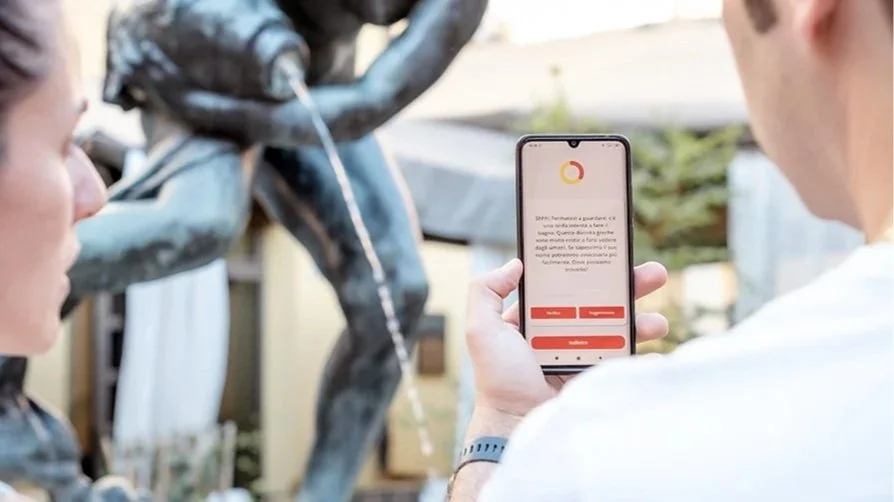
ClueGo swaps the guide for a web app — no download, no account — that turns each stop into a riddle you work out from a detail sitting right in front of you, rather than something explained to you out loud. You buy the code, and nothing starts until you decide it does.
The Siena route, the second built in Tuscany after Florence's, packs 11 riddles of rising difficulty into about 4 km, opening at the Basilica di San Francesco and closing at the Fortezza Medicea, with stops at Piazza del Campo, the Duomo and Baptistery, the Logge del Papa, and Fontebranda along the way. Local creator Matteo Albertazzi built it around the kind of things a guidebook glosses over — a stone head mounted overhead, a "magic" puzzle carved into stone, and what ClueGo bills as the smallest window in the world, tucked somewhere most visitors never think to check.
The gap between the two formats comes down to who's telling the story. A guide narrates live, to a group standing around them. ClueGo folds the narrative into the puzzles themselves, and you move through it at whatever speed you want — with no one there in person if a question comes up mid-riddle. It's not a faster route to the same information; it's a different way of getting at it.
Curious how this unusual tour works? Check out ClueGo Siena
Doing the Math on "Free"
Since price is half the reason anyone compares these two options, it's worth being blunt: a free tour isn't actually free, it's a payment deferred to the end instead of collected up front. You're not choosing between €0 and a fee — you're choosing when you pay and how much.
ClueGo's Siena trail runs €19.99 per group, with each code good for one to five people. Split across five, that's about €4 a head; for two people, closer to €10 each; for a group of four, roughly €5 per person. Whether that beats what you'd tip a guide after a 90-minute tour comes down to your own sense of what the time was worth — but at least the ClueGo figure is fixed, something concrete to weigh against a decision usually made on the spot.
What that price doesn't cover: getting inside anything. The trail runs entirely outdoors, so a stop at the Duomo means buying a separate ticket, which sits anywhere from €7 to €10 depending on the season, per the cathedral's own site. Between the trail and its stops, plan for that as its own line item either way.
The web app works straight from a browser once you're at the starting point, with hints built into every riddle and the option to skip one if it stumps you — nothing about it depends on cell signal beyond loading the next clue. The code stays valid for 6 months after purchase, and once activated, you've got 10 days to finish, so splitting the route across two mornings is entirely workable. It's recommended for players roughly 7 and up, and because the route covers uneven medieval paving, it's worth a quick check with ClueGo directly if anyone in your group needs stroller or wheelchair access.
Frequently Asked Questions
-
Joining costs nothing upfront, but the model runs on tips — you're expected to pay the guide something at the end, at your own discretion. It's not hidden, but it's not zero either.
-
Yes: Free Walking Tour Siena uses an online reservation system for a specific date and time, even though the payment itself only happens afterward, as a tip.
-
It's listed at 1.5 hours on the operator's own page, though some participants describe the same tour running closer to two hours.
-
Yes — ClueGo's Siena trail runs 11 riddles across roughly 4 km, and can be started at any time without a guide or a fixed schedule.
-
The game code and web app access for up to five people. Entry to monuments along the route, including the Duomo, is separate and has to be booked on its own.