
Photo by unamicainviaggio.com
Genoa spends a lot of its tourist life as a name people pass through: a cruise port, a train change on the way to Cinque Terre, a city seen from a car window on the motorway to France. That's a strange fate for a place that once ran one of the wealthiest maritime republics in Europe and still carries the nickname La Superba, "the Superb One."
Genoa has two sides worth covering: a historic centre built for looking at, all striped facades and narrow alleys, and an old port built for doing something in, from museums you walk through to a lift ride up the hillside. This guide covers both, organised so you can see how much of it actually fits into one day.
In this guide:
Can You See Genoa's Highlights in One Day?
What to See in Genoa's Historic Centre
Piazza De Ferrari and Palazzo Ducale
San Lorenzo Cathedral
Piazza San Matteo
Via Garibaldi and the Strada Nuova Museums
Porta Soprana and the House of Columbus
See the Old Town Differently: A Puzzle Trail Through Genoa
What to Do Along Genoa's Old Port
Palazzo San Giorgio and the Bigo
Step Aboard at the Galata Museo del Mare
Climb the Lanterna
Ride the Lift to Spianata Castelletto
If You Have More Than a Day: Boccadasse
FAQ
Can You See Genoa's Highlights in One Day?
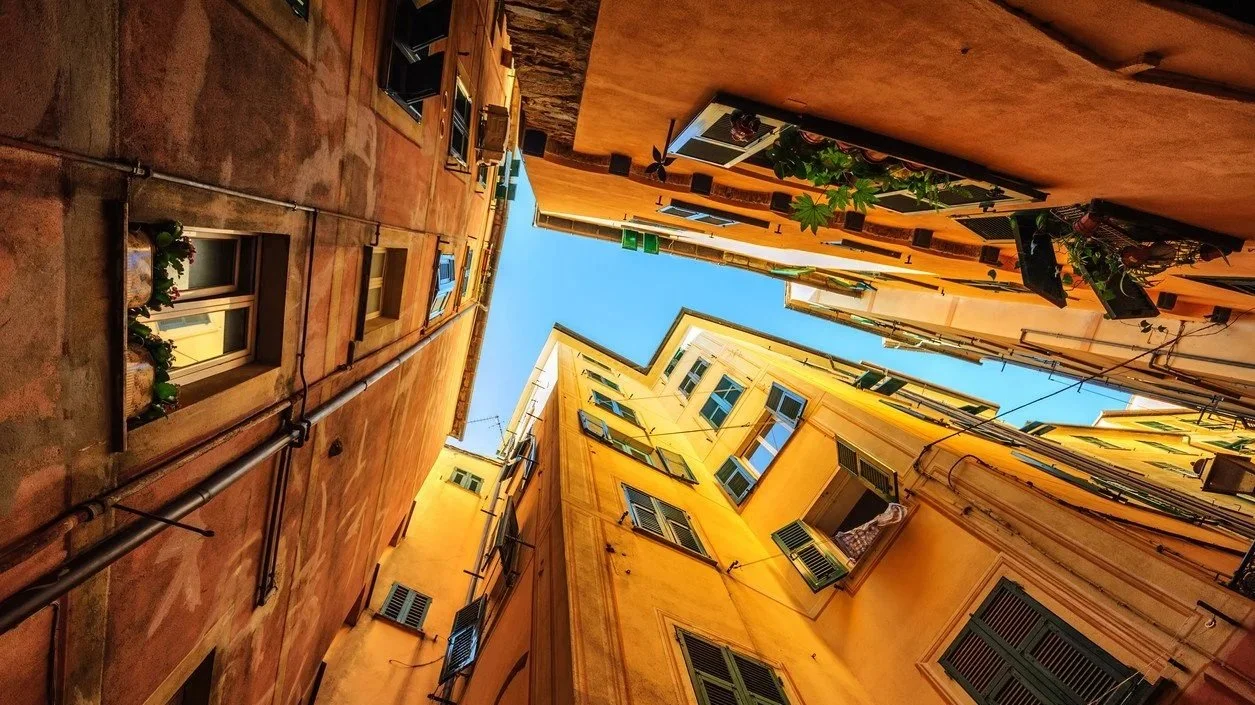
Photo by wonderfulitaly.eu
Most of what's listed here fits comfortably into a single, well-planned day. The historic centre and the Old Port sit close together, everything below is reachable on foot or with one short lift ride, and none of the main stops require long queues if you go at the right time.
The one variable is pace. Walking straight through the centre and the port without lingering takes a few hours; adding time inside the Strada Nuova Museums, the Galata Museo del Mare or the Aquarium stretches the day considerably, since each of those alone can take an hour or two. A second day is only worth planning if you want to go slowly through the museums or add Boccadasse at the end, covered further down.
If you're arriving by train, Genoa's two main stations, Piazza Principe and Brignole, both sit within walking distance of the centre; Piazza Principe is closer to the Old Port. If you're coming from the cruise terminal, the historic centre starts more or less where the port ends, with no real buffer zone in between.
What to See in Genoa's Historic Centre
The old town of Genoa is genuinely maze-like, so it helps to follow one clear line rather than trying to see everything at once.
Piazza De Ferrari and Palazzo Ducale
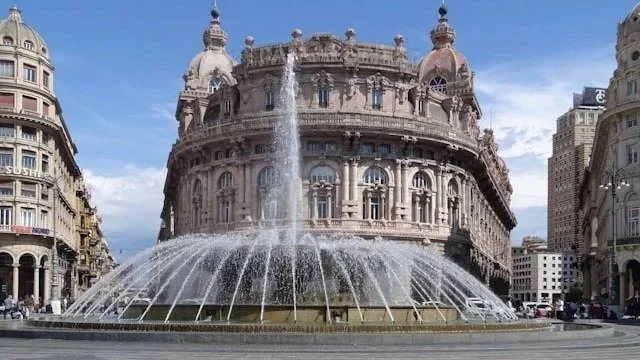
Photo by Belinda Fewings - Unsplash
Start at Piazza De Ferrari, the square that marks the boundary between Genoa's medieval centre and its 19th and 20th-century expansion. Its bronze fountain, added in 1936, sits at the middle of a space ringed by some of the city's grandest buildings, including the Teatro Carlo Felice opera house.
Right off the square stands Palazzo Ducale, seat of the Doges of Genoa from 1339. Construction began in 1298, after Genoese victories over Pisa and Venice, and the neoclassical facade facing Piazza Matteotti was rebuilt by architect Simone Cantoni following a fire in 1777. The building has two entrances, one on each square, so it's an easy stop to fold into the walk rather than a detour. The courtyards are free to walk through; temporary exhibitions inside have their own separate ticket.
San Lorenzo Cathedral
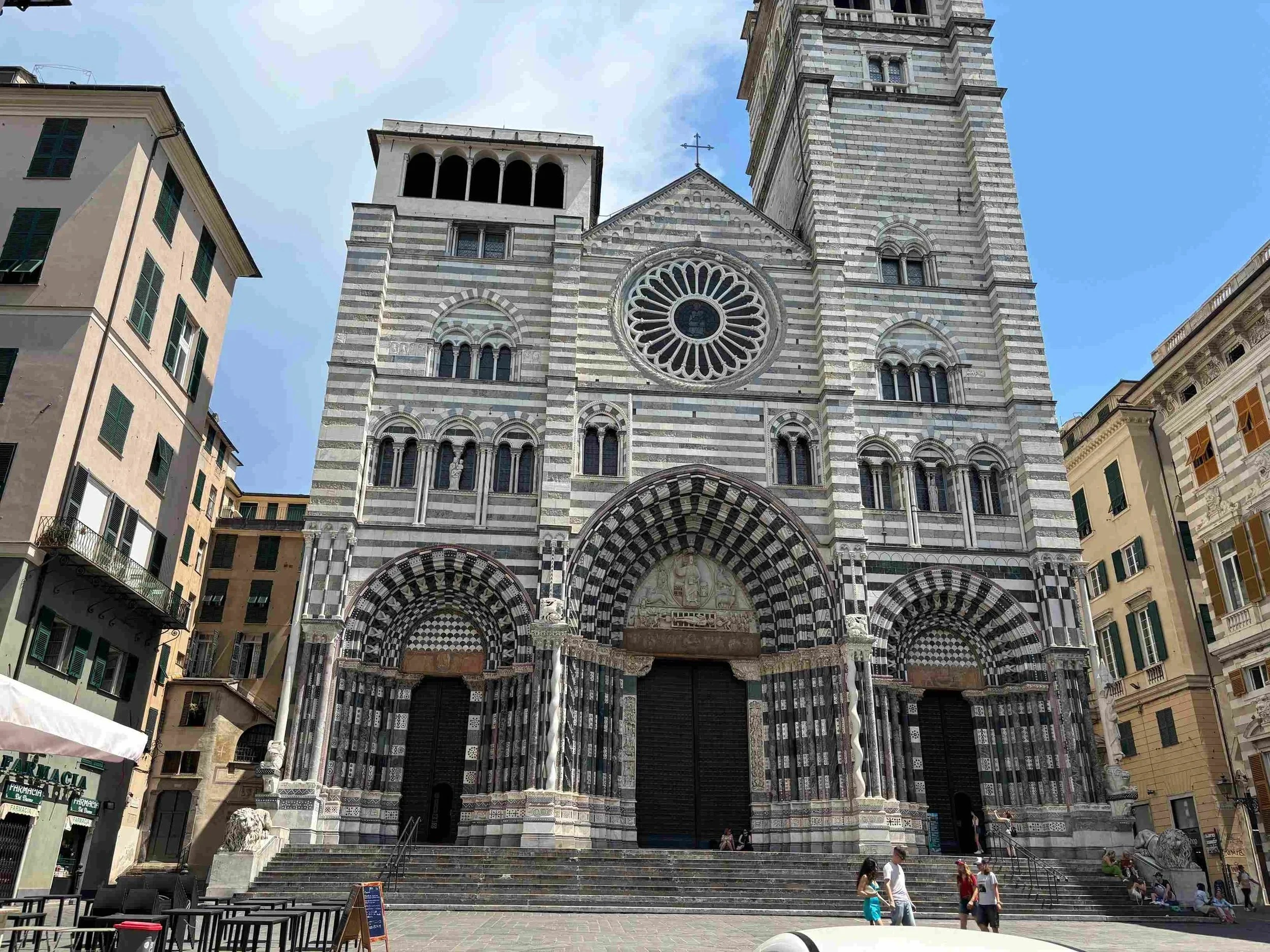
From Palazzo Ducale, a short walk brings you to San Lorenzo Cathedral, easy to recognise from a distance thanks to its facade of alternating black and white marble stripes, completed in the early 14th century. Entry is free, and the cathedral is generally open mornings and afternoons with a midday closure, suspended during services.
Inside the right aisle stands a large naval shell, over a metre tall. On 9 February 1941, during a British naval bombardment of the city, a 381mm shell fired from the battleship HMS Malaya tore through the cathedral's roof and two walls before coming to rest on the floor without exploding. What you see today isn't the original: the real shell was defused and later detonated at sea, and the one on display is an exact replica, kept as a reminder of how close the building came to being destroyed.
If you want the view from above, the cathedral's towers can be climbed for a small fee, generally between 11:00 and 16:00.
Piazza San Matteo
Phoyo by lucadea.com
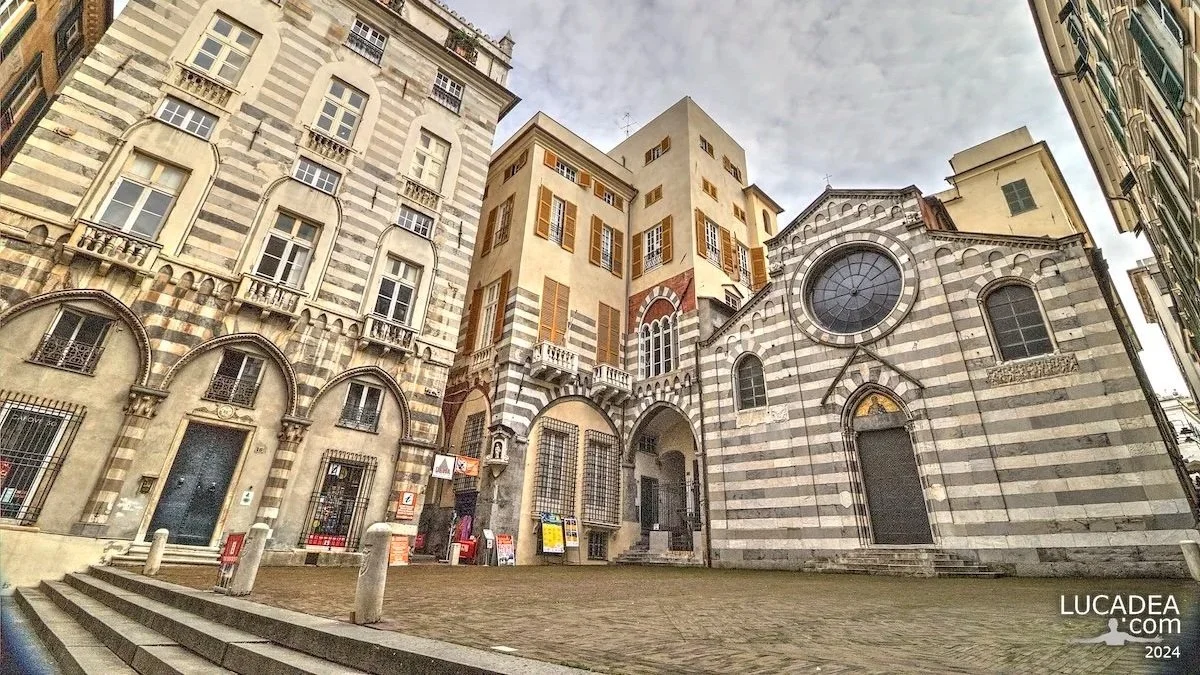
A short climb from the cathedral leads to Piazza San Matteo, laid out in 1278 around a church founded in 1125 by Martino Doria as his family's private chapel. For centuries this was the Doria family's own corner of the city: the church and the palaces around the square, all built in the same black-and-white striped style as the cathedral, belonged to different branches of the family, including the palace given to admiral Andrea Doria in 1528.
There's no ticket and no fixed hours here — it's a small, quiet square you can walk into any time, and one of the best-preserved medieval corners of the city.
Via Garibaldi and the Strada Nuova Museums
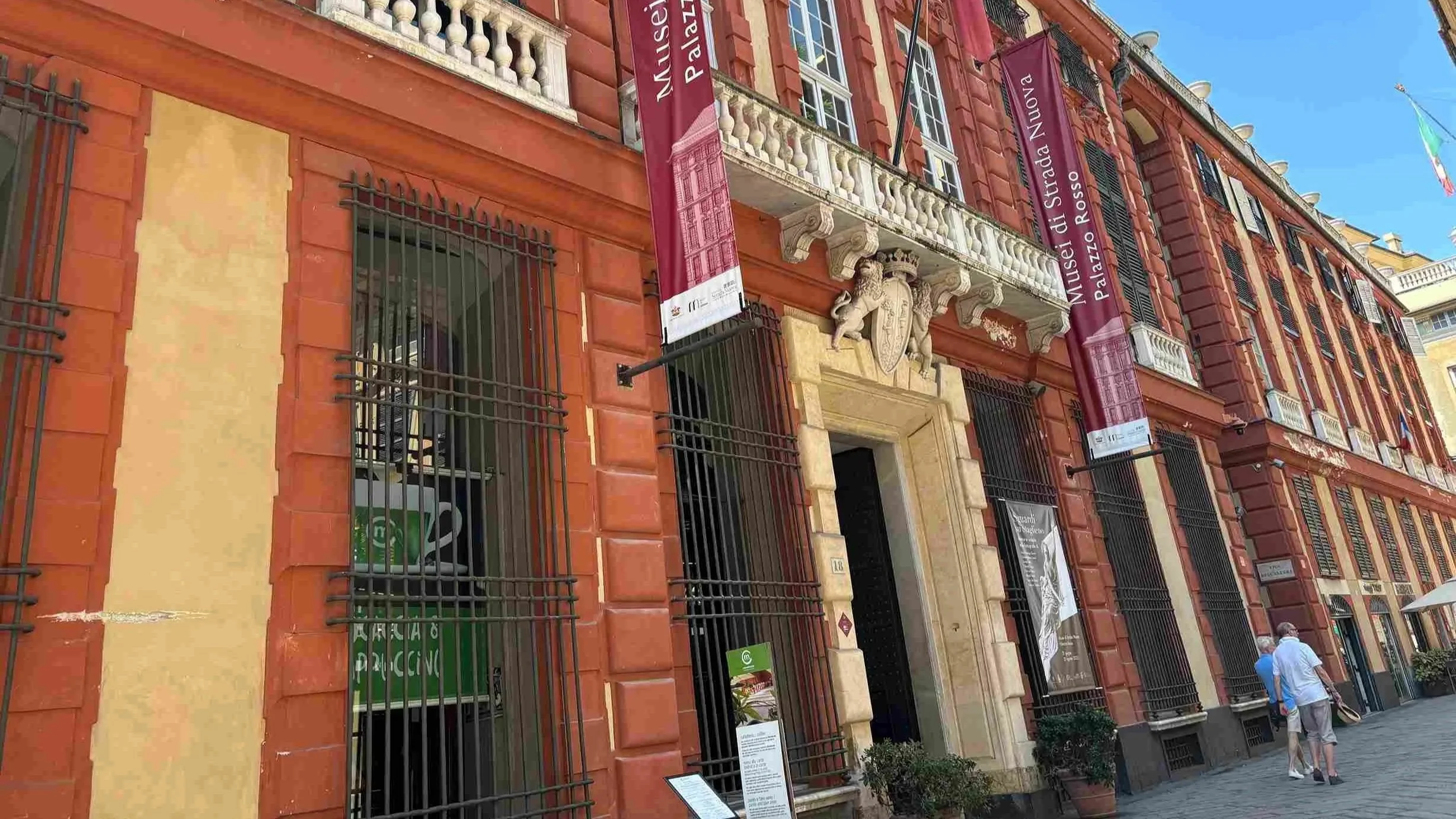
Continue to Via Garibaldi, once known as Strada Nuova, laid out by Genoa's aristocratic families between the mid-16th and late 18th centuries as a showcase street of private palaces. Since 2006, the street and 42 of its palaces have been a UNESCO World Heritage Site, listed as "Genoa: Le Strade Nuove and the system of the Palazzi dei Rolli."
Most of these buildings are still private and closed to visitors, except during the twice-yearly Rolli Days, when dozens open their doors for free. Three of them, however, are open year-round as museums: Palazzo Rosso, Palazzo Bianco and Palazzo Doria Tursi, together known as the Strada Nuova Museums. A single combined ticket (around €14, reduced €9, as of a 2026 pricing update) covers all three, and includes a Caravaggio in Palazzo Bianco and Paganini's violin in Palazzo Tursi. In summer the museums open daily; for the rest of the year, only Palazzo Rosso opens on Mondays.
Porta Soprana and the House of Columbus
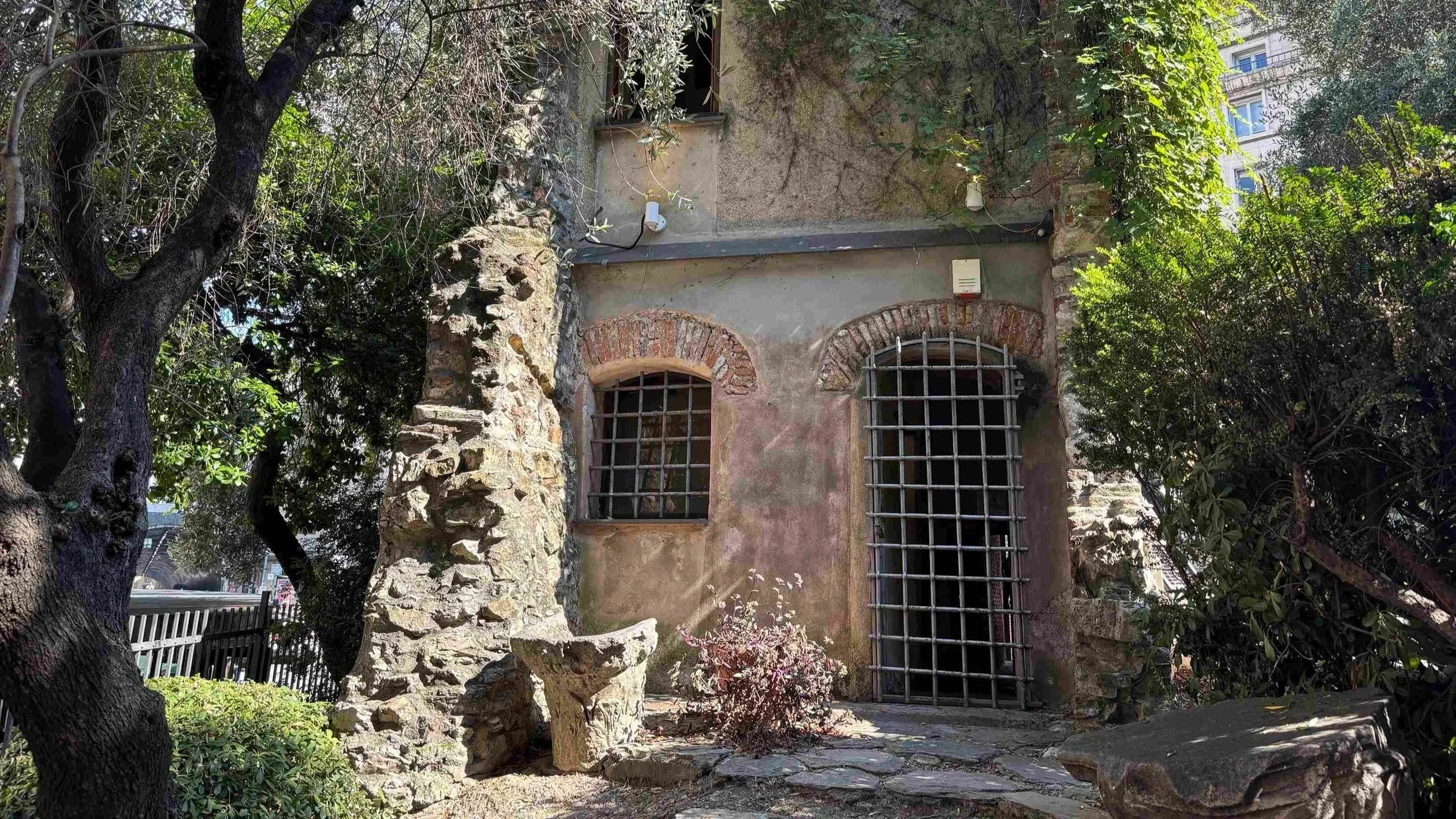
Finish the walk at Porta Soprana, a 12th-century gate with two well-preserved towers that once marked the edge of the medieval city walls. Just below it stands the House of Columbus, a reconstructed building where, according to archival records, Christopher Columbus's family moved in 1455, when he was four years old; the ground floor served as his father's wool workshop. The original house was damaged in a French naval bombardment in 1684 and rebuilt afterwards. It's a short visit, generally 10 to 20 minutes, with a ticket costing a few euros.
See the Old Town Differently: A Puzzle Trail Through Genoa

If you want to cover most of what's above without stopping every few minutes to check a map, a self-guided puzzle trail is one of the more efficient ways to do it. It's also the clearest example of how the city's "what to see" and "what to do" sides overlap: you're looking at the same landmarks, but working through them rather than just walking past.
ClueGo Genoa works through a Web App, so there's nothing to download and no fixed starting time or booking required. The route covers 10 stops over about 3 km, starting at Piazza De Ferrari and finishing at Porta Soprana, taking in the Carlo Felice Theatre, Palazzo San Giorgio, Via Garibaldi, San Lorenzo Cathedral and the Old Port along the way. It takes around 2 to 3 hours without breaks, is available in English and Italian, and works for groups of 1 to 5 people, with a recommended minimum age of 7.
Instead of stopping every few minutes to check a map and work out which street leads where, the puzzles themselves guide you from one stop to the next, with directions built into the app. You don't need to keep several guides open on your phone while trying to piece together a route through streets that famously confuse GPS — which, in practice, is one of the reasons the historic centre fits into a single day more easily than it looks like it should. The whole trail is outdoors and doesn't require any admission tickets, though the terrain and stairs in the old town mean it isn't well suited to strollers or wheelchairs. You can pause and resume whenever you need to.
What to Do Along Genoa's Old Port
The Old Port picks up where the historic centre leaves off, both geographically and in what there is to do: fewer buildings to look at from outside, more things to walk into.
Palazzo San Giorgio and the Bigo
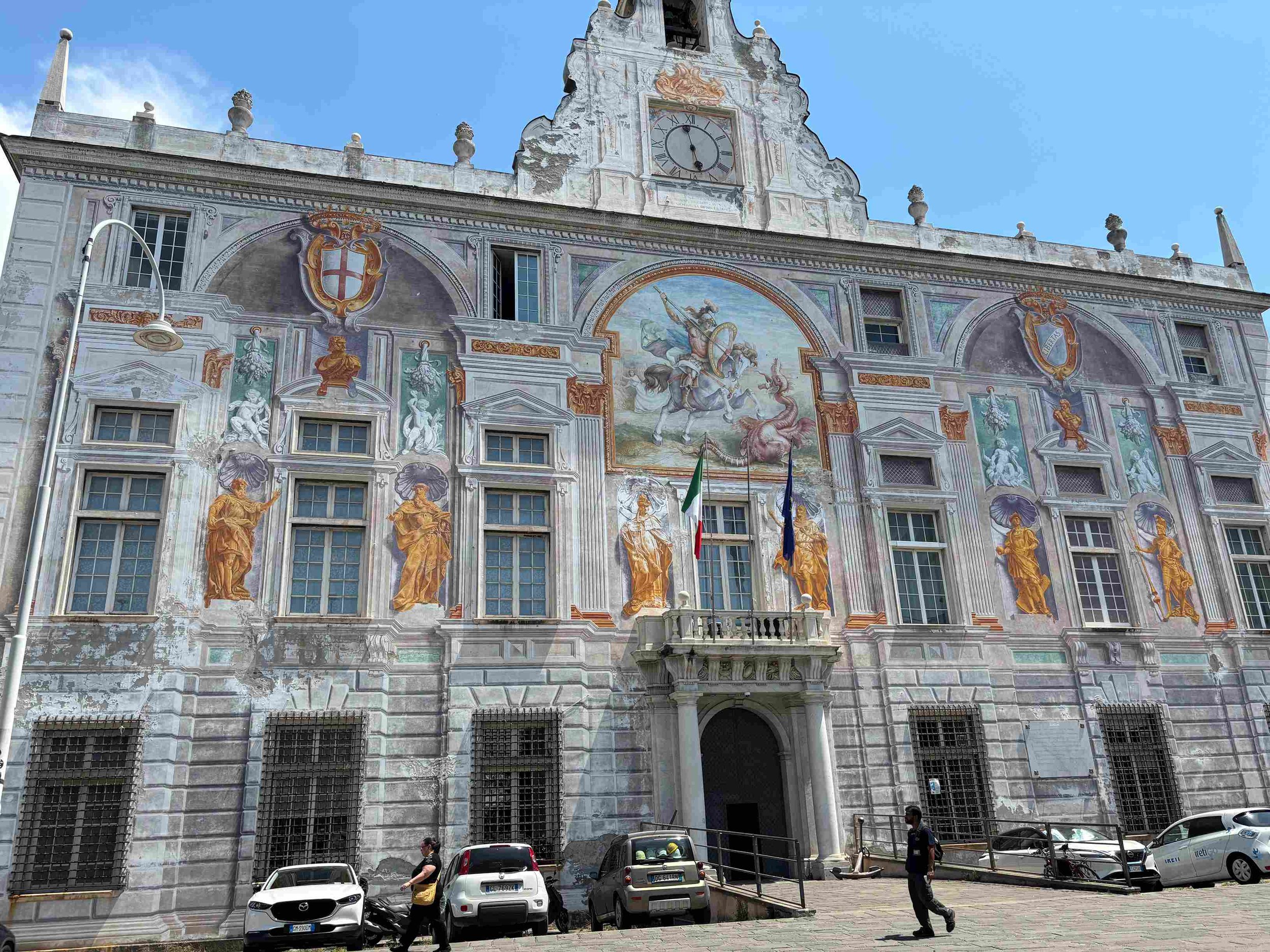
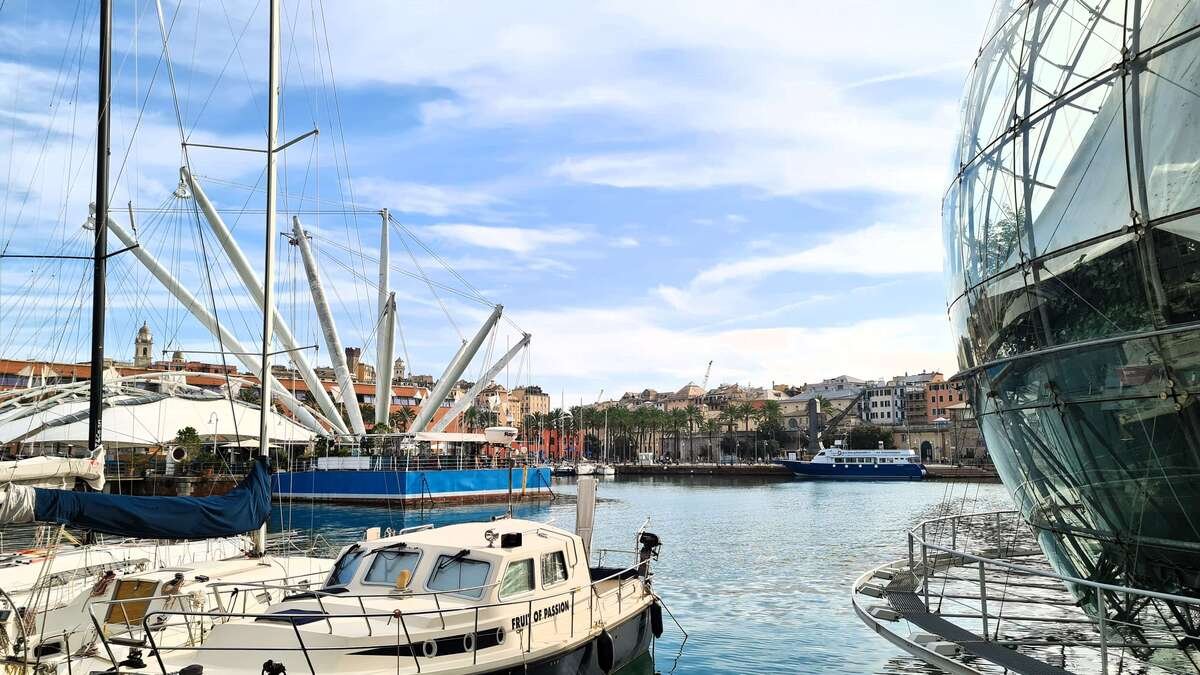
The Old Port, Porto Antico, was redeveloped by architect Renzo Piano in the early 1990s, ahead of the 1992 celebrations marking 500 years since Columbus's voyage to the Americas. On the way in, you'll pass Palazzo San Giorgio, built in 1260 and later home to the Bank of Saint George, an institution that managed the Republic of Genoa's public debt from the 15th century onward. Its seaward facade, frescoed in 1608 with an image of Saint George slaying the dragon, faces the water; the medieval side, in red brick, faces the city. It's now the headquarters of Genoa's Port Authority and isn't generally open to the public, so plan to see it from the outside, unless you happen to be visiting during Rolli Days or another open-house event.
Further along stands the Bigo, also designed by Piano and shaped like a ship's crane, with a panoramic lift that raises visitors around 40 metres above the port for a 360-degree view. Right beside it is the Aquarium of Genoa, the largest in Italy, holding over 12,000 animals; entry is by timed slot, so it's worth booking online in advance if you plan to go in, since prices vary considerably by date and a visit can take a couple of hours on its own.
Step Aboard at the Galata Museo del Mare
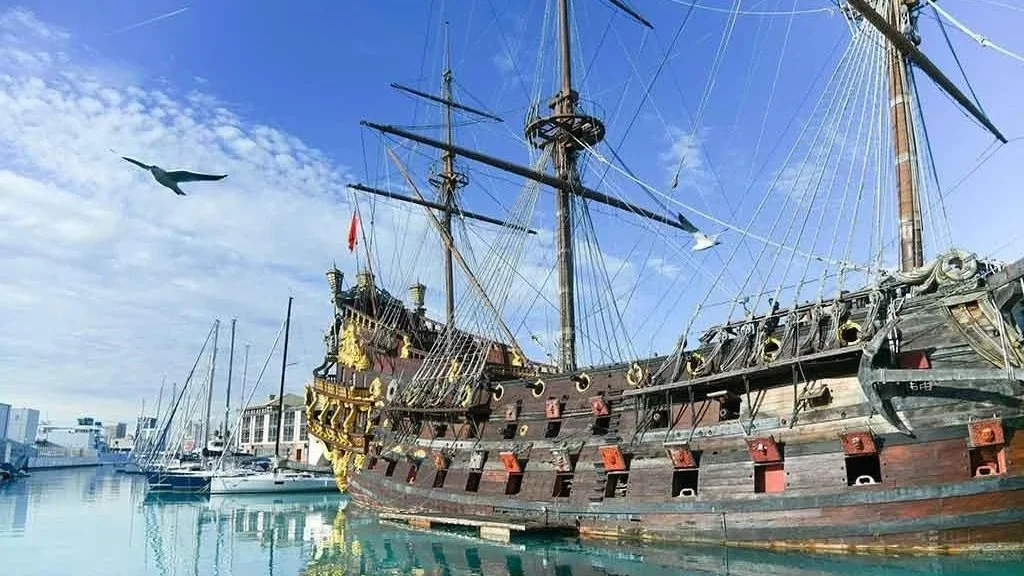
Photo by visititaly.it
A short walk along the Darsena, the old shipyard basin, brings you to the Galata Museo del Mare, the largest maritime museum in the Mediterranean, opened in 2004 when Genoa was European Capital of Culture. Spread across five floors, it covers the city's naval history from the age of the galleys to 20th-century emigration, and includes a full-scale reconstructed 17th-century galley and a real submarine, the Nazario Sauro, moored outside. A visit takes around two hours; the submarine tour adds another 20 to 25 minutes.
Climb the Lanterna
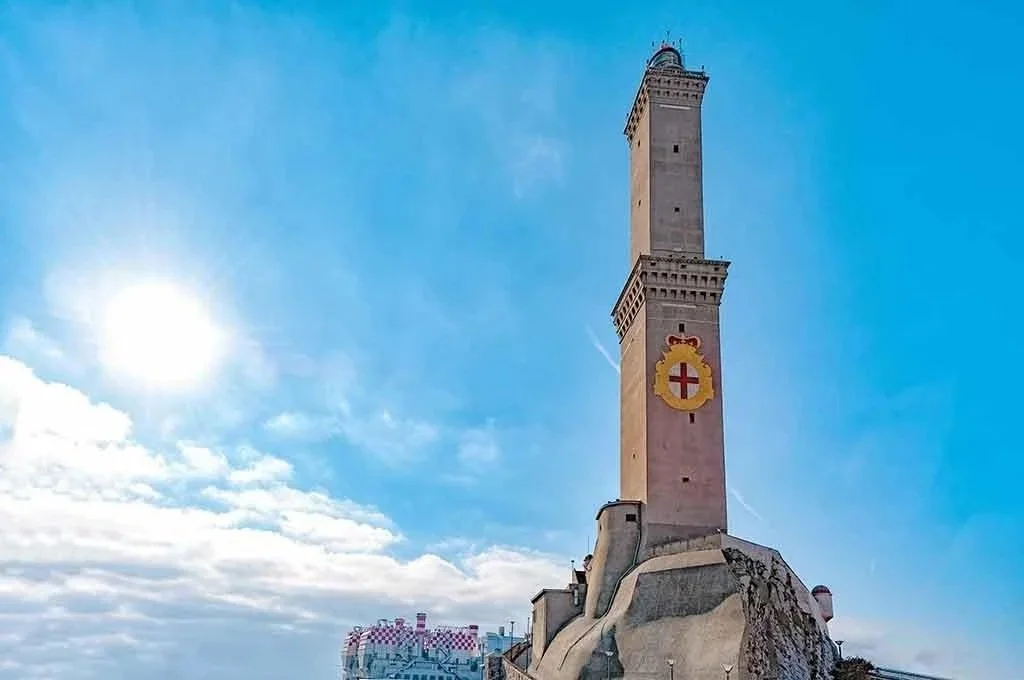
Photo by visititaly.it
From the port, an 800-metre walkway built in 2001 follows the line of the old 17th-century walls out to the Lanterna, Genoa's lighthouse and the symbol of the city since the Middle Ages. A beacon has stood on this spot since 1128, though the tower in its current form dates to 1543; at 77 metres, standing on a 40-metre rock, its light sits 117 metres above sea level, making it the tallest lighthouse in the Mediterranean and the second-tallest in Europe. Visits, including the climb to the first terrace, are generally limited to Friday, Saturday and Sunday, so it's worth checking this against whatever day you're in town before counting on it.
Ride the Lift to Spianata Castelletto
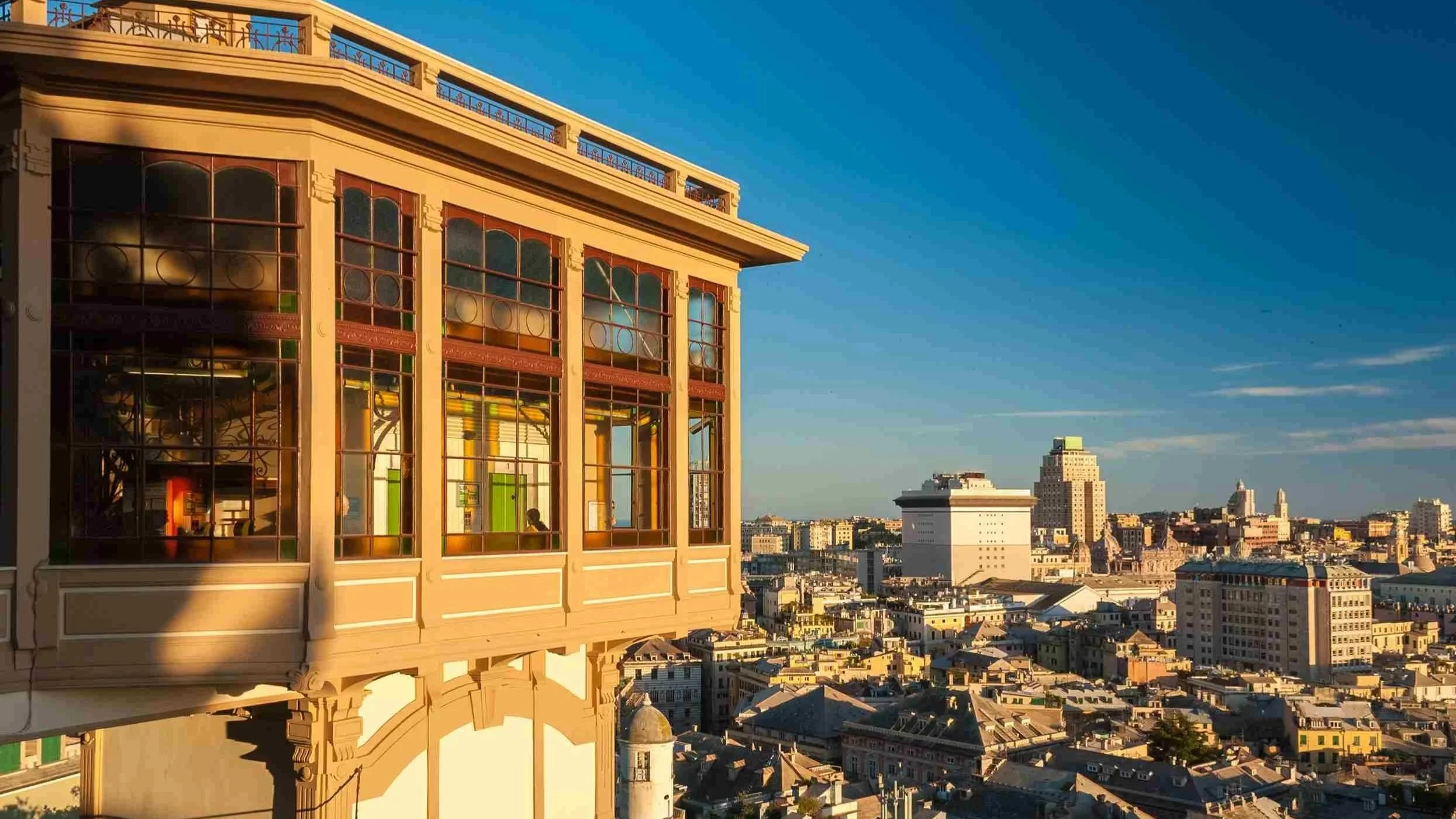
Photo by visitgenoa.it
For a different perspective on the city, head to Spianata Castelletto, a viewpoint on the hillside above the centre, a few minutes' walk from Via Garibaldi. The quickest way up is the Liberty-style public lift from Piazza Portello, in operation since 1909, which covers the climb in under two minutes for the cost of a normal city bus ticket. The viewing terrace itself is free and open around the clock, with a panorama that takes in the Old Port, the Lanterna, and, on clear days, the coast as far as Portofino.
If You Have More Than a Day: Boccadasse
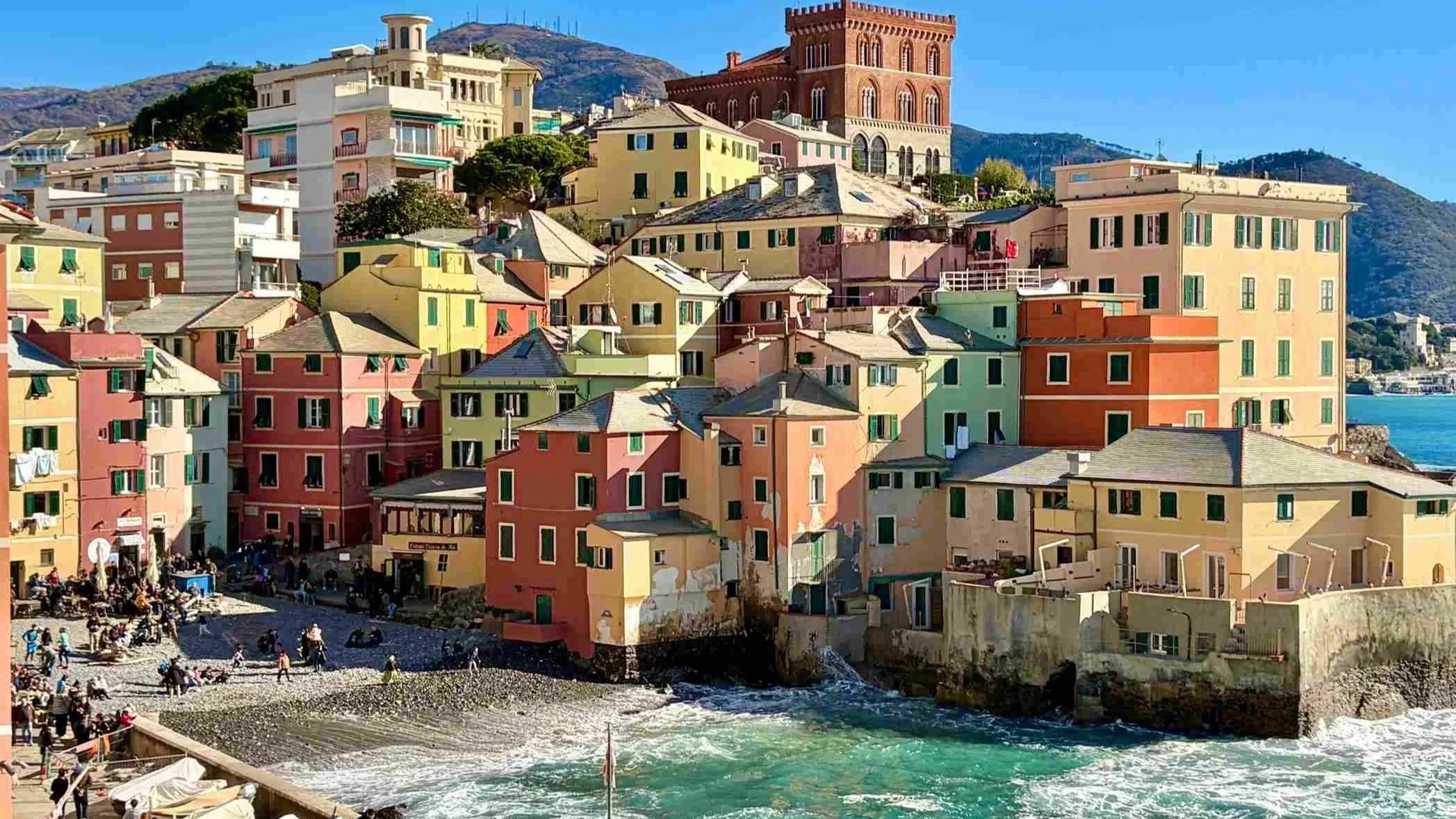
Photo by Wikipedia
Everything above fits within Genoa's historic centre and its port, and most of it fits into one day. If you're staying longer and want to go a little further, Boccadasse is the one stop worth the extra distance: a former fishing village folded into the city's eastern edge, about 4 km from Piazza De Ferrari, reachable by bus (lines 15, 31 or 42) or on foot along the roughly 40-minute Corso Italia seafront promenade. Pastel-coloured houses cluster around a pebble beach where fishing boats are still pulled up onto the shore.
Frequently Asked Questions
-
Most of the main sights, yes: the historic centre and the Old Port sit close together, and everything from Palazzo Ducale to the Lanterna is reachable on foot or with one short lift ride. Spending longer in the museums, or adding Boccadasse, is what tends to push a visit into a second day.
-
San Lorenzo Cathedral, Piazza San Matteo, Via Garibaldi's Strada Nuova Museums and Porta Soprana cover the historic centre. The Old Port adds the Galata Museo del Mare and the Lanterna as the city's main maritime landmarks.
-
The Old Port has the most active options: the Aquarium, the Galata Museo del Mare's submarine tour, and the lift up the Bigo or up to Spianata Castelletto. A self-guided puzzle trail through the historic centre is another way to spend the day actively rather than just walking past buildings.
-
Yes, though it's genuinely maze-like: the caruggi are narrow, GPS signal is unreliable between the tall buildings, and it's easy to lose your bearings. Sticking to a planned route, rather than wandering freely, makes the old town far easier to navigate.
-
No. Visits are generally limited to Friday, Saturday and Sunday, so it's worth checking current hours before building it into your day.
-
Yes. Entry is by timed slot, and prices vary by date and booking channel, so it's worth reserving online rather than arriving without a slot.