
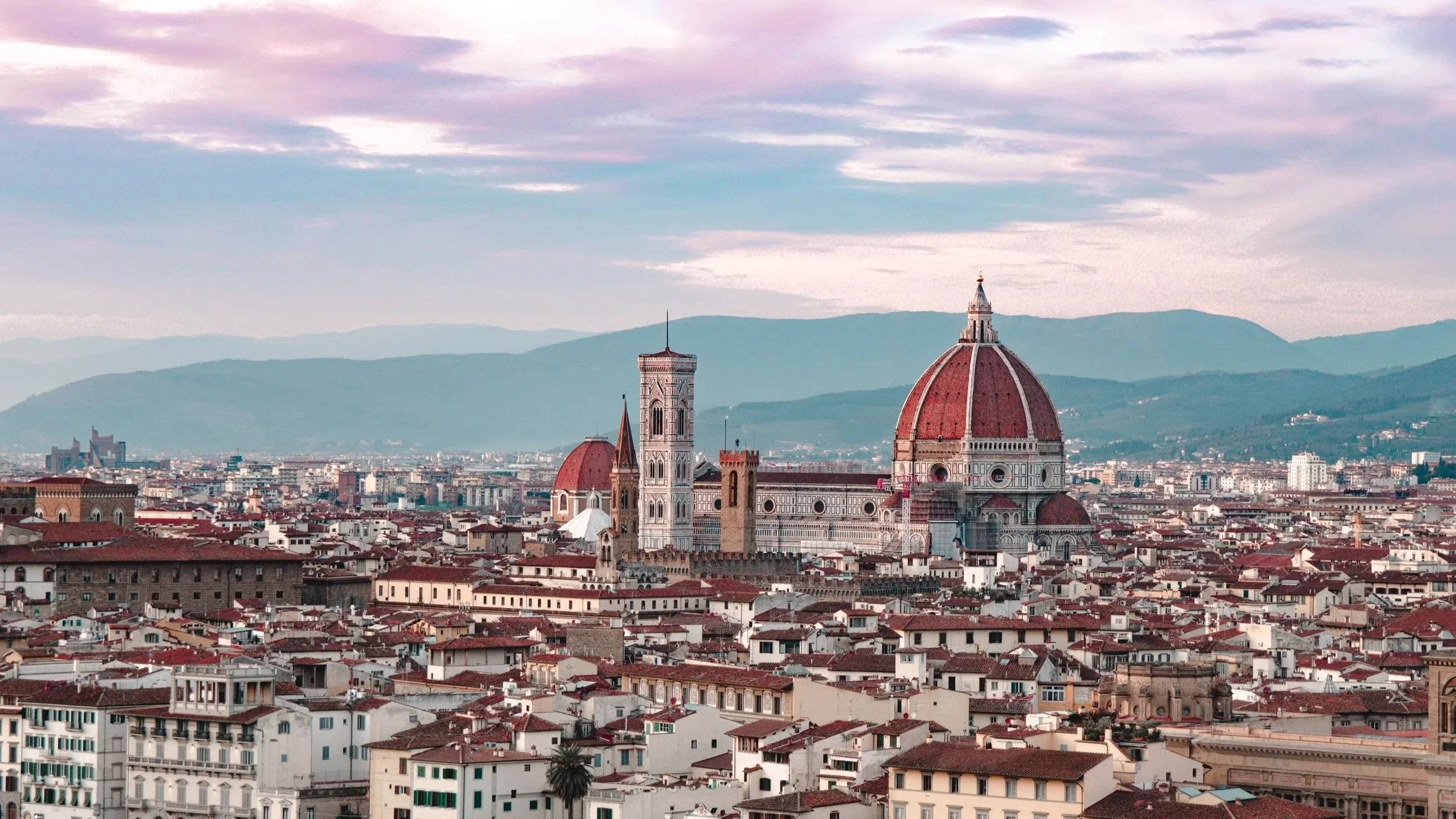
Photo by Nicola Pavan - Unsplash
If you're mapping out a trip to Florence, the practical question isn't really "what's worth seeing" — most lists agree on that within the first five minutes of searching. The real question is how those sights sit in relation to each other, which ones need a booked time slot weeks in advance, and whether you can actually string them together into a day that doesn't involve backtracking across the same bridge three times.
Florence's historic centre is small enough that this is more manageable than it looks on paper. The Duomo, Piazza della Signoria, the Uffizi and the Ponte Vecchio sit within about a fifteen-minute walk of each other, all on the same side of the Arno. The complications come from elsewhere: timed reservations for the Duomo's dome, a separate queue system for the Accademia across town, and a couple of sights — Piazzale Michelangelo and San Miniato al Monte among them — that reward the climb but do take a genuine chunk of the afternoon.
This guide walks through what those sights actually are, how they connect on the ground, and what a realistic one-day route looks like if that's what you have. If you've got a second day, there's a section on what to add and why.
In this guide:
The Sights That Anchor a Visit to Florence
Is One Day Enough for Florence's Main Sights?
What to Add If You Have a Second Day
Is Florence Walkable?
A Different Way to Walk the Centre
Frequently Asked Questions
The Sights That Anchor a Visit to Florence
The Duomo Complex: A Cathedral, a Dome and a Reservation You Need in Advance
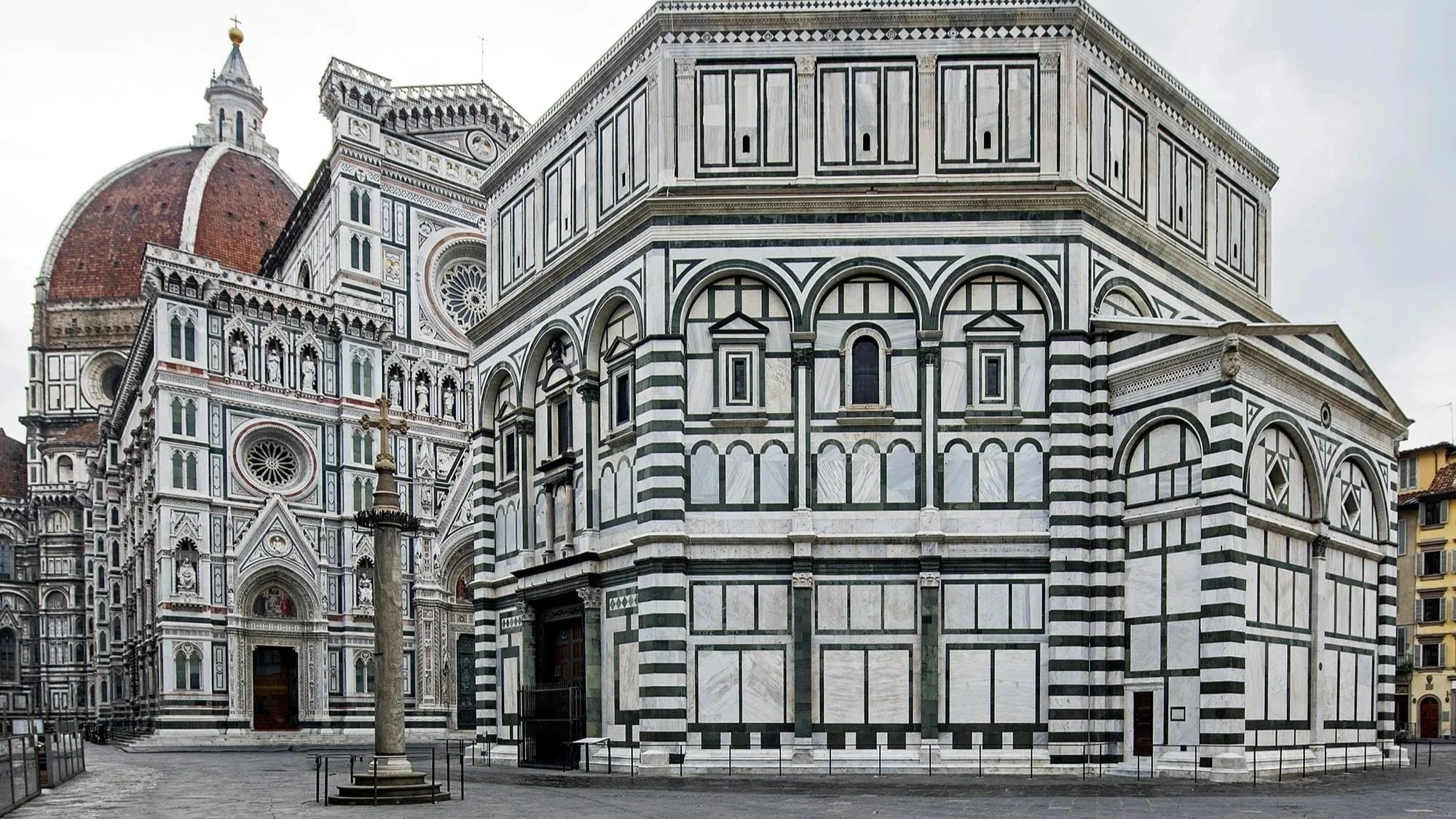
Photo by firenze.it
The Cattedrale di Santa Maria del Fiore sits at the geographic and historical centre of Florence, and almost every walking route through the city passes its façade at some point. Entry to the cathedral nave itself is free and requires no ticket, but the hours are tighter than visitors expect: Monday to Saturday 10:15 to 15:45, closed to tourists on Sundays outside of Mass times.
Brunelleschi's Dome is a separate matter entirely. Climbing the 463 steps to the base of the lantern requires a timed-entry Brunelleschi Pass — there is no walk-up entry, ever, and since 2025 the tickets have been name-registered, with ID occasionally checked at the door. Hours run Monday to Friday 8:15 to 18:45, Saturday 8:15 to 16:30, and Sunday only from 12:45 to 16:30, with the last entry roughly 40 minutes before closing. In summer, slots can sell out a month ahead. The dome closes for scheduled maintenance November 16–20, 2026, and Giotto's Bell Tower — the alternative climb, with no reservation required and its own 414 steps — closes for maintenance November 9–13, 2026.
The Baptistery, facing the cathedral's west doors, is where the famous "Gates of Paradise" bronze panels are (the originals are in the Opera del Duomo Museum; what's on the building today is a replica). It's covered by the same combination pass as the dome and keeps its own separate hours, open daily.
Piazza della Signoria: Florence's Open-Air Sculpture Collection
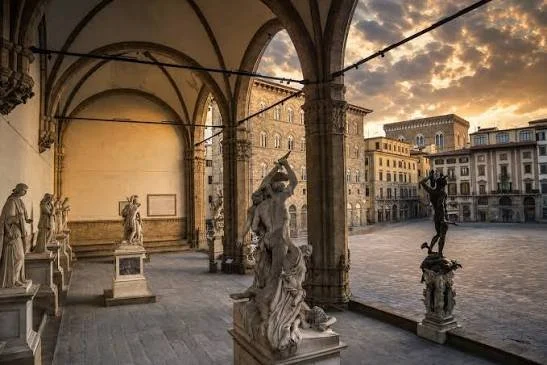
Photo by @visiteguiatefirenzetoscana
A five-minute walk south of the Duomo along Via dei Calzaiuoli brings you to Piazza della Signoria, dominated by the crenellated tower of Palazzo Vecchio. The square costs nothing to walk through and is arguably the densest concentration of Renaissance sculpture in the city that you don't need a ticket for: Ammannati's Neptune Fountain, a copy of Michelangelo's David standing where the original once stood, and the Loggia dei Lanzi sheltering works including Cellini's Perseus with the Head of Medusa. Palazzo Vecchio itself, the town hall, does charge for entry to its upper rooms and tower, but the square and loggia are open at all hours.
The Uffizi: Deciding Whether to Go Inside
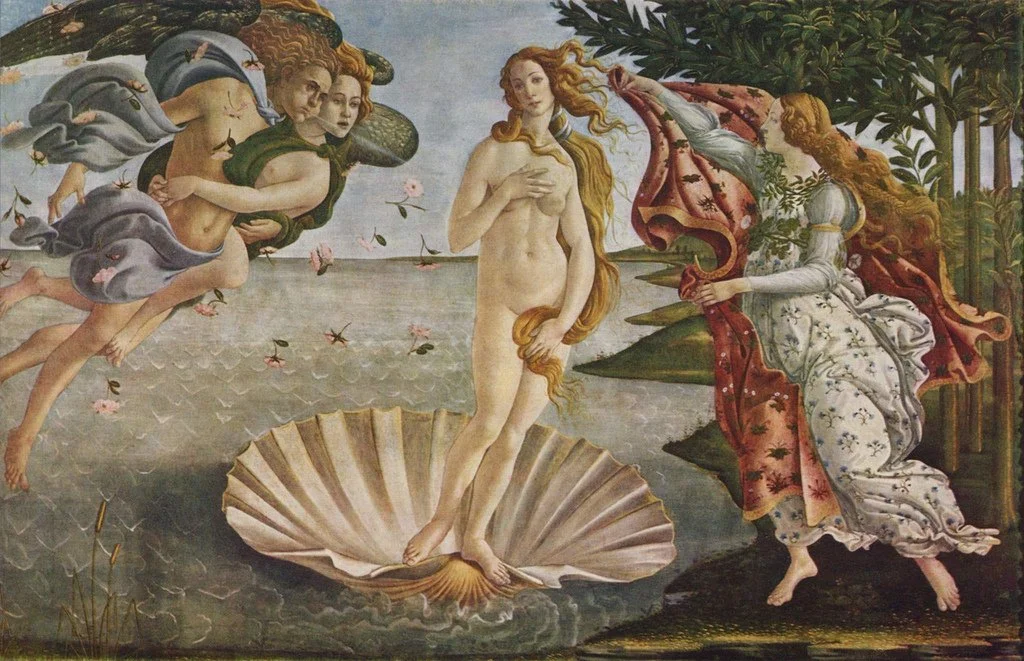
The Uffizi Gallery is a two-minute walk from Piazza della Signoria, in the U-shaped building that gives the museum its name (uffizi means "offices" — it was built as the administrative headquarters of the Medici). This is the point in a Florence itinerary where the real decision gets made: the Uffizi holds Botticelli's Birth of Venus and Primavera, along with major works by Leonardo, Caravaggio and Titian, but a meaningful visit needs at least two hours, and the museum is genuinely large enough to absorb half a day if you let it.
The Uffizi is open Tuesday to Sunday, 8:15 to 18:30, with last entry at 17:30, and closed every Monday. Booking ahead is strongly recommended in high season — during peak months the ticket-office queue alone can run over two hours. A new-for-2026 afternoon ticket, valid from 16:00, costs €16 at the door or €20 online, which is a reasonable trade if you only have a couple of hours and want to see the headline rooms rather than all 101 of them.
Ponte Vecchio and the Oltrarno: Crossing to the Quieter Side
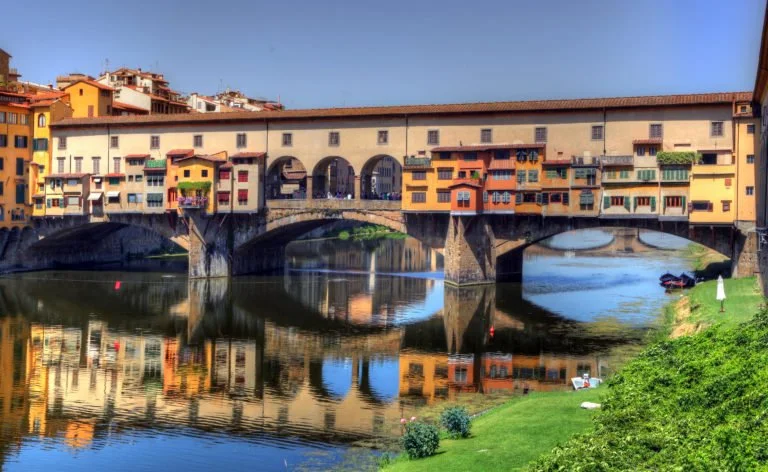
Photo by 10cose.it
From the Uffizi it's a few minutes' walk down to Ponte Vecchio, the medieval bridge lined with jewellers' shops that somehow survived the German demolitions of the retreating army in 1944 — it was reportedly the only bridge across the Arno the Nazis chose not to blow up, unlike the nearby Ponte Santa Trìnita, which was later rebuilt stone by stone. Crossing it costs nothing and takes about two minutes if you don't stop to look in the windows, which most people do.
On the far bank is the Oltrarno, Florence's artisan quarter, where the crowd density drops noticeably and workshops for leather, marbled paper and restoration work still operate behind unmarked doors. Piazza Santo Spirito, a few minutes further in, has none of the queue culture of the centre — it's where residents actually eat lunch.
Accademia Gallery: The Detour for Michelangelo's David
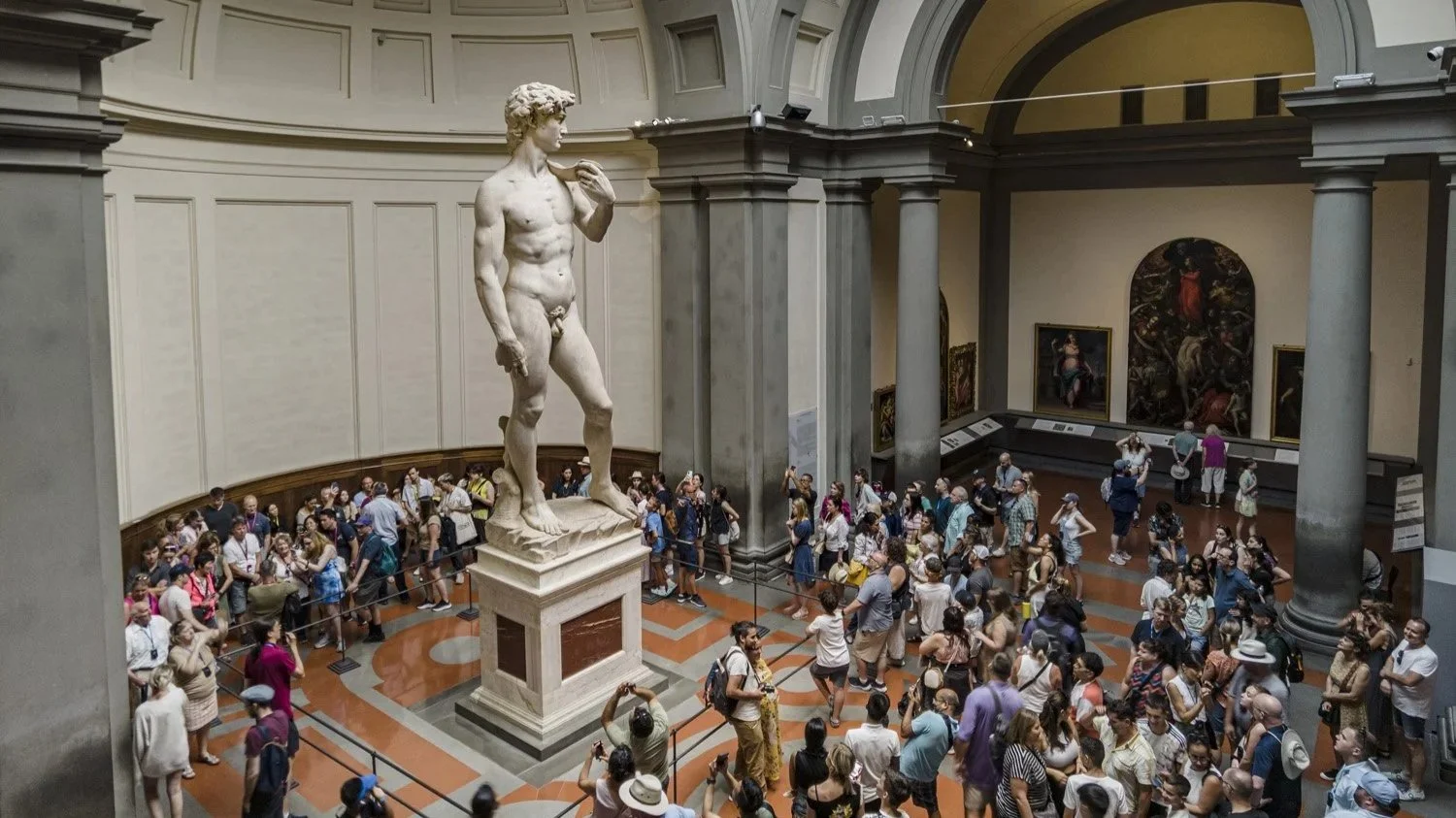
Photo by galleriaaccademiafirenze.it
The Accademia sits about a fifteen-minute walk north of the Duomo, on Via Ricasoli, which makes it the one major sight that doesn't sit naturally on the Duomo–Signoria–Uffizi–Ponte Vecchio line. It exists, for most visitors, for one reason: Michelangelo's David, the 5.17-metre marble figure carved between 1501 and 1504, on display since 1873.
Hours are Tuesday to Sunday, 8:15 to 18:50, last entry 18:20, closed Mondays. Booking in advance matters here more than almost anywhere else in the city — the museum is small, and the room around David fills three rows deep by mid-morning between May and September. Plan on 75 to 120 minutes for a full visit, or closer to 45 minutes if David and the unfinished Prisoners are the priority.
Santa Croce: Where Florence Buried Its Geniuses
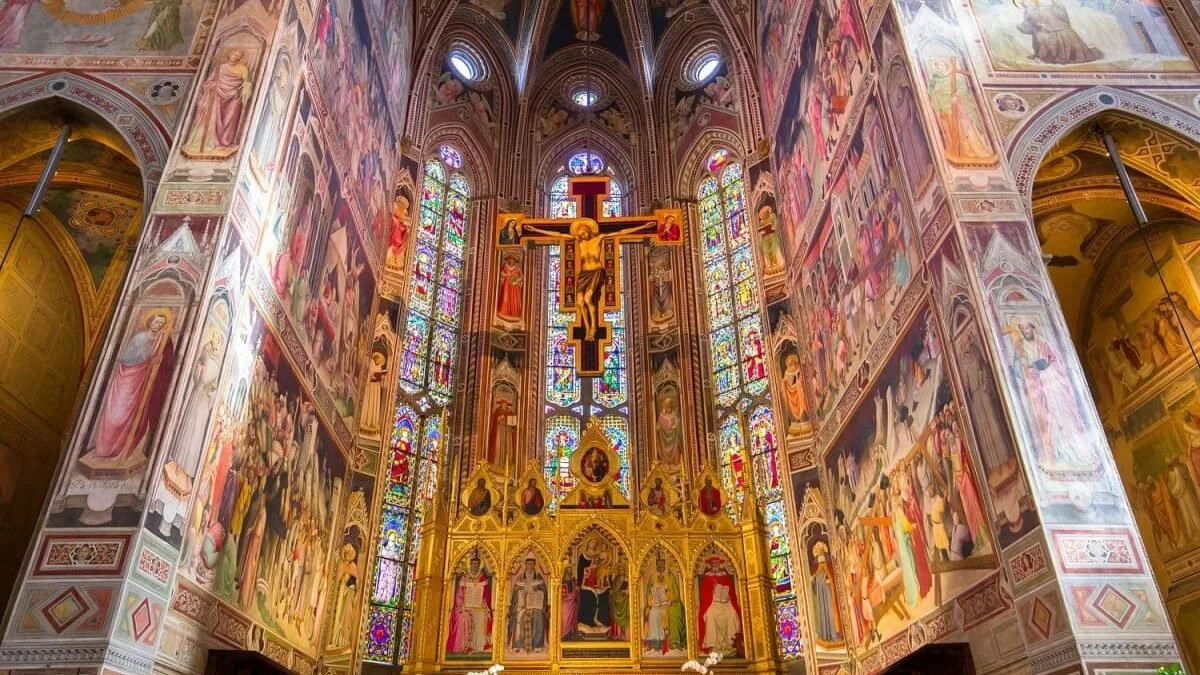
Photo by guiaturisticadeflorencia.com
Santa Croce sits about ten minutes east of the Duomo, in the opposite direction from the Accademia, and it's the sight most likely to get cut when a day runs short — which is a genuine trade-off rather than a minor one, since the basilica holds the tombs of Michelangelo, Galileo and Machiavelli, plus Giotto's frescoes and Brunelleschi's Pazzi Chapel. It's open Monday to Saturday 9:30 to 17:30 (ticket office closes 17:00) and Sunday and religious holidays 14:00 to 17:30. Entry requires a ticket; this isn't a free church visit like the Duomo's nave.
Piazzale Michelangelo and San Miniato: The View That Needs a Climb
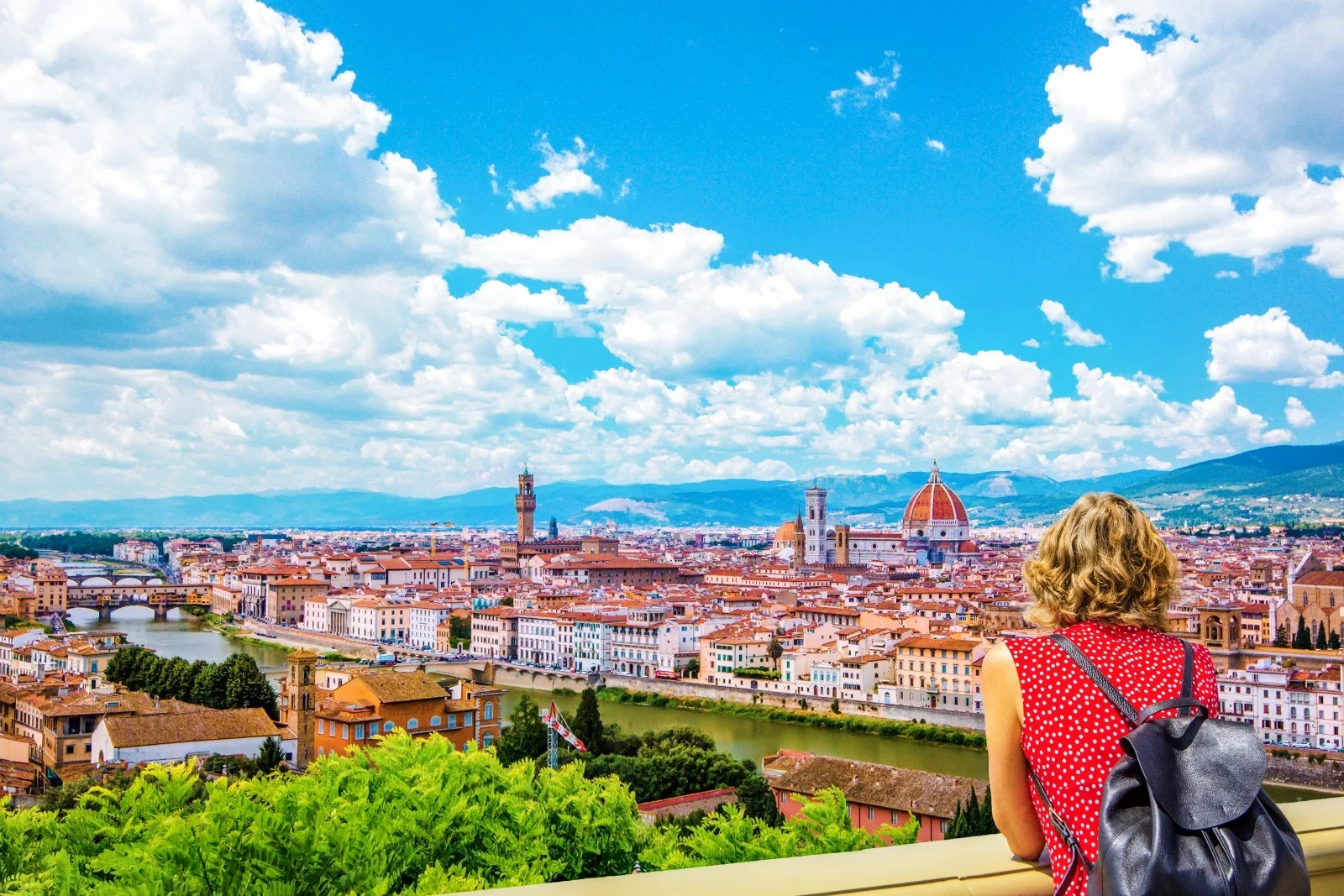
Photo by toscana.info
Piazzale Michelangelo is the wide terrace on the hill south of the river where every rooftop photo of Florence you've seen online was taken. It's about a 20-minute uphill walk from Ponte Vecchio — cross the Arno, follow the river to Piazza Poggi, then climb the Rampe del Poggi staircase through the gardens — or a short ride on ATAF bus 12 or 13 if the climb isn't appealing. Allow 30 to 45 minutes at the top for the view alone.
San Miniato al Monte, a Romanesque church with a green-and-white marble façade, sits another five to ten minutes' climb above the Piazzale. It adds real time rather than a quick add-on: budget another 20 to 30 minutes if you go up, more if you catch the monks' Gregorian chant (traditionally around late afternoon, though this varies and is worth checking locally rather than planning around).
A Different Way to Walk the Centre: a self-guided puzzle tour
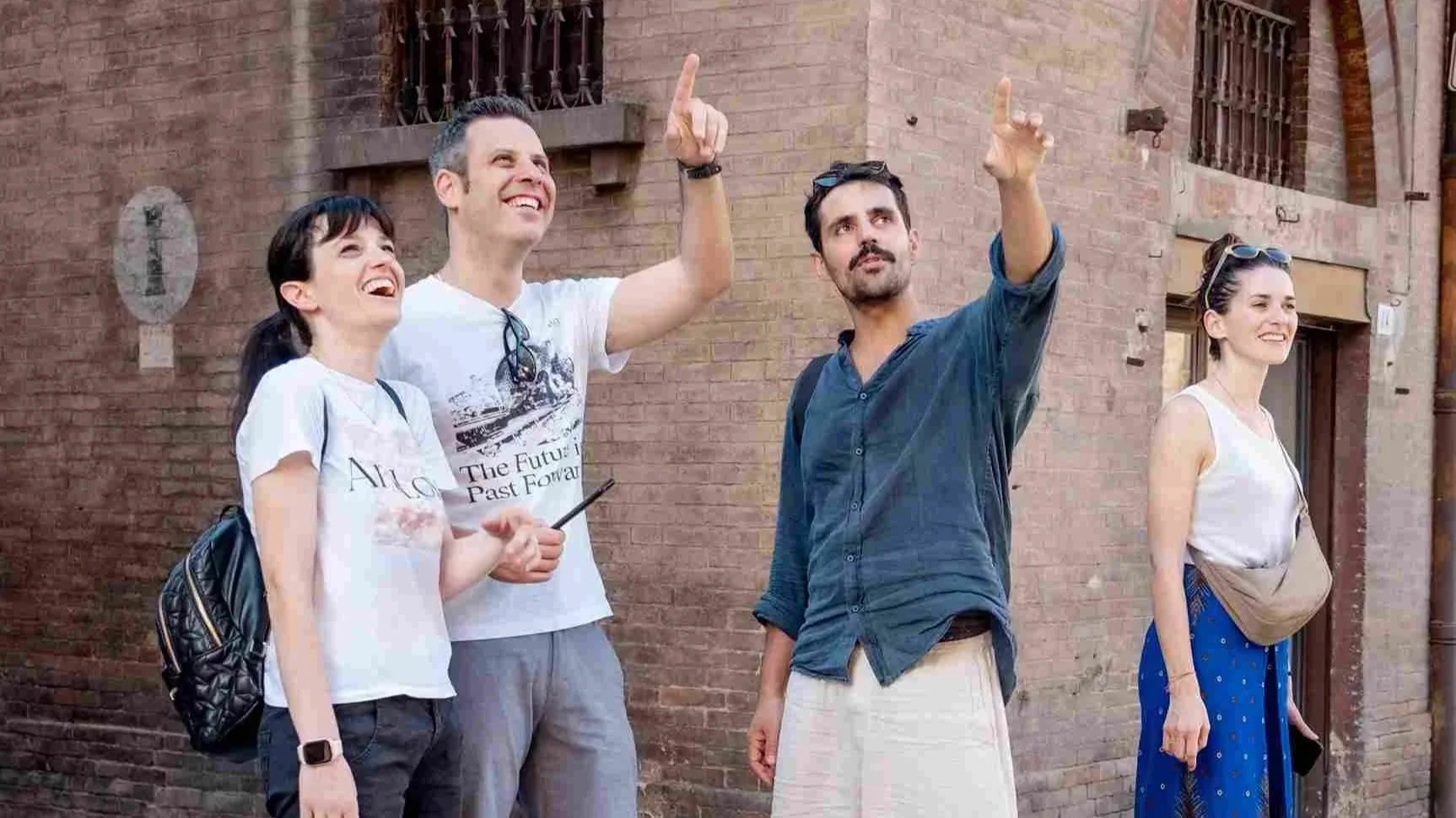
Fitting the Duomo, Signoria, the Uffizi exterior and Ponte Vecchio into a single afternoon without missing anything usually means having several browser tabs open — one for opening hours, one for a map, one for background on whatever you're standing in front of — and stopping every few minutes to check which one applies to where you are.
ClueGo Florence is a self-guided route built around exactly that problem: the stops are already chosen and ordered, so instead of deciding what to see and calculating how to reach it, you're following a route on your phone that tells you where to go next and gives you a puzzle to solve when you get there. The Florence route runs about 3 km over nine stops, starting at Piazza SS. Annunziata and finishing at Piazza de' Pitti, passing the cathedral, Piazza della Signoria, the Uffizi and Ponte Vecchio along the way — the same core sights this guide has already walked through, connected into one continuous walk instead of six separate decisions.
It runs as a web app with no download and no fixed start time — buy a code, open the link on your phone, and start whenever suits your day. A group of one to five people takes 2 to 3 hours to finish without stopping, though you can pause and resume across several days if needed, and the code stays valid for six months from purchase. Along the way it points out things a straightforward walk past the same buildings wouldn't: among them, a passage tied to Florence's ruling families and a bar the route describes as the city's most hidden speakeasy. The route is entirely outdoors and doesn't include admission to any museum or monument — anyone who wants to go inside the Uffizi or climb the dome still needs a separate ticket.
If you'd rather have the afternoon's route already mapped out than build it stop by stop, ClueGo's Florence trail is worth a look before you go.
Is One Day Enough for Florence's Main Sights?
Mostly, yes — with a catch that has nothing to do with distance. The historic centre is compact: the Duomo, Piazza della Signoria, the Uffizi and Ponte Vecchio are all within a fifteen-minute walking loop of each other, and even Santa Maria Novella train station to Santa Croce, roughly the widest crossing of the centre you'd make on foot, takes about 30 minutes without rushing.
The catch is booking, not geography. The dome climb and the Accademia both run on timed-entry systems that lock you into specific hours weeks ahead of your visit, especially between May and September. A one-day plan that works has to be built around those two fixed points first, then filled in with everything else around them — not the reverse.
A realistic version: dome climb or Accademia first thing in the morning (whichever slot you can get), the Duomo's exterior and Baptistery on the walk over, Piazza della Signoria at midday, the Uffizi in the early afternoon (or the 16:00 discounted slot if mornings are booked), Ponte Vecchio and a stroll through the Oltrarno in the late afternoon, and Piazzale Michelangelo for the last light of the day. That covers the sights every "must-see" list in Florence agrees on. What it doesn't cover in the same day, without a genuinely long afternoon, is both major galleries at full depth, Santa Croce, and San Miniato al Monte on top of Piazzale Michelangelo — those three are the ones worth flagging as a conscious trade-off rather than something to squeeze in at the end.
What to Add If You Have a Second Day in Florence
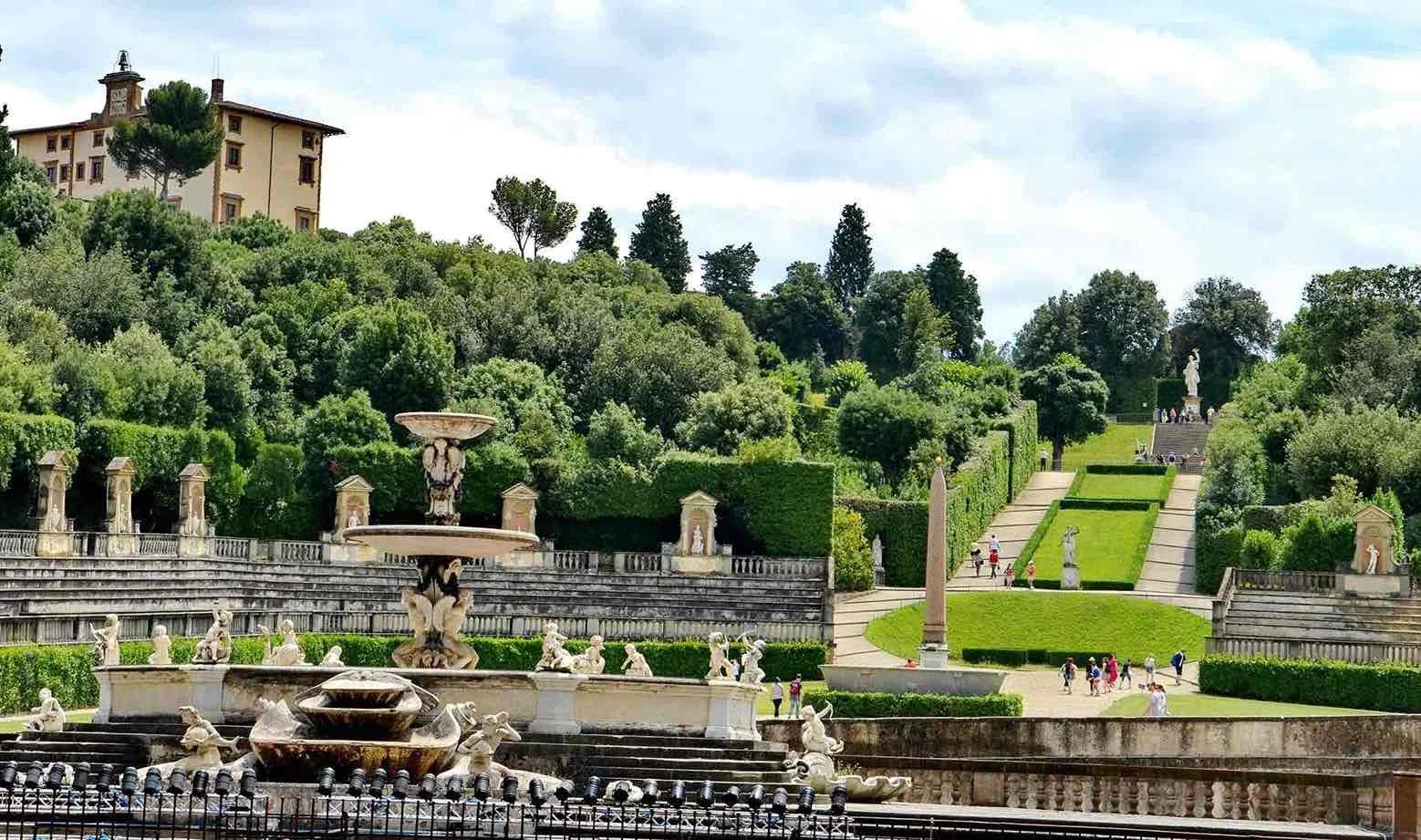
Photo by firenzemadeintuscany.com
If you have more time, the additions fall into a few categories rather than a fixed itinerary.
The gallery you skipped. If the Uffizi was day one's priority, the Accademia (or vice versa) is the obvious first stop of day two — both reward a slower, unhurried visit more than a rushed one squeezed between other stops.
Santa Croce, if it didn't make day one, pairs naturally with a slower walk through the eastern side of the centre and the Bargello Museum nearby, which is smaller and considerably less crowded than either major gallery.
Boboli Gardens and Pitti Palace, across the river from Ponte Vecchio, are the Medici's former residence and its formal gardens — a genuinely different pace from the centre's museum circuit, and useful if a second day is partly about slowing down rather than adding more monuments.
San Miniato al Monte, if Piazzale Michelangelo's view was enough on day one but the climb wasn't, is worth the extra ten minutes on a day with no other fixed appointments.
None of this is a mandatory checklist. If the historic centre's core sights genuinely covered what you came for, a second day is better spent slower rather than fuller.
Frequently Asked Questions
-
For the core sights — the Duomo exterior and Baptistery, Piazza della Signoria, one major gallery, and Ponte Vecchio — one day generally works, provided the dome climb or Accademia ticket is booked in advance. Fitting in both galleries plus Santa Croce and San Miniato al Monte on top of that same day is a tighter squeeze than most one-day itineraries admit.
-
The Duomo complex (cathedral, dome, Baptistery, bell tower), Piazza della Signoria, the Uffizi Gallery, Ponte Vecchio, and Michelangelo's David at the Accademia form the core that almost every list of Florence highlights includes. Santa Croce and Piazzale Michelangelo follow close behind.
-
It's strongly recommended for both, and close to essential for the Accademia and the Duomo's dome climb during the May-to-September high season, when timed slots can sell out weeks ahead.
-
Yes. The historic centre is compact, mostly pedestrianised, and flat except for the hill south of the river leading to Piazzale Michelangelo. Most of the main sights are within a fifteen-minute walk of each other.
-
Whichever major gallery didn't fit on day one, Santa Croce, Boboli Gardens and Pitti Palace, and San Miniato al Monte if the climb to Piazzale Michelangelo wasn't enough the first time round.