
Ancona spends a lot of its tourist life as a name on a ferry ticket, a stop before Croatia or Greece rather than a destination in its own right. That's worth correcting, because the city's shape alone makes it unusual on this coast: built on a promontory that bends like an elbow (the name Ancona comes from the Greek ankon, "elbow"), it's one of the few places on the Adriatic where you can watch the sun rise over the water in the morning and set over the water again in the evening.
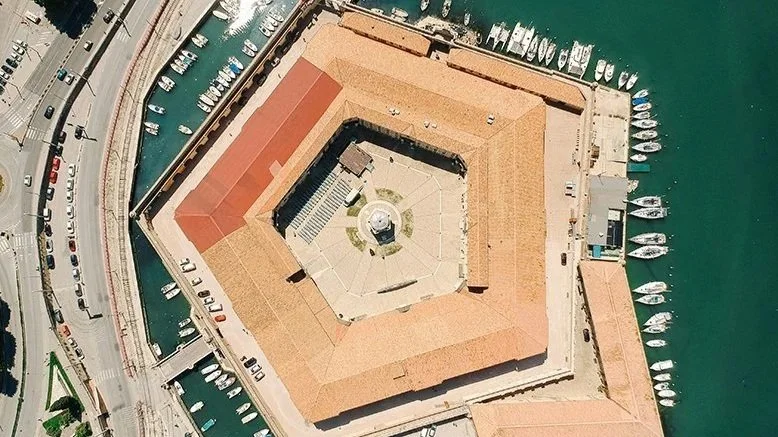
Photo by Robert Bye - Unusplash
One day is enough to walk the old town properly: the port, the main squares, the Roman arch, and the hill where the cathedral looks out over both horizons. A second day moves further out, to the Roman amphitheatre, the archaeological museum, and the parks along the coast.
This itinerary follows that same split. You can do the first day on its own if you're short on time, or add the second if you're staying longer.
How Much Time Do You Really Need in Ancona?
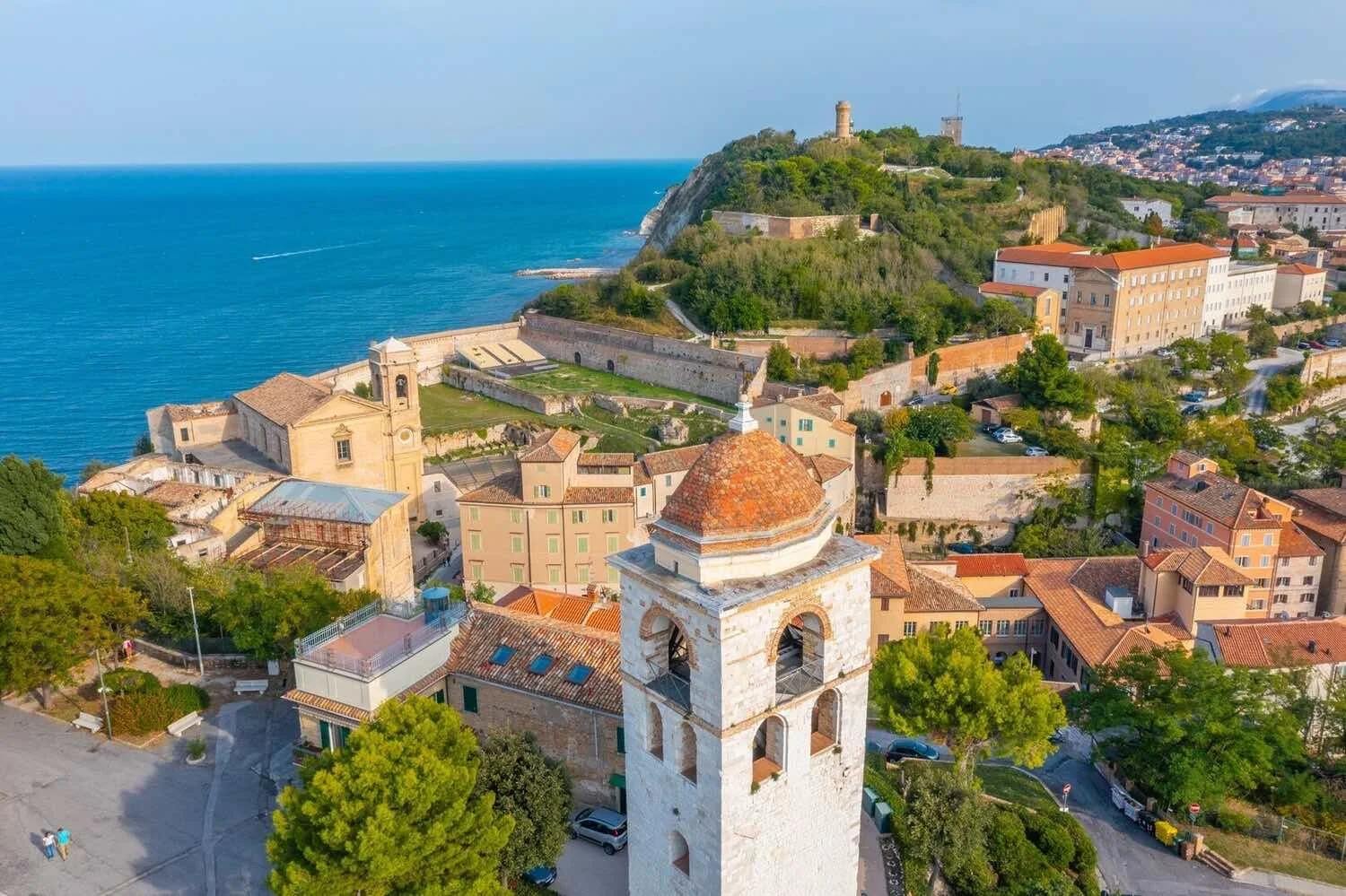
One day covers the historic centre comfortably. Start at the old port, walk up through Piazza del Plebiscito, past Trajan's Arch, and finish on Colle Guasco at the Cathedral of San Ciriaco. It's a compact route, mostly on foot, with some uphill sections near the end.
A second day is worth it if you want to go beyond the medieval and Roman core. The Roman Amphitheatre and the National Archaeological Museum sit further up the same hill, while Cardeto Park and Passetto stretch along the coast in the opposite direction, past the cathedral.
If you're arriving by train, Ancona Centrale station is around 2 km from the historic centre. A local bus gets you there in about 10 minutes; a taxi costs roughly €10 for the same trip. If you're coming from the port, the centre is closer: Trajan's Arch is only a 5 to 7-minute walk from the Old Port.
How to Spend One Day in Ancona
The old town climbs from the port to the top of Colle Guasco, so it makes sense to follow that same direction rather than zigzagging between stops.
Mole Vanvitelliana: An Island Built as a Quarantine Station
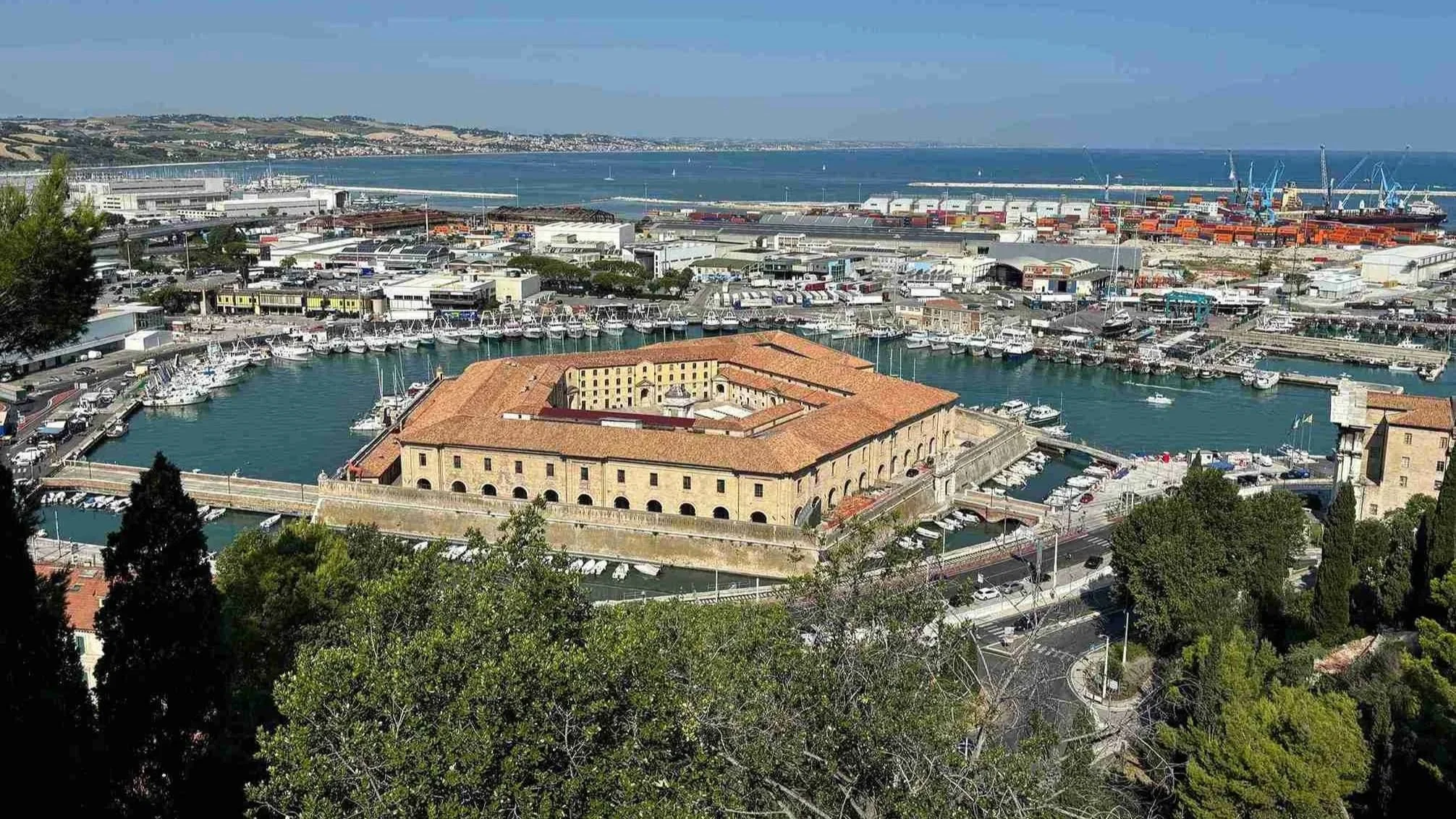
Start at the Mole Vanvitelliana, also known as the Lazzaretto, a pentagonal building standing on its own artificial island inside the port. Pope Clement XII commissioned the architect Luigi Vanvitelli to build it in 1732, as a quarantine station for sailors and goods arriving from outside Italy.
The building later became a military barracks, then a sugar refinery, then a tobacco warehouse, before being converted into a cultural space. Entry to the pentagon-shaped courtyard is free; temporary exhibitions inside are ticketed separately.
The Mole also houses the Museo Tattile Statale Omero, a tactile museum where visitors are invited to touch the sculptures and architectural models on display, including copies of works like the Venus de Milo. Entry is free, except for the separate Design collection, which costs €5. The museum is open Tuesday to Saturday from 15:00 to 18:00, and Sunday and public holidays from 10:00 to 18:00. It's closed on Mondays.
Piazza del Plebiscito: Ancona's Oldest Square
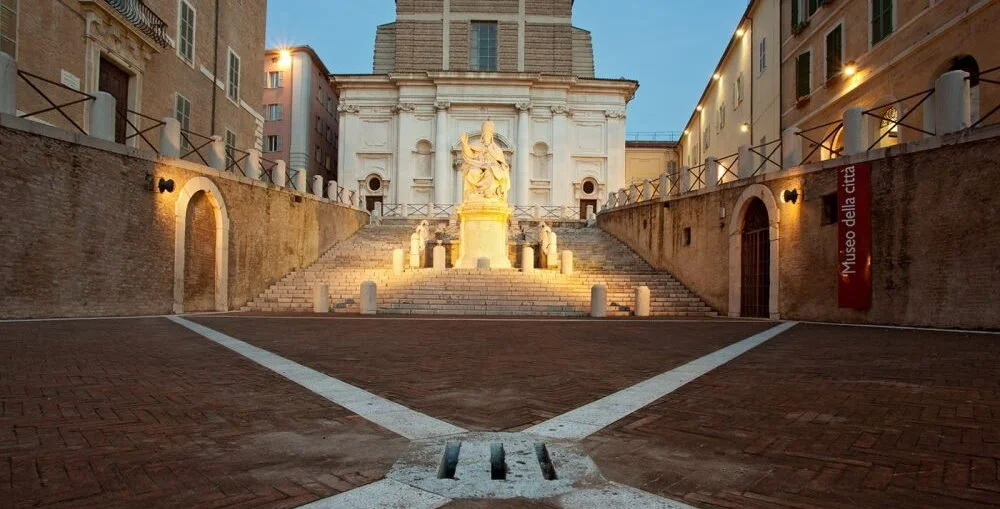
Photo by comuneancona.it
From the Mole, head into Piazza del Plebiscito, the oldest of the city's squares, laid out at the end of the 15th century. Locals still call it Piazza del Papa, after the marble statue of Pope Clement XII at its centre, sculpted by Agostino Cornacchini in 1732, the same year Clement XII commissioned the Lazzaretto.
The square is rectangular and steeply sloped, split across different levels connected by ramps and a staircase. At the top stands the baroque Church of San Domenico, designed by Carlo Marchionni and begun in 1763.
Trajan's Arch and the Old Port
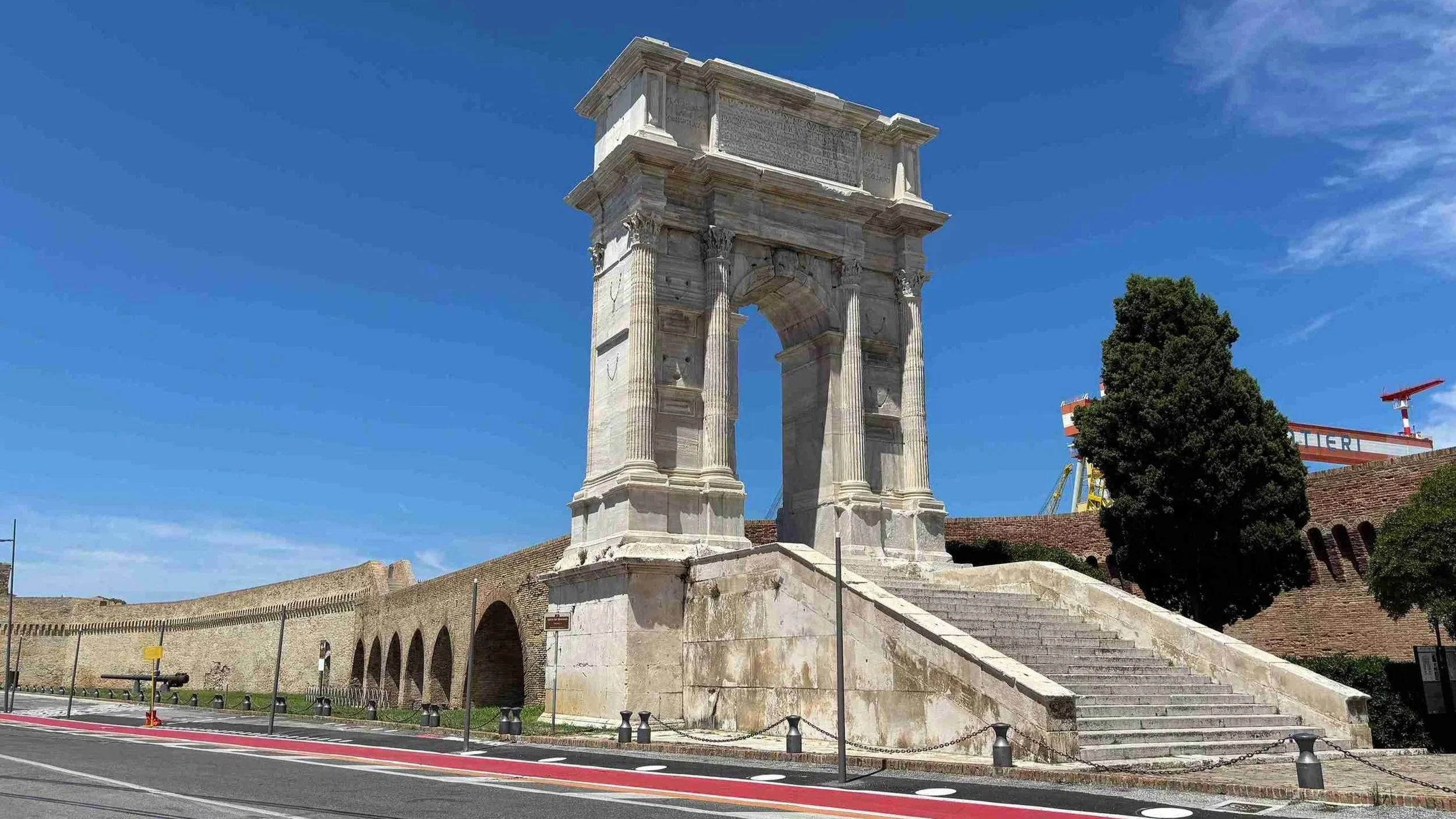
Continue down towards the water to Trajan's Arch, a white marble arch built between roughly 100 and 115 AD and attributed to the architect Apollodorus of Damascus. The Roman Senate had it built to honour Emperor Trajan, who paid to expand and fortify Ancona's port out of his own funds. It isn't a former city gate: it was built purely as a monument.
A short walk away stands the Clementine Arch, an 18th-century gateway designed by the same Luigi Vanvitelli who built the Lazzaretto — a second appearance for an architect who shaped a surprising amount of what you see in Ancona in a single generation.
Cathedral of San Ciriaco: The City of Two Suns
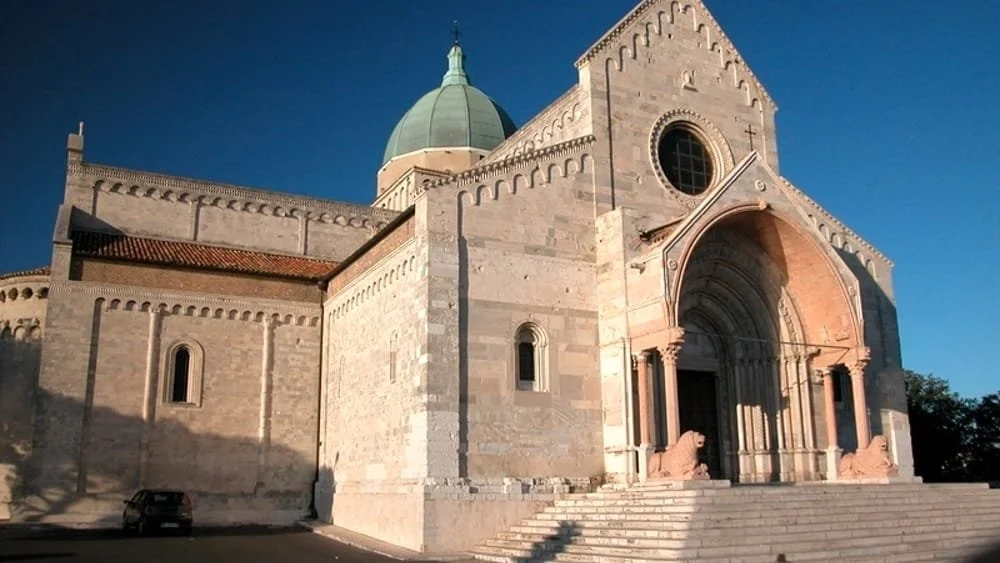
Photo by regione.marche.it
From the port, climb Colle Guasco to the Cathedral of San Ciriaco, dedicated to the city's patron saint and built combining Romanesque, Gothic and Byzantine elements. Entry is free. The cathedral is typically open mornings and afternoons, with a midday closure that varies by season and extends further into the evening in summer — check the current schedule before planning your visit around a specific hour, and avoid arriving during Mass.
This is also one of the two best spots in the city to see why Ancona is nicknamed the "city of two suns." Because the city sits on an elbow-shaped promontory, the sun rises over the sea to the east in the morning and appears to sink back into the sea to the west in the evening — a rare arrangement on the Adriatic, where most towns only get one or the other. The cathedral's terrace looks out over both directions; Cardeto Park, on Day Two, is the other viewpoint locals mention for the same effect.
Explore Ancona Through a Puzzle Trail
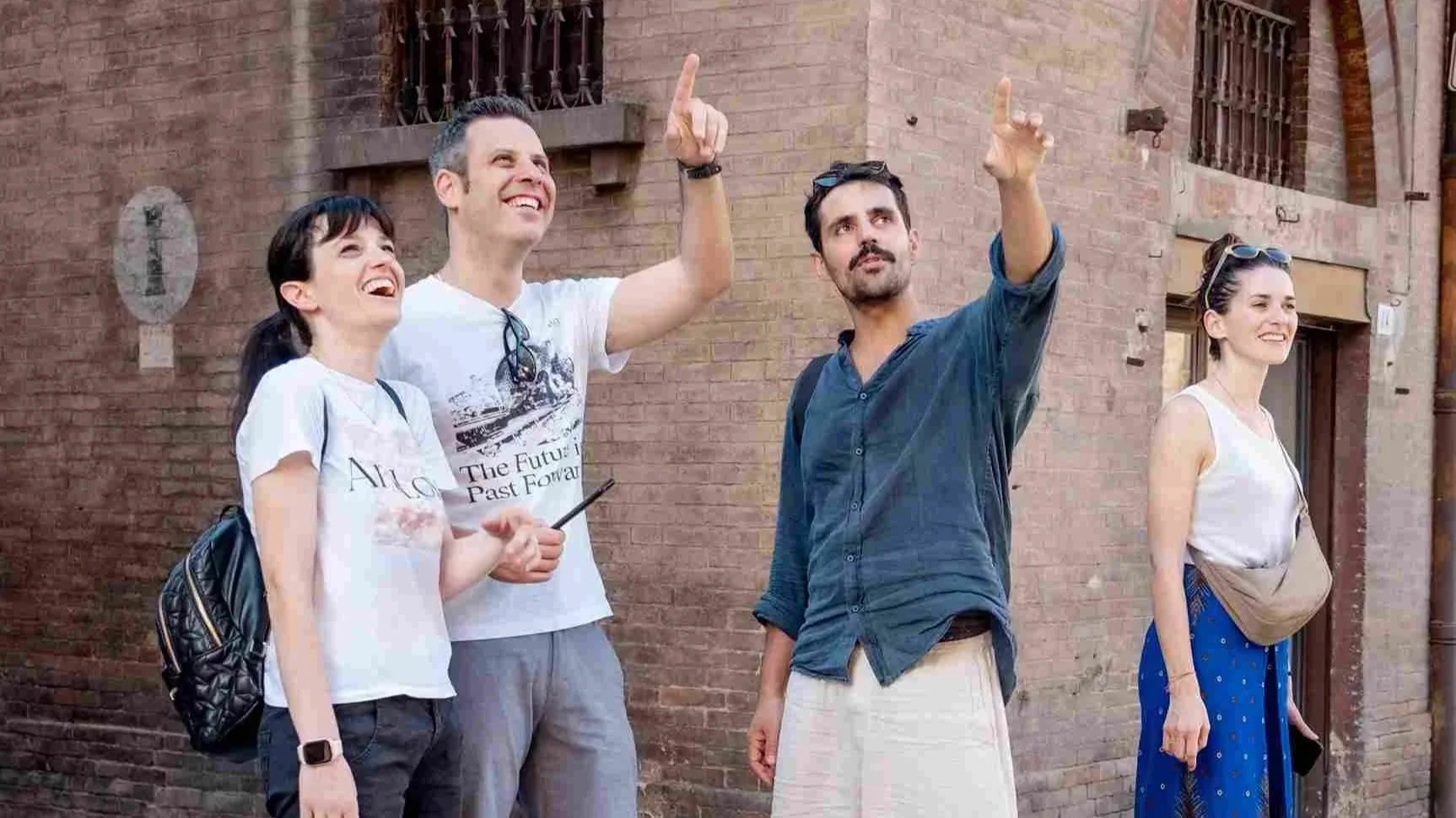
If you've walked past the arch, the squares and the port and still want a reason to look more closely at what's around you rather than move on to the next stop, a self-guided puzzle trail is worth considering here. Ancona's centre has plenty of details, small streets and doorways that are easy to walk past without noticing what they're connected to.
ClueGo Ancona works through a Web App, so there's nothing to download and no fixed starting time or booking required. The current route covers 10 stops over roughly 3 to 4 km, starting at the Mole Vanvitelliana and finishing at Ancona Cathedral, and takes around 2 to 3 hours without breaks. It's available in English and Italian, for groups of 1 to 5 people, with a recommended minimum age of 7.
Rather than checking a map after every stop to work out where to go next, the route is already sequenced: each puzzle you solve points you towards the next location, with the walking directions built into the game. You don't need to keep several guides or articles open on your phone to piece the day together. The whole trail takes place outdoors and doesn't require any admission tickets, though it isn't well suited to strollers or wheelchairs given some of the terrain in the old town. If you need to stop, you can pause and pick it up later.
What to Do in Ancona on Day Two
A second day works best if you head further up the hill towards the city's Roman remains, then come back down towards the coast on the other side of the cathedral.
Roman Amphitheatre: What You Can (and Can't) See Without a Guide
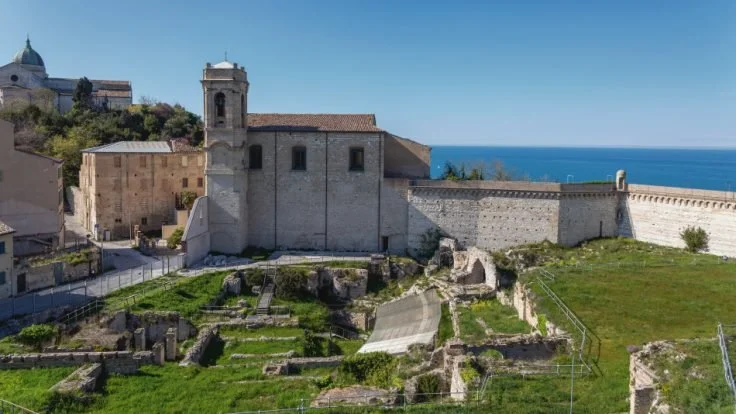
The Roman Amphitheatre, on Via Birarelli, is built into the natural slope of Colle Guasco and dates back to the city's Roman period. It isn't freely open to walk through: the interior is only accessible on scheduled guided visits, on Tuesdays at 10:00 (booking required, from April 10 to September 25) and on Fridays and Saturdays at 14:30, 15:30 and 16:30, each lasting around 50 minutes and starting from the National Archaeological Museum. A combined ticket covering the amphitheatre and the museum costs €8 full price, €2 for visitors aged 18 to 25, and is free for minors. Outside these times, you can still see the site from the surrounding walkway.
National Archaeological Museum of the Marche
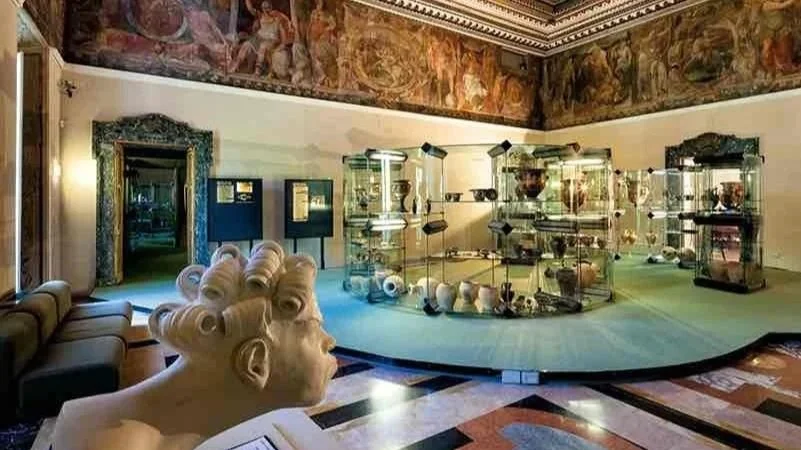
Photo by Paolo Zitti - Tripadvisor
For an indoor stop, the National Archaeological Museum of the Marche sits in Palazzo Ferretti, also on Guasco Hill. Its collection covers the region's history from prehistory through the Roman period, and it works well paired with the amphitheatre, since the combined ticket includes both.
Piazza Roma and the Fontana del Calamo
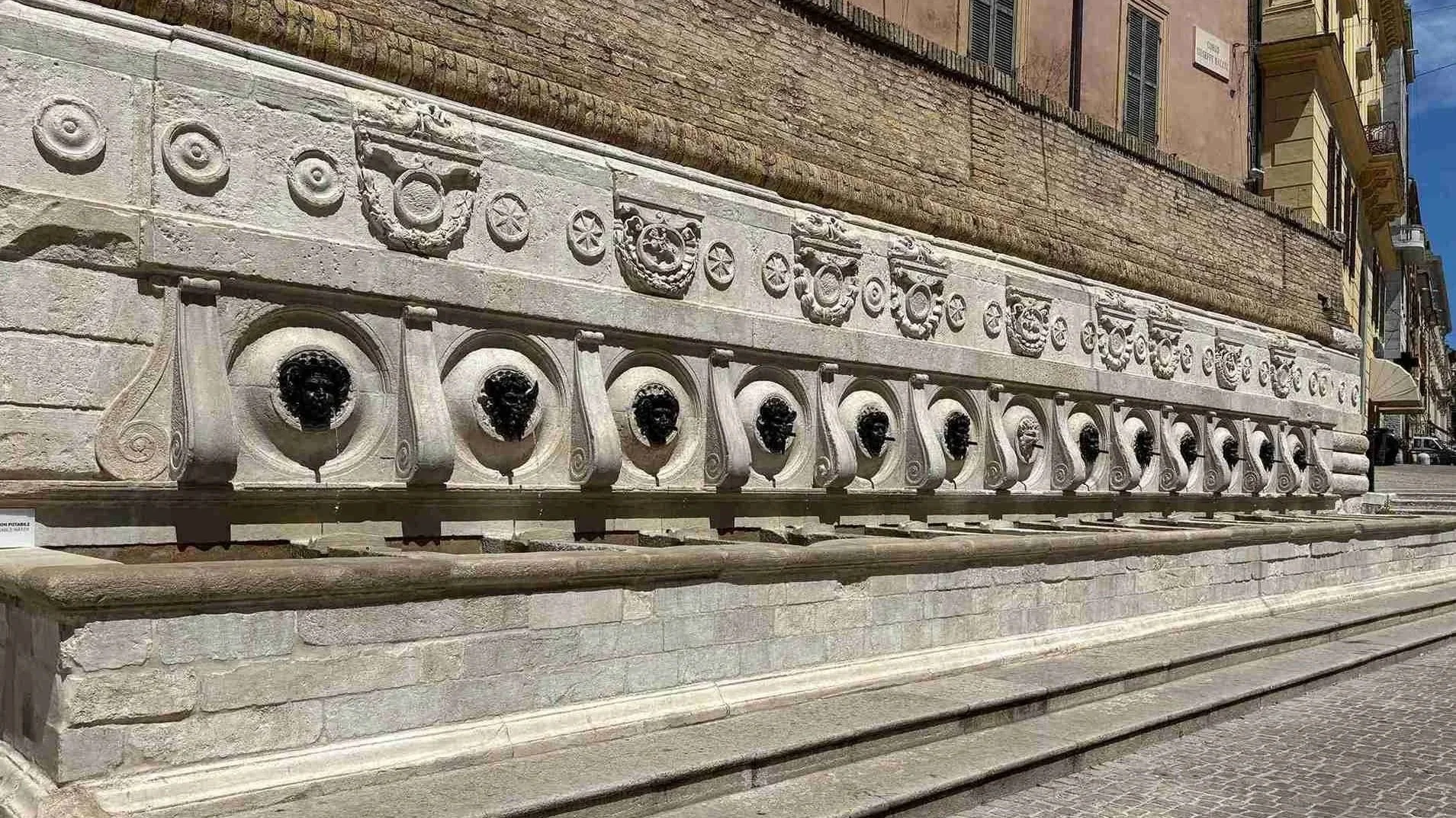
Head back down towards Piazza Roma, developed as the city expanded in the 19th century. Along Corso Mazzini, at the edge of the square, stands the Fontana del Calamo, a Renaissance fountain designed by the architect Pellegrino Tibaldi in the 16th century and known locally as the "Fontana delle Tredici Cannelle" for its thirteen spouts.
Local tradition holds that drinking from the fountain means you'll come back to Ancona one day — a small ritual that's stayed attached to the spot for generations.
Mercato delle Erbe: A Quick Local Break
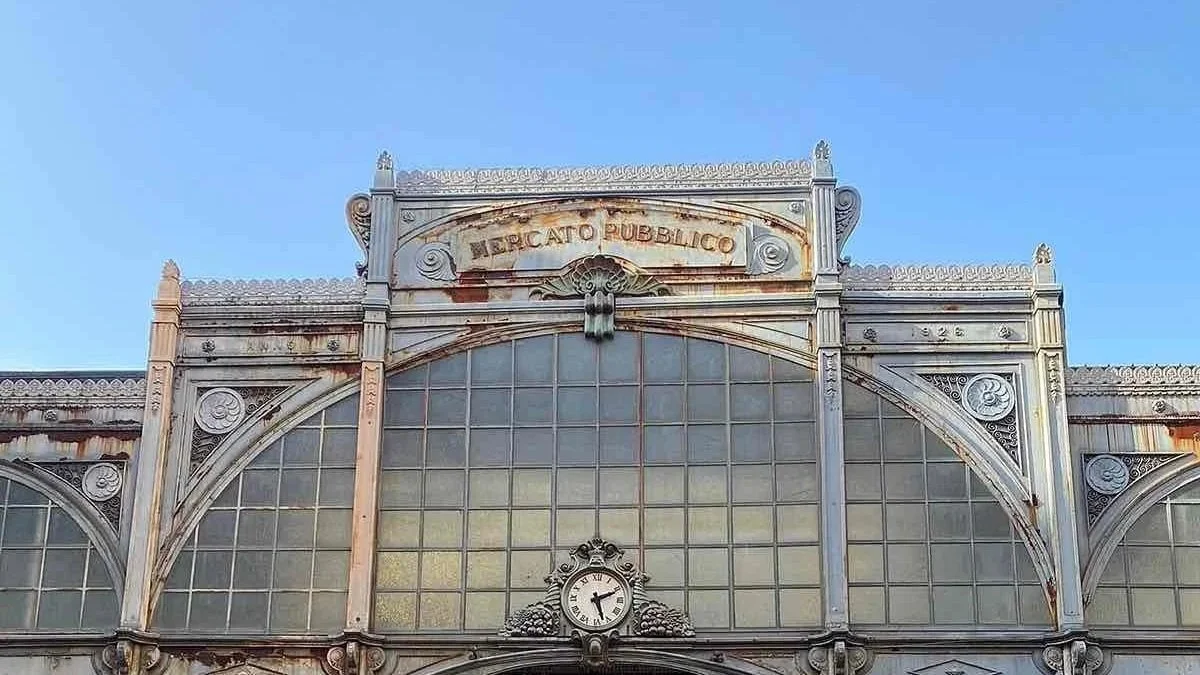
Photo by Tripadvisor
A short walk from Piazza Roma is the Mercato delle Erbe, Ancona's covered market, housed in a building from the 1920s with an iron-and-glass structure. It's a practical stop for something to eat before continuing towards the coast.
Cardeto Park
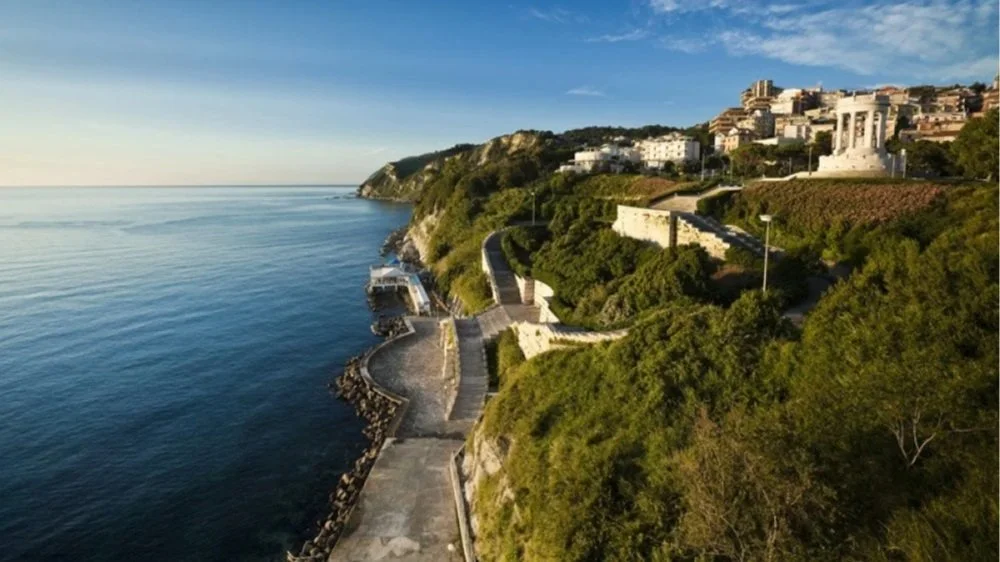
From the centre, Cardeto Park is around 20 to 30 minutes on foot. It's one of the city's largest green spaces, stretching along the coast, with an old lighthouse, a Jewish cemetery, and walking paths through different types of vegetation. As mentioned earlier, it's also one of the spots locals point to for watching both the sunrise and the sunset over the sea.
Passetto
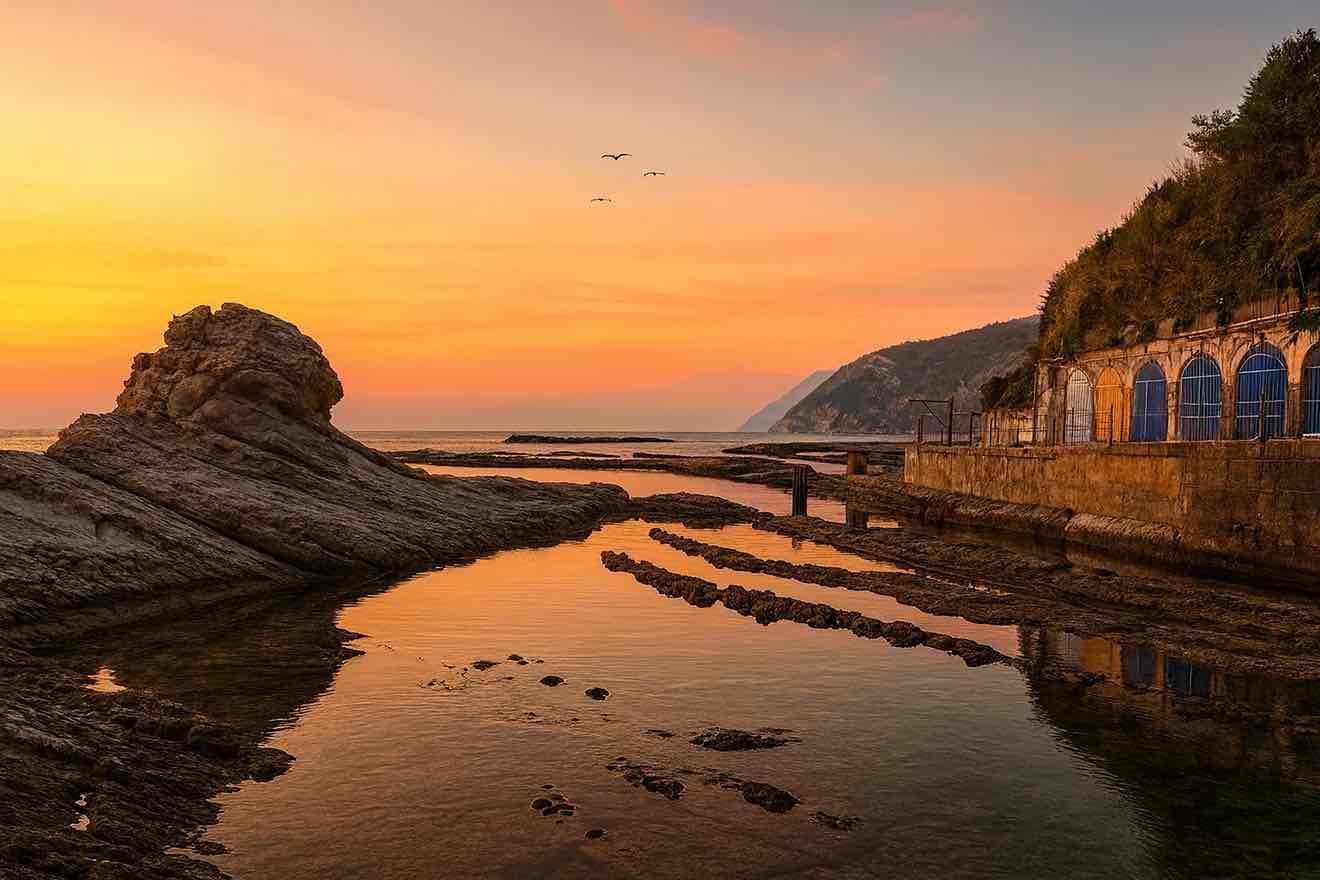
Photo by milazzo.life
Passetto is the other coastal option. Its upper section is a seafront viewpoint centred on the War Memorial, from which a monumental staircase leads down to the beach and the fishermen's caves carved into the rock at the bottom. Compared with Cardeto, Passetto feels more urban and works well if you want to combine a short walk with time by the water rather than a longer nature walk.
-
One full day is enough for the historic centre: the old port, Piazza del Plebiscito, Trajan's Arch and the Cathedral of San Ciriaco. A second day lets you add the Roman Amphitheatre, the archaeological museum and the coastal parks.
-
For the main historic centre, yes. The route from the port up to the cathedral is compact and mostly walkable in a single day without rushing.
-
Trajan's Arch, the Cathedral of San Ciriaco and its viewpoint, and Piazza del Plebiscito cover the core of the city. If you have a second day, the Roman Amphitheatre and Cardeto Park add a different side of Ancona.
-
The historic centre is. The route from the port to the cathedral involves an uphill stretch near the end, and reaching Cardeto Park or Passetto on Day Two adds more walking along the coast.
-
Because the city sits on an elbow-shaped promontory, it's possible to see the sun rise over the sea in the morning and set over the sea again in the evening — best seen from the Cathedral of San Ciriaco or from Cardeto Park.
-
The station is about 2 km from the centre. A local bus takes around 10 minutes, and a taxi costs roughly €10.