
If you're flying into Bari, chances are the city itself wasn't the only reason for the trip. Bari is where many visitors land before heading deeper into Puglia, and it is also a common stop for cruise passengers and travellers arriving by train. If you have limited time, the question is less about finding things to do and more about knowing what is actually worth fitting in.
The good news is that Bari Vecchia, the historic centre, can easily fill a full day without feeling rushed. If you have a second day, you can then see a very different side of Bari: the 19th-century Murat district, its Liberty architecture, the Teatro Petruzzelli and the seafront museums.
This itinerary keeps the two days separate for a reason. You can follow the first day on its own if you're short on time, or add the second if you're staying longer.
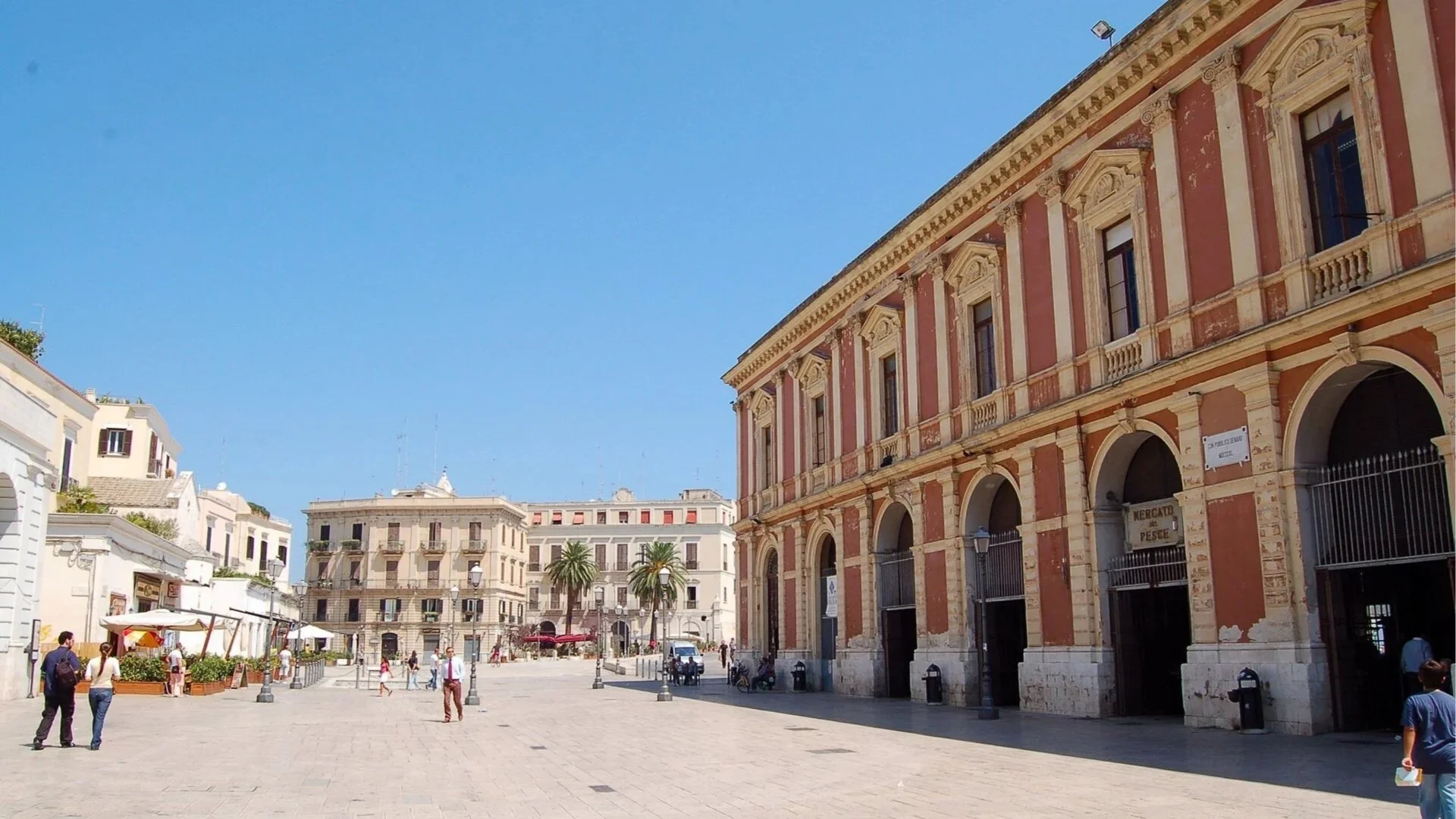
How Much Time Do You Really Need in Bari?
One full day is enough for the main sights of Bari. Make Bari Vecchia your priority: Piazza del Ferrarese and Piazza Mercantile, the Basilica di San Nicola, the Cathedral of San Sabino, Castello Svevo and the narrow streets around Arco Basso. Finish by the sea.
A second day is worthwhile if you want to see beyond the medieval centre. The Murat district has a completely different layout and architectural character, with broad streets, 19th-century buildings and the Teatro Petruzzelli. You can also add the Pinacoteca Metropolitana if you want some time indoors.
If you're arriving at Bari Airport, getting into the city is relatively straightforward: Ferrotramviaria operates a direct railway connection to Bari Centrale, with a journey of about 17 minutes. The airport station is connected to the terminal by a 300-metre tunnel.
How to Spend One Day in Bari
Bari Vecchia is compact enough to explore on foot, but its narrow streets are much easier to enjoy if you don't try to tick off every corner. Start around the edge of the old town and work your way through the main sights before heading back towards the waterfront.
Piazza del Ferrarese and Piazza Mercantile: Where Bari Vecchia Begins
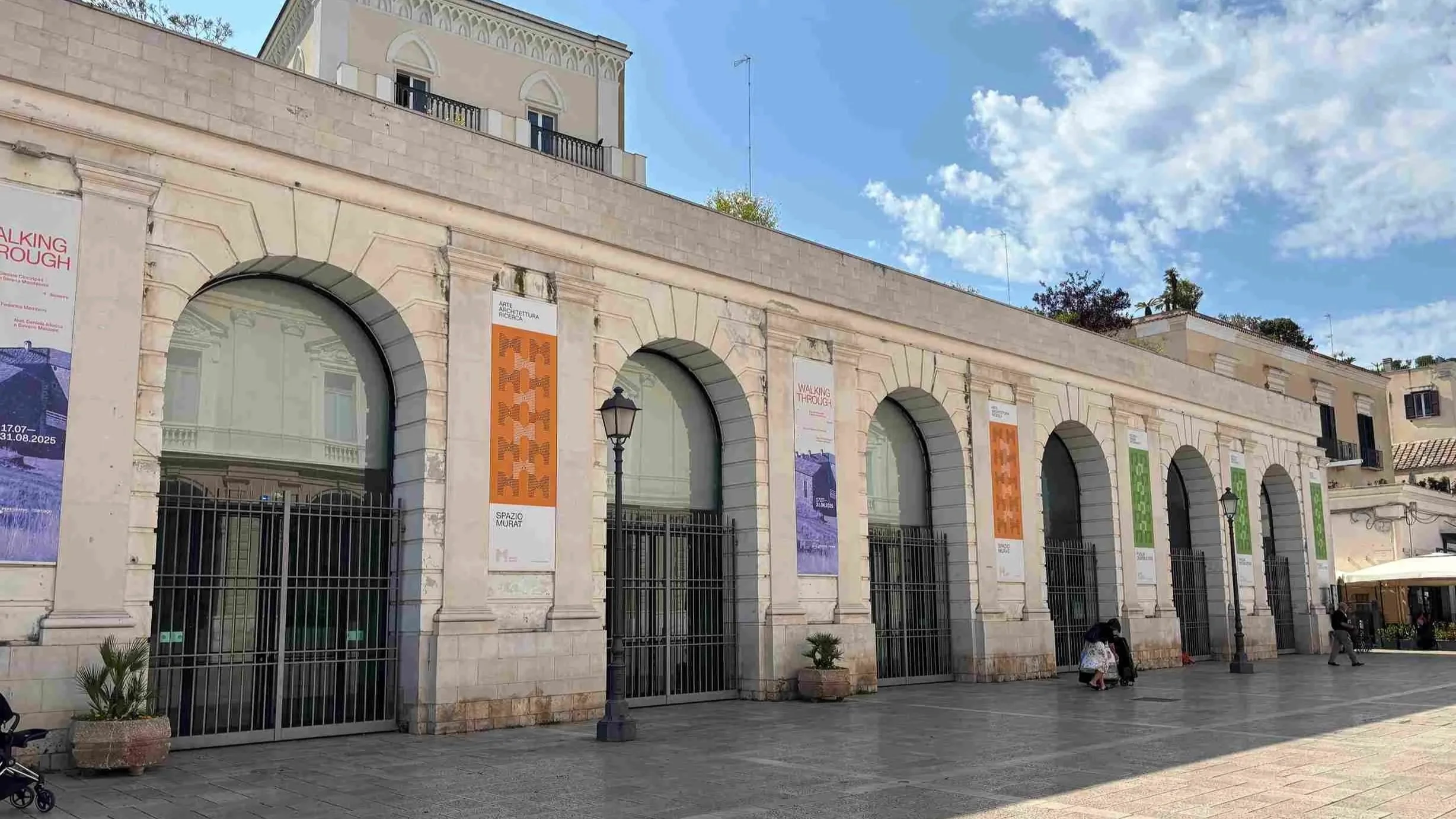
Piazza del Ferrarese is a useful starting point because it sits right where the newer city meets the old town. From here, Piazza Mercantile and the lanes of Bari Vecchia are just ahead.
The two squares are also a good introduction to the way Bari changes from one neighbourhood to another. Around them you'll find cafés, bars and restaurants, while the streets behind Piazza Mercantile quickly become narrower and more irregular.
Take a few minutes here before heading deeper into the old town. You don't need to spend long, but these squares give you a useful sense of where you are before the maze of streets begins.
Basilica di San Nicola: Bari's Most Important Church
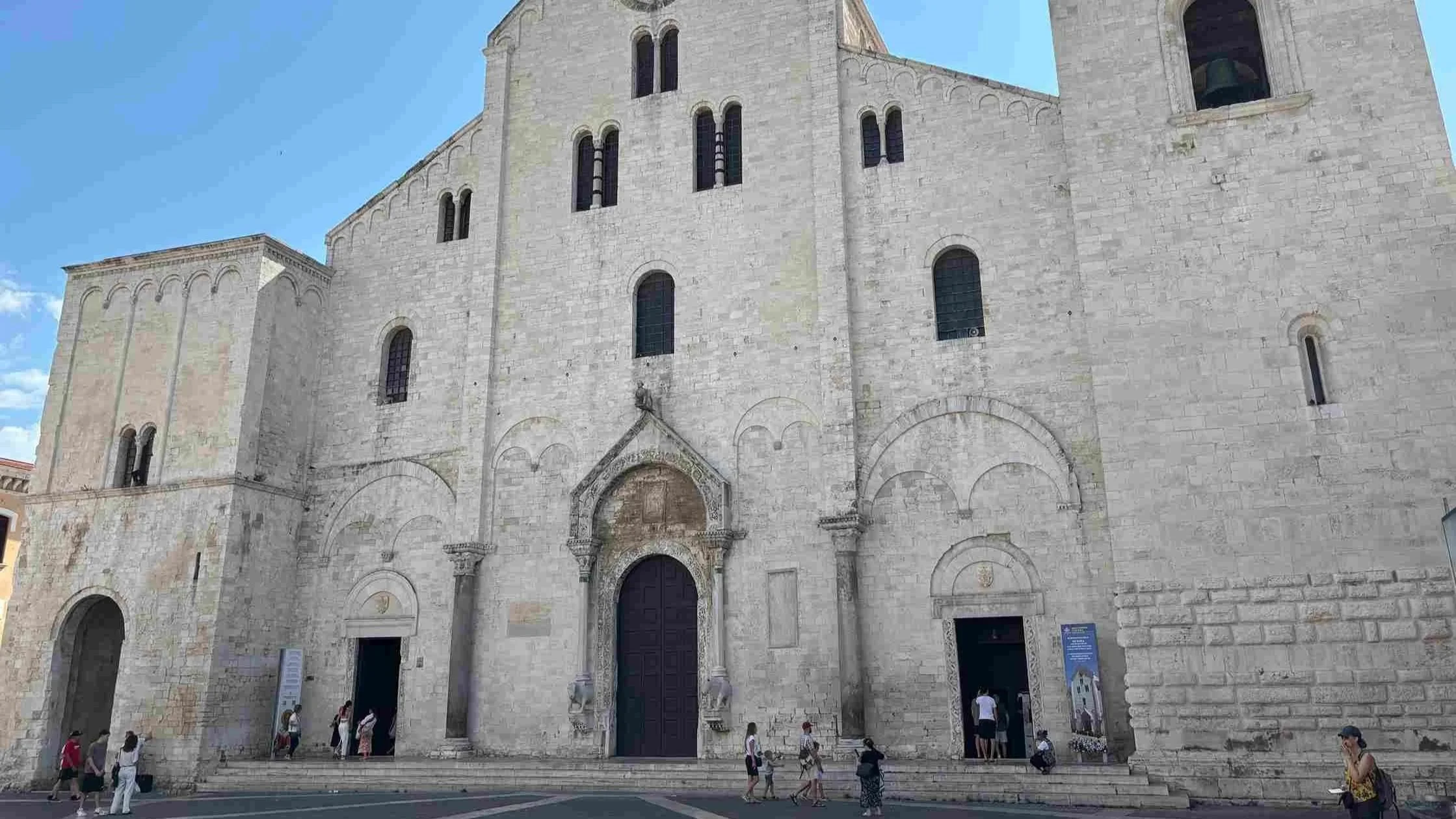
The Basilica di San Nicola is the major landmark of Bari Vecchia and one of the city's defining buildings. Construction began in the late 11th century after the relics of Saint Nicholas of Myra were brought to Bari in 1087.
That connection explains something you may notice when visiting: Saint Nicholas is not simply the historical figure behind the modern Santa Claus story. His cult has a particularly strong connection with Bari, and the basilica remains an important destination for both Catholic and Orthodox visitors.
Inside, don't stop at the main nave. The crypt beneath the church contains the saint's tomb and is an important part of the building's religious significance.
Admission to the basilica is free. The official site currently lists opening hours from 6:30 to 20:30 Monday to Saturday and 6:30 to 22:00 on Sundays, although services take place throughout the day.
Cattedrale di San Sabino: Romanesque Bari
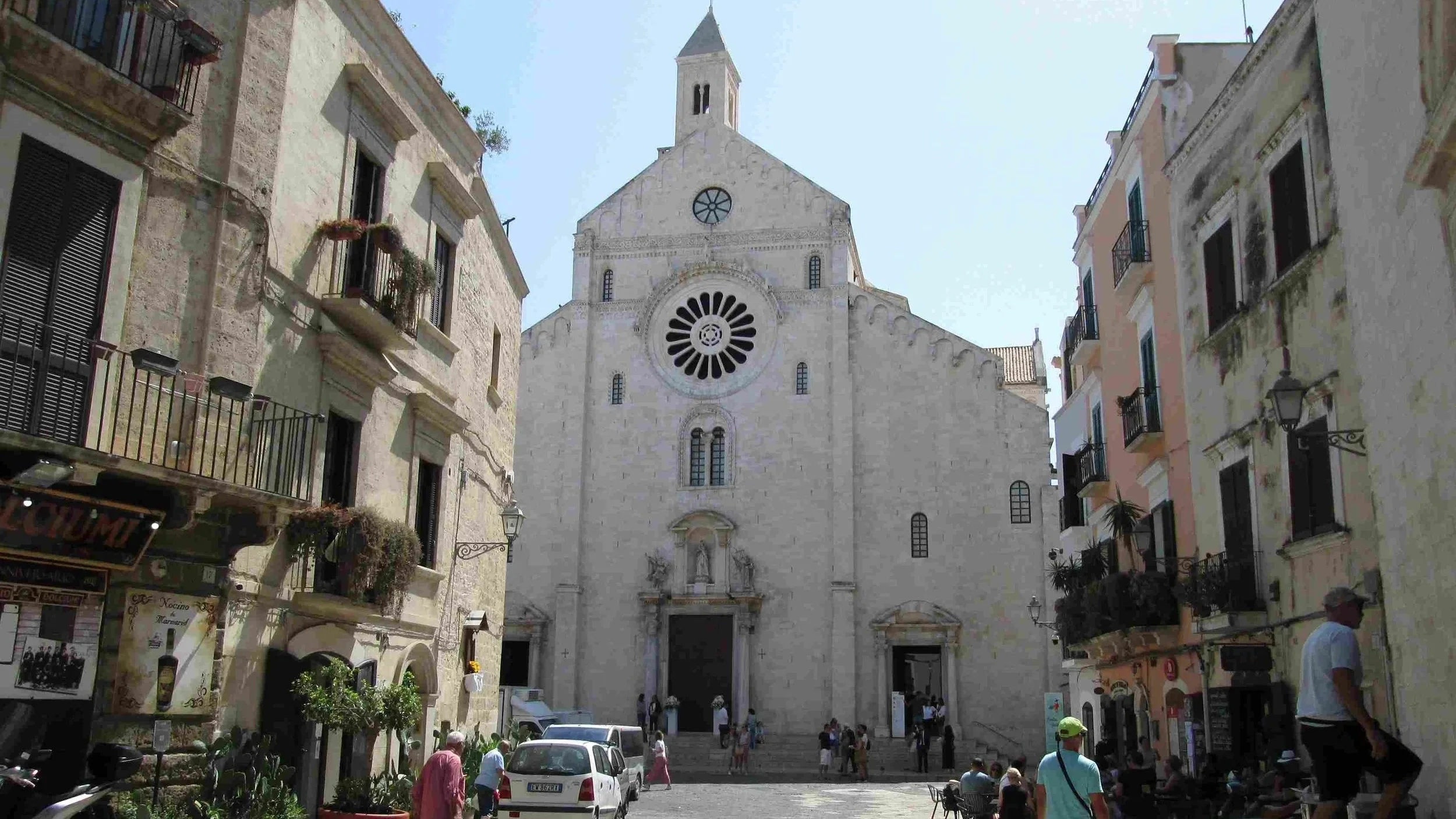
Continue through Bari Vecchia to the Cathedral of San Sabino, the city's cathedral and another major example of Apulian Romanesque architecture.
It is easy to treat the two churches as interchangeable stops, but they have a different character. San Nicola is closely tied to the city's international religious importance and the cult of its patron saint; San Sabino gives you a quieter look at the architectural tradition that shaped medieval Bari.
Below the cathedral, archaeological remains provide evidence of earlier buildings on the site.
Opening arrangements can vary, so this is one place where it makes sense to check the current access conditions rather than building your whole day around a fixed visiting time.
Castello Svevo: The City's Medieval Fortress
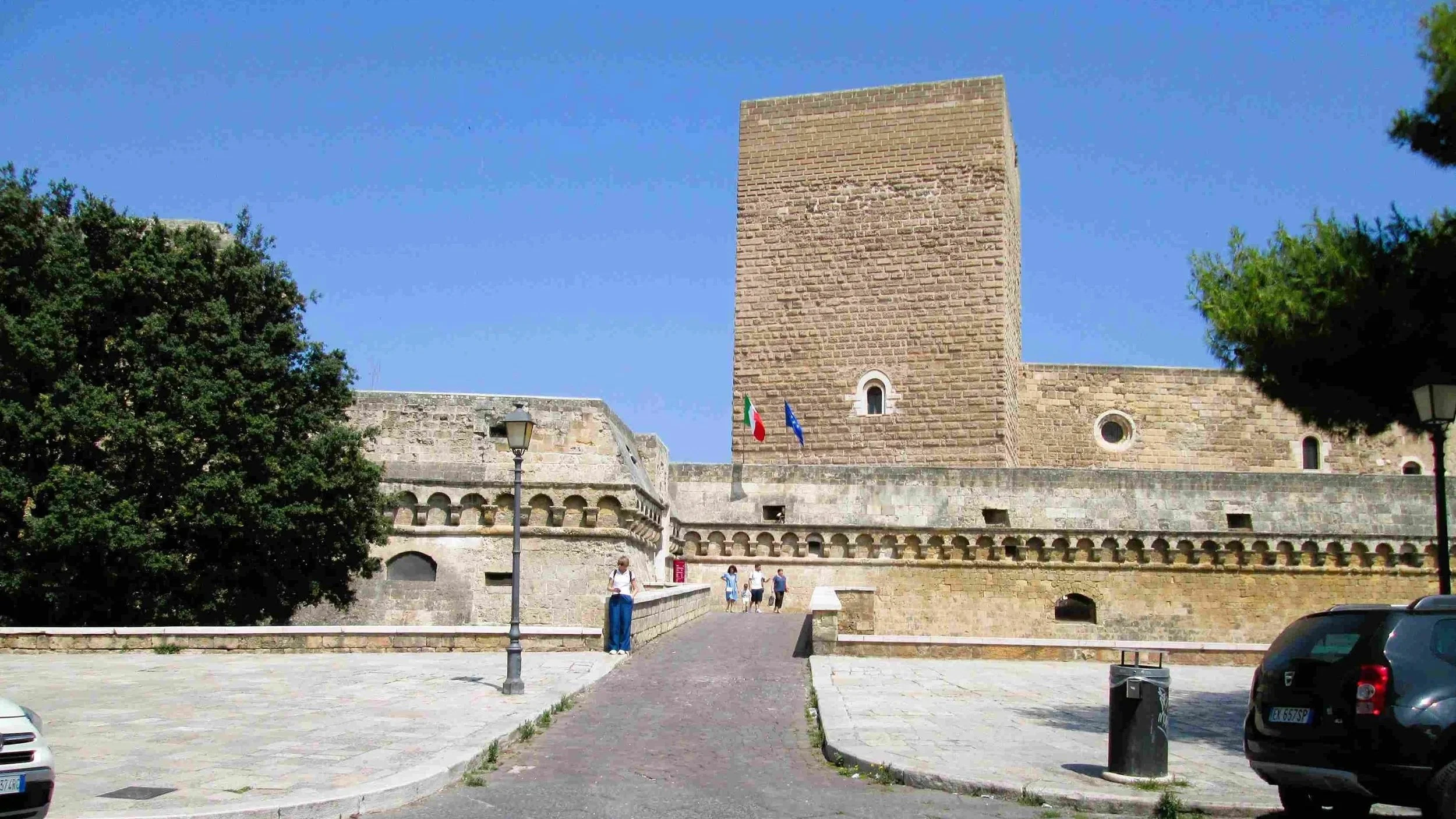
From the cathedral, continue towards the Castello Svevo, the large fortress on the edge of Bari Vecchia.
The castle's present form reflects several stages of Bari's history. It was built under the Normans in the 12th century and later rebuilt under Frederick II of Swabia, before further modifications under the Angevins.
Today the castle is both a historic monument and a museum. One of its distinctive features is the Gipsoteca, a collection of plaster casts of Romanesque sculptures from Puglia, which gives you the chance to examine architectural details more closely than you usually can on a church façade.
The current official ticket price is €10 for a full-price ticket, with a €2 reduced fare. Opening hours vary seasonally, so check the official museum page before visiting.
If you're short on time, you can admire the castle from outside and continue into the surrounding streets. If you have a full day, the interior is one of the more substantial visits to add.
Arco Basso: Where Bari's Orecchiette Are Made
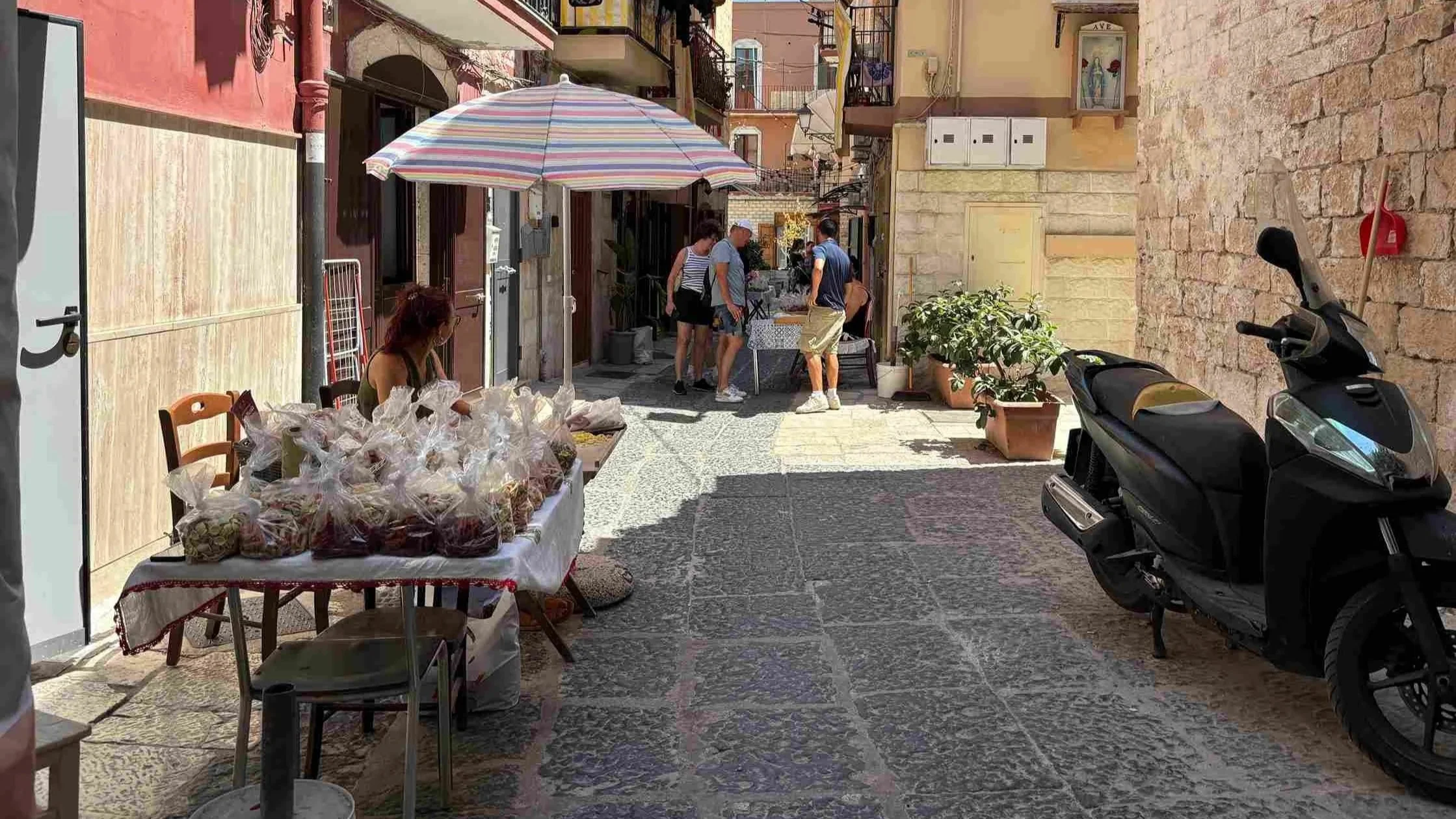
Just beyond the castle, look for Arco Basso, the lane better known to visitors as the “street of orecchiette”.
This is one of the most recognisable scenes in Bari: fresh pasta being shaped by hand outside homes along the narrow street. Orecchiette — the small, ear-shaped pasta associated with Puglia — have become one of the city's most visible food traditions.
You don't need to turn this into a formal food stop. Walk through slowly, watch how the pasta is made and, if you want to take some home, ask the person selling it how it should be stored and cooked.
It is a good example of why Bari Vecchia works better on foot than as a checklist: some of the most memorable parts of the visit are simply things you notice between the major monuments.
Lungomare Nazario Sauro: Finish by the Sea
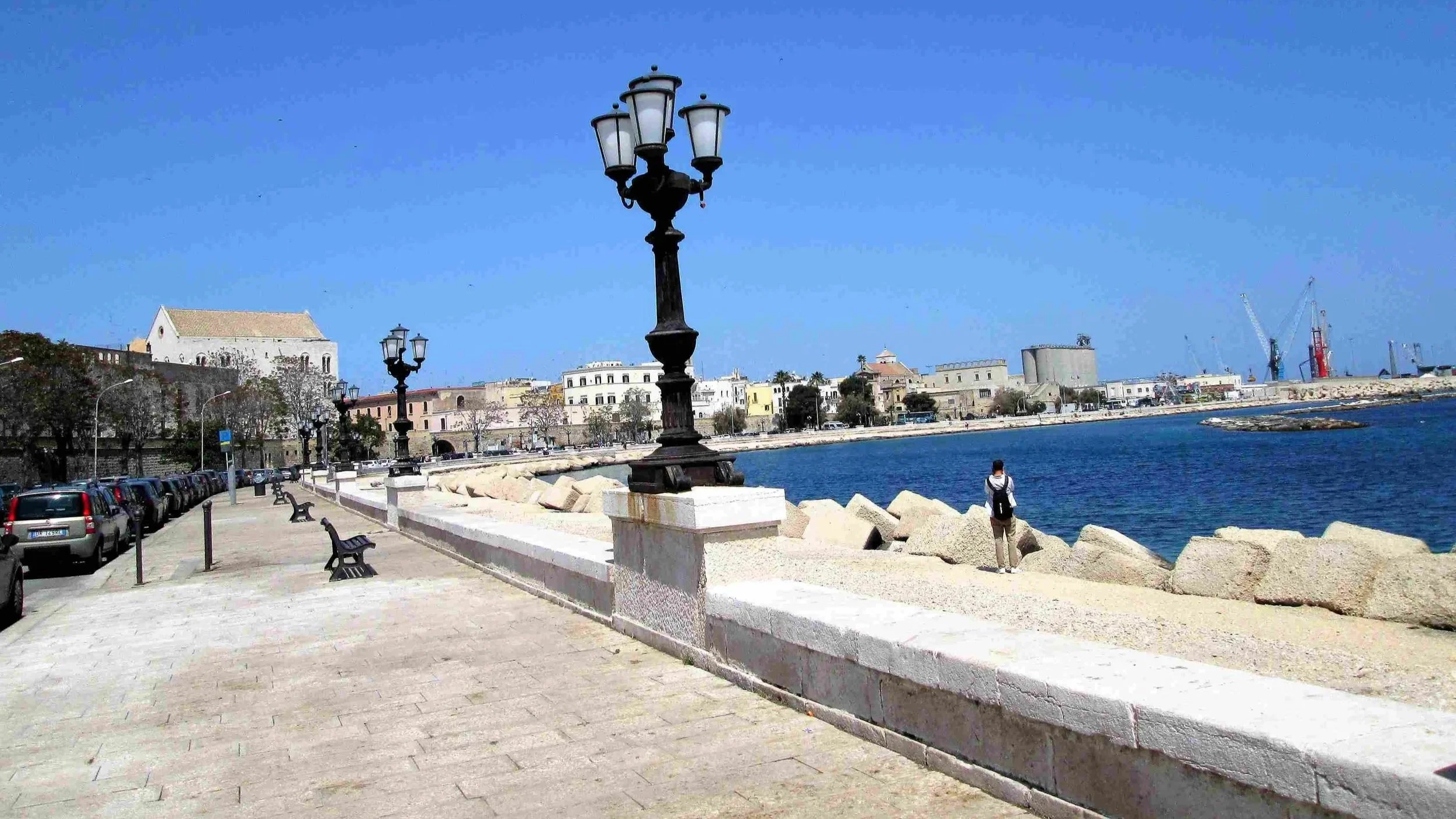
After the narrow streets of Bari Vecchia, head towards the waterfront.
The Lungomare Nazario Sauro runs along the eastern side of the city and gives you a completely different view of Bari: open water, the Adriatic horizon and the old city behind you.
You don't need to walk the entire promenade. A short stretch is enough to change the pace of the day, particularly in the late afternoon when the waterfront becomes one of the easiest places in the centre to simply stop walking and look out to sea.
Explore Bari Through a Puzzle Trail
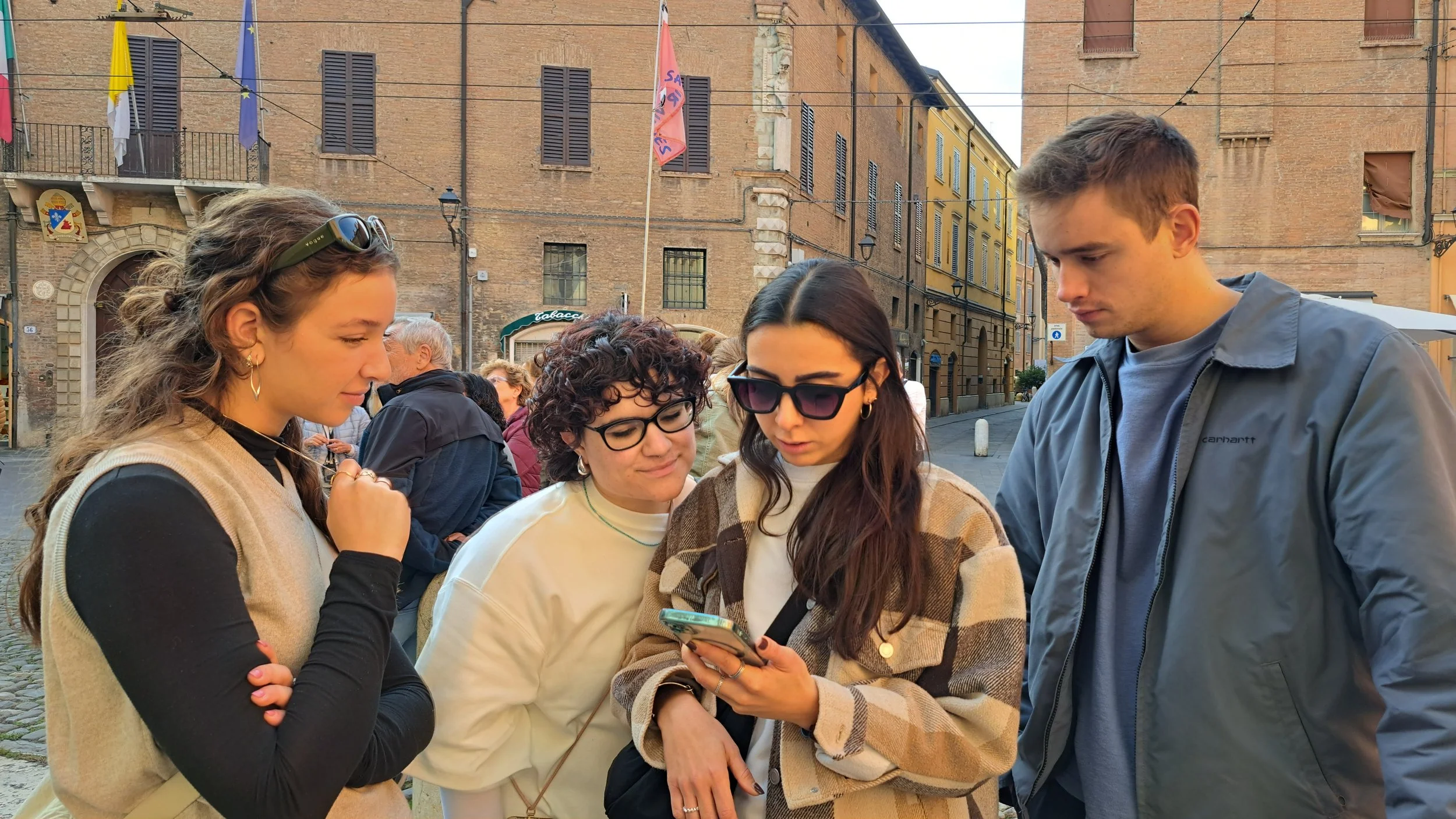
After visiting the main landmarks of Bari Vecchia, you can continue exploring the city by following a pre-planned route, without having to decide on your own which stops to include and how to connect them.
With ClueGo, you’ll follow a self-guided riddle itinerary that winds through the center of Bari: the stops are already selected, and the route tells you where to go to reach the next one. This means you don’t have to keep multiple guidebooks or articles open on your phone, constantly check what to see next, or look up directions from one spot to another every time. Just grab your phone, solve the puzzle, and follow the directions to the next stop.
The Bari route starts at Palazzo Mincuzzi and ends at Molo San Nicola, passing through 9 stops and covering about 3 km. Among the sites included are the Castello Svevo, the Basilica of Saint Nicholas, the Petruzzelli Theater, Piazza del Ferrarese, and the Fortino di Sant’Antonio. The activity takes about 2–3 hours, not including any breaks, and is available in Italian and English.
You don’t need to download an app or book a departure time. The tour takes place entirely outdoors and does not require any admission tickets to complete. You can stop along the way and resume later; once activated, you have 10 days to complete it. The tour is designed for groups of 1 to 5 people, and the recommended minimum age is 8 years old.
If that sounds like a better way for you to explore Bari than simply following a sightseeing list, you can see the full route here: ClueGo Bari.
What to Do in Bari on Day Two
If you have another day, don't simply repeat Bari Vecchia at a slower pace. Cross Corso Vittorio Emanuele II and spend some time in the Murat district, the planned 19th-century part of central Bari.
The contrast is quite noticeable: instead of medieval lanes, you get broad streets, regular blocks and large urban buildings. This is also where some of Bari's most recognisable Liberty architecture can be found.
Murat District and Palazzo Mincuzzi: Bari's 19th-Century Side
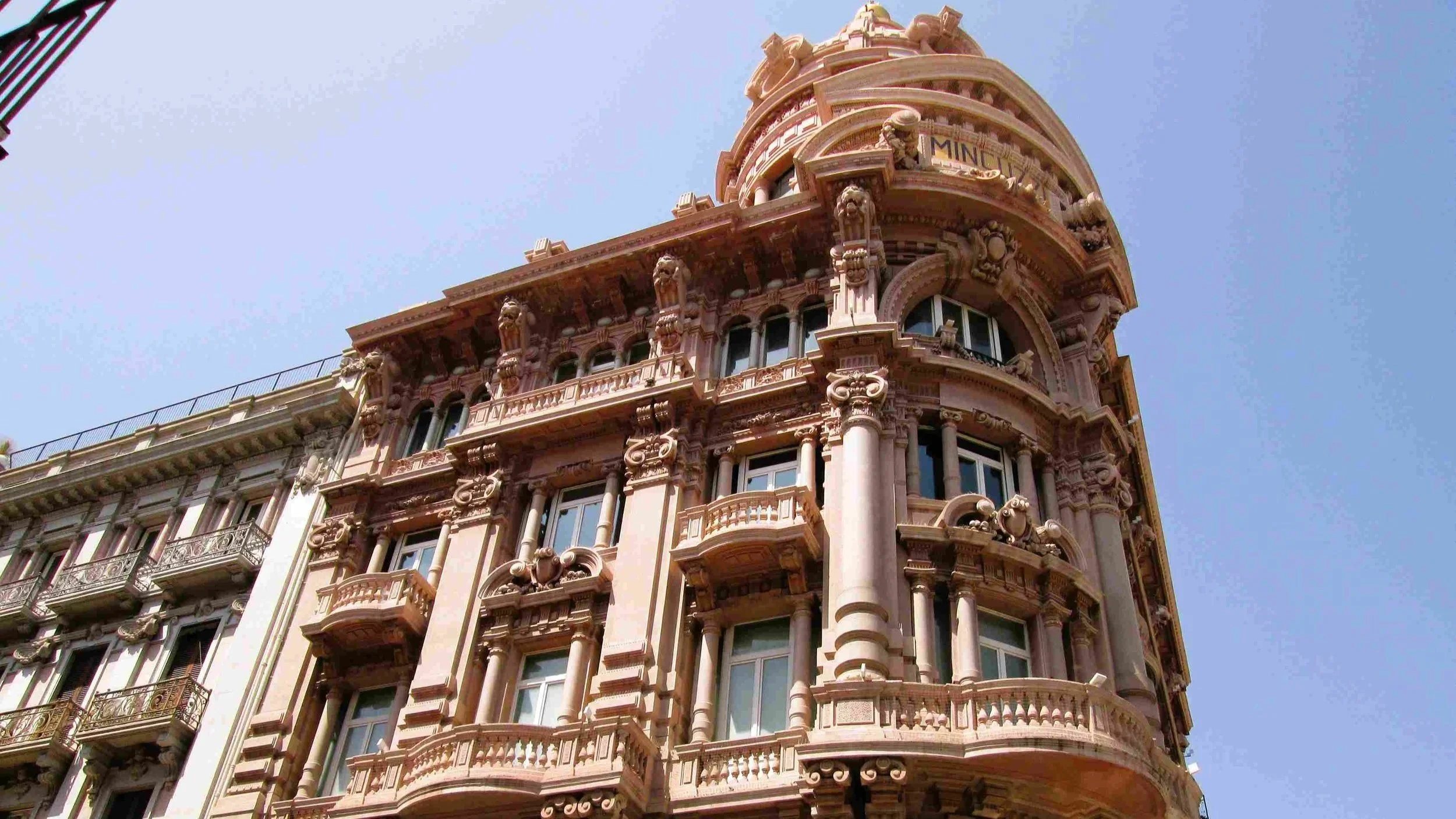
Start around the Murat district and walk through its central streets rather than aiming for a single monument.
The neighbourhood was developed in the early 19th century and has a much more regular urban layout than Bari Vecchia. Look upwards as you walk: façades, balconies and decorative details are a large part of what makes this area worth exploring.
Palazzo Mincuzzi is one of the buildings worth seeking out, particularly if you're interested in Liberty and early 20th-century architecture. The building is also the starting point of the current ClueGo Bari trail.
Teatro Petruzzelli: Inside Bari's Famous Opera House
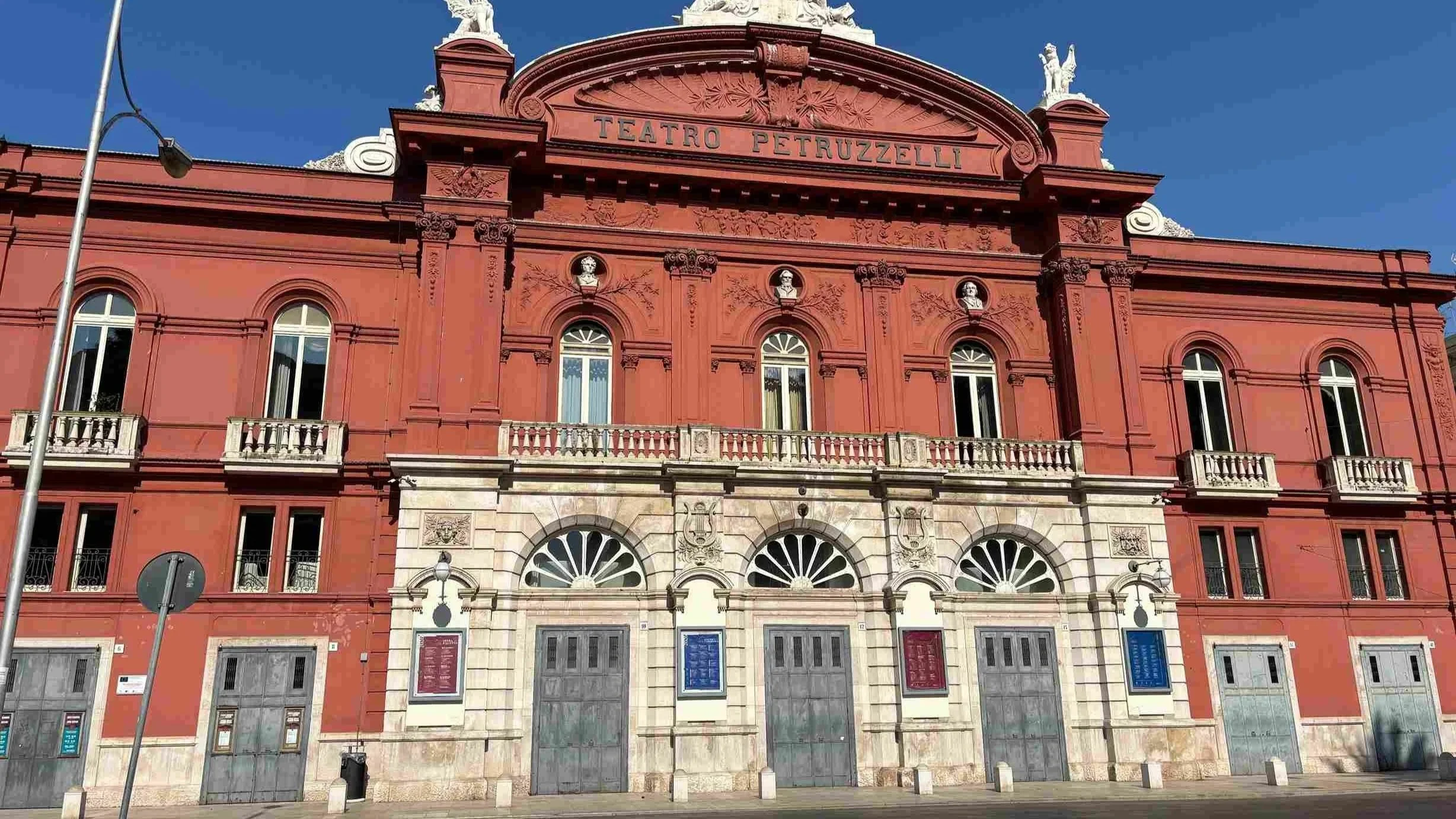
Continue towards the Teatro Petruzzelli, Bari's best-known theatre and one of the city's major architectural landmarks.
The building has a complicated modern history. It was severely damaged by fire in 1991 and was subsequently reconstructed before reopening in the 2000s.
If you want to see the interior rather than just the façade, the theatre runs guided visits. The official programme describes tours of approximately 30 minutes, including the foyer and auditorium, with visits offered in English and Italian. Because the Petruzzelli is a working opera house, the schedule can change according to theatre activities.
That makes it a good second-day stop rather than something to build your entire itinerary around.
Pinacoteca Metropolitana: Apulian Art by the Seafront
For an indoor stop, head to the Pinacoteca Metropolitana Corrado Giaquinto, housed in the historic Palazzo della Provincia on the seafront.
Its collection covers a broad period of Apulian and Italian art, making it particularly useful after a first day spent looking at Bari's medieval churches and architecture.
The Pinacoteca is currently open Tuesday to Saturday from 9:00 to 19:00 and Sunday from 9:00 to 13:00. The full-price ticket is €5.
You don't need to spend hours here. It works well as a slower part of Day Two, especially in the middle of the day when you want a break from walking.
Fortino di Sant'Antonio: A Different View of Bari Vecchia
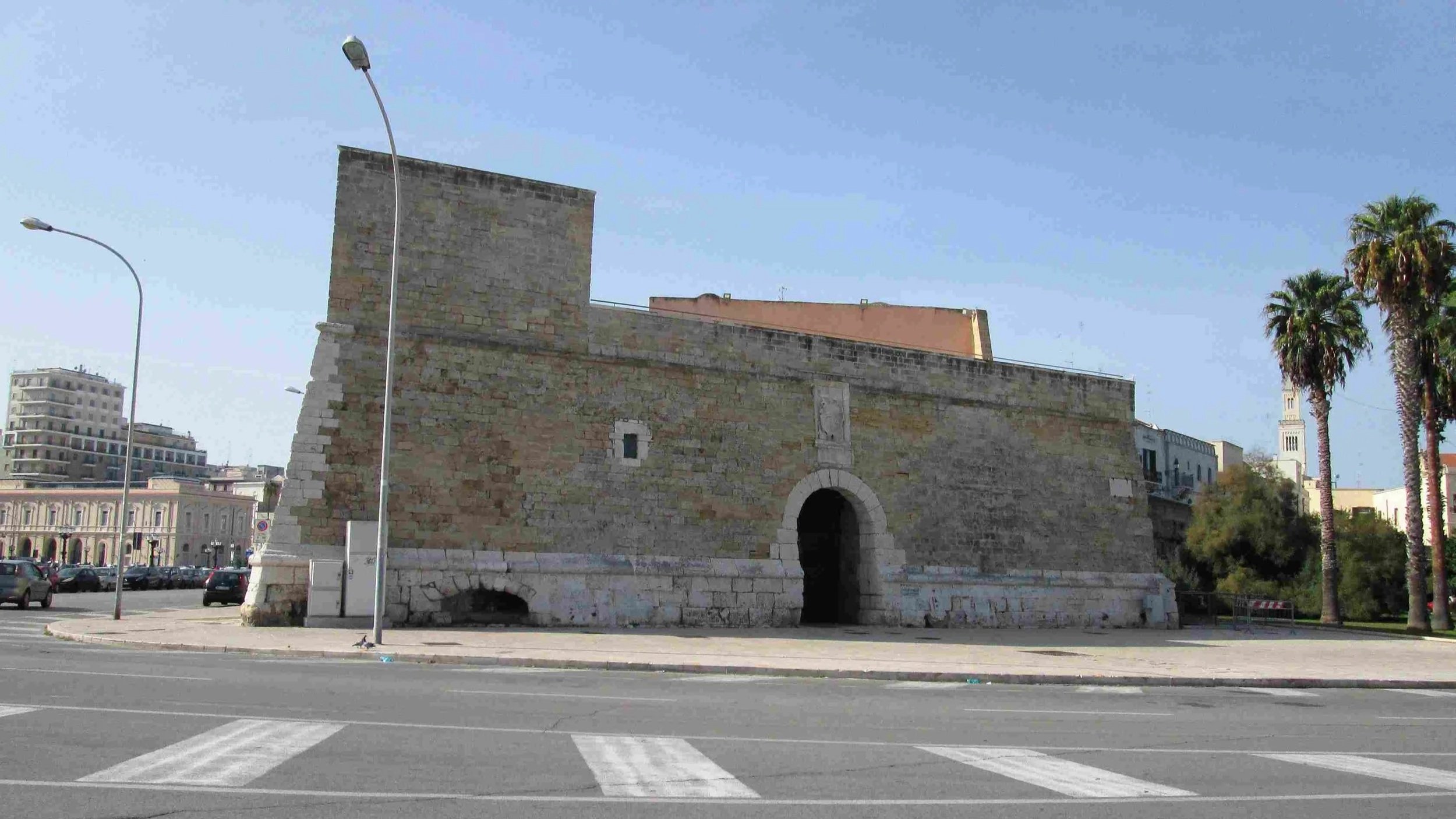
Finish the second day by heading back towards the waterfront and the Fortino di Sant'Antonio, a historic fortification on the edge of Bari Vecchia.
Its position gives you another perspective on the old town and the sea, and it makes a useful final stop after spending the day in the wider city centre.
From here, you can continue along the waterfront rather than returning immediately to the streets of Murat. It is an easy way to end the itinerary without adding another major museum or monument to the list.
-
One full day is enough to see the main sights of Bari Vecchia, including the Basilica di San Nicola, Cathedral of San Sabino, Castello Svevo and the waterfront. Two days give you enough time to add the Murat district, Teatro Petruzzelli and a museum without rushing.
-
Yes. If your time is limited, focus on Bari Vecchia. The historic centre contains most of the sights that first-time visitors come to Bari to see, and it is compact enough to explore on foot.
-
For a first visit, prioritise the Basilica di San Nicola, Bari Vecchia, Castello Svevo and the waterfront. If you have time for a less conventional activity, the orecchiette-making street around Arco Basso is also worth seeing.
-
For this itinerary, yes. Bari Vecchia is compact and the main sights in the historic centre can be linked on foot. The Murat district is also straightforward to explore on foot, although the wider grid means you'll cover more ground on Day Two.
-
The simplest public-transport option is the Ferrotramviaria train connecting Bari Airport directly with Bari Centrale. The journey takes about 17 minutes, and the airport station is connected to the terminal by a 300-metre tunnel.
-
Spend the first day in Bari Vecchia, covering the Basilica, Cathedral, castle, Arco Basso and waterfront. On the second day, explore the Murat district, Palazzo Mincuzzi, Teatro Petruzzelli, the Pinacoteca and Fortino di Sant'Antonio.