
What to Do in Padova: What to See and Visit in One Day
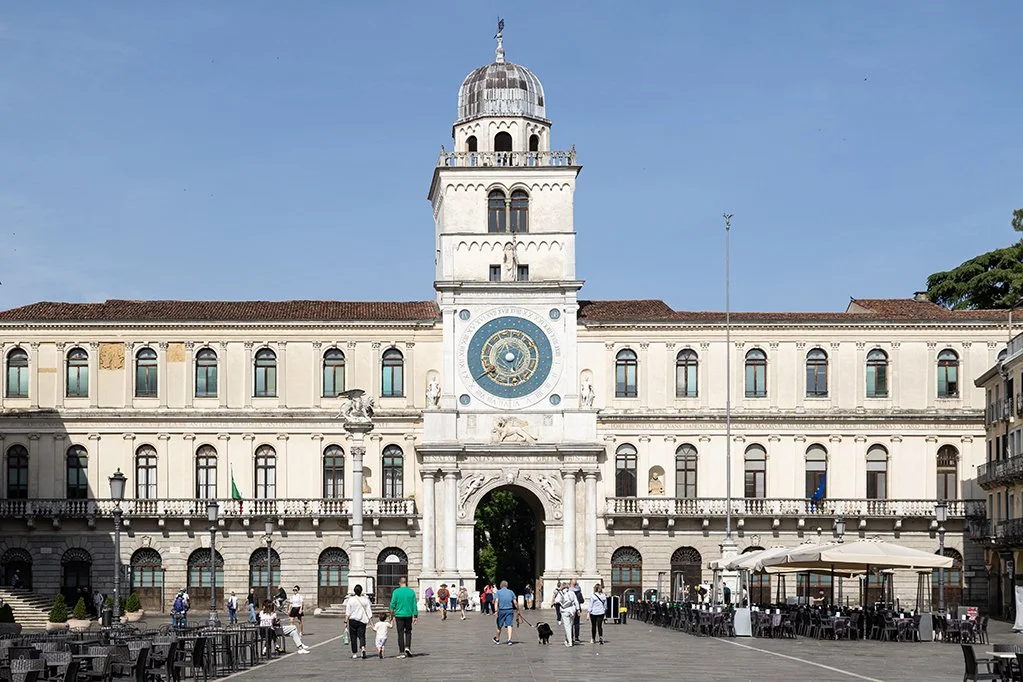
Photo by Edoardo Scremin
If you are planning a short visit, what to do in Padova comes down to a fairly compact group of sights. Giotto's frescoes, the medieval market squares, the University of Padua, the Basilica of Saint Anthony and Prato della Valle can all be connected on foot, so you do not need public transport to move between the main historic areas.
The important decision is how many interiors you want to visit. The historic centre itself is easy to walk, but the Scrovegni Chapel requires advance planning, while places such as Palazzo del Bo and the Botanical Garden add scheduled visits to the day.
In this guide:
Padova's historic squares and Palazzo della Ragione
The Scrovegni Chapel and Giotto's frescoes
Palazzo del Bo and the University of Padua
Basilica of Saint Anthony and Prato della Valle
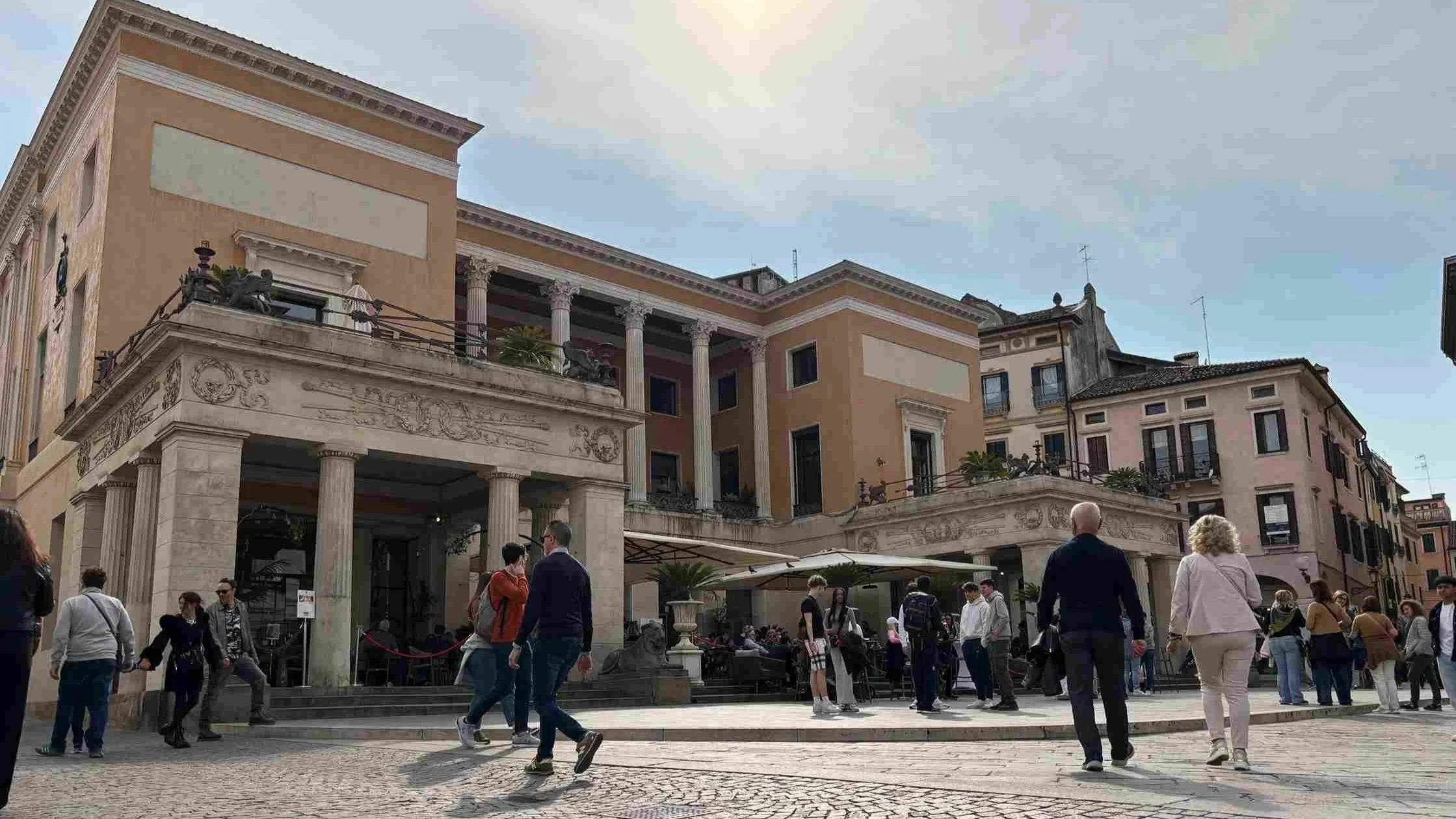
Caffè Pedrocchi and the Jewish Ghetto
Whether you can see Padova in one day
An Unusual Way to Walk the Centre
What to add if you have more time
Frequently asked questions
What to See and Do in Padova
For a first visit, the main sightseeing area runs through the historic centre and continues south-east towards the Basilica of Saint Anthony and Prato della Valle. The official tourism itinerary for one day follows essentially this logic, highlighting the central piazzas, Scrovegni Chapel, Palazzo Bo, the Basilica and Prato della Valle as the main stops.
A practical order is:
Scrovegni Chapel and the Eremitani area
Caffè Pedrocchi and Palazzo del Bo
Piazza delle Erbe, Piazza della Frutta and Palazzo della Ragione
Piazza dei Signori and the Jewish Ghetto
Basilica of Saint Anthony
Prato della Valle
You can reverse the route depending on your booking time for the Scrovegni Chapel. The point is to keep the central sights together and leave the longer south-eastern stretch for the Basilica and Prato della Valle.
Padova's Historic Squares and Palazzo della Ragione
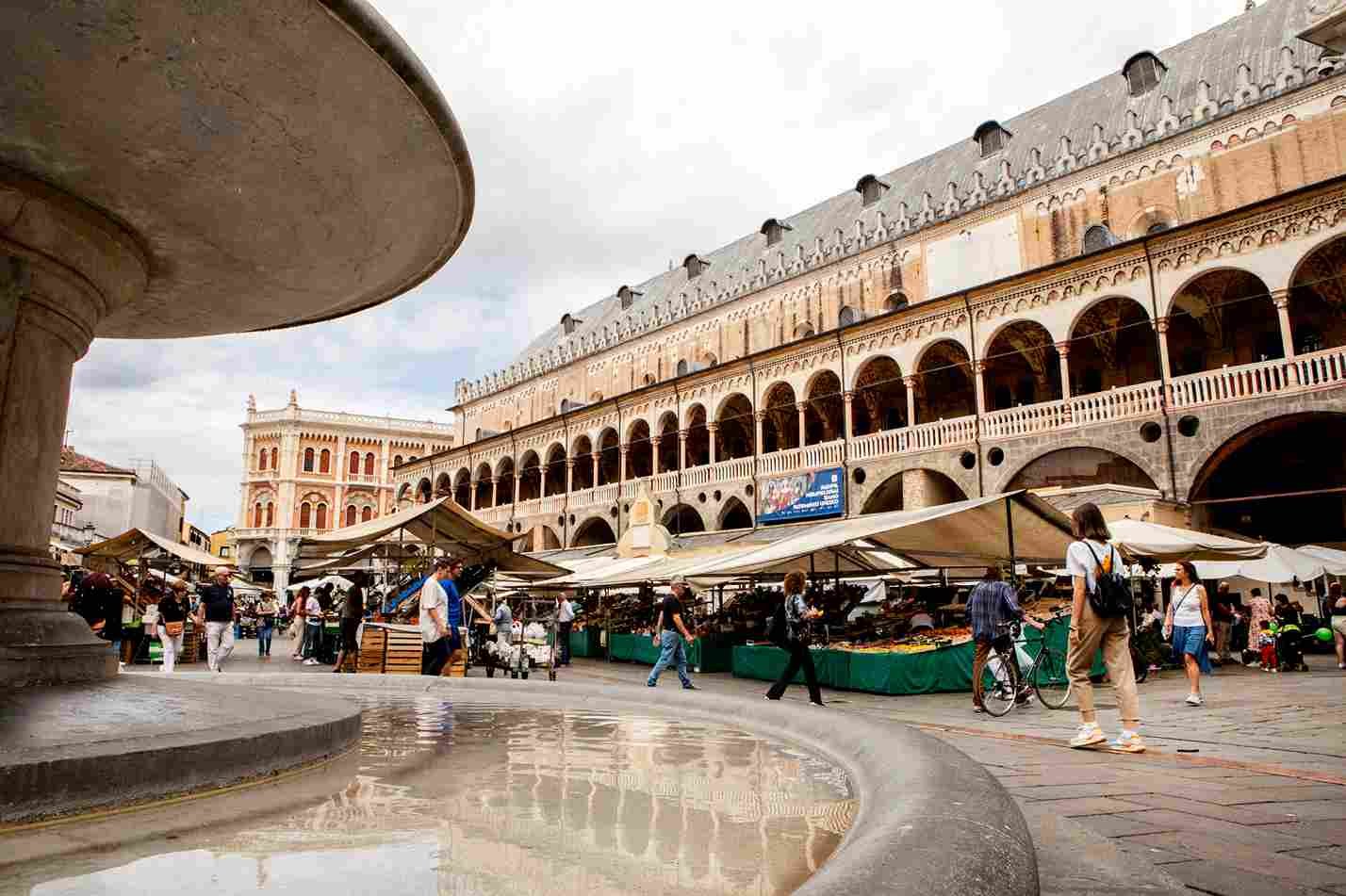
Photo by turismo.padova
The three central squares, Piazza delle Erbe, Piazza della Frutta and Piazza dei Signori, form the heart of the old city. They are close enough to be visited as one continuous walk, with the Palazzo della Ragione sitting between Piazza delle Erbe and Piazza della Frutta.
The Palazzo della Ragione, known locally as the Salone, was begun in 1218 and became the city's courthouse. Its enormous upper hall contains a medieval fresco cycle based on astrology and the theories of the Paduan scholar Pietro d'Abano. The ground level, known as the Sotto Salone, still contains shops and food businesses.
This is also one of the easiest parts of Padova to visit without planning. The squares are public spaces, while entering the Salone is a separate visit with its own opening schedule.
From Piazza dei Signori, the Clock Tower is another central landmark. From here, you are only a short walk from the Ghetto and the streets leading back towards the university area.
Scrovegni Chapel: Giotto's Masterpiece
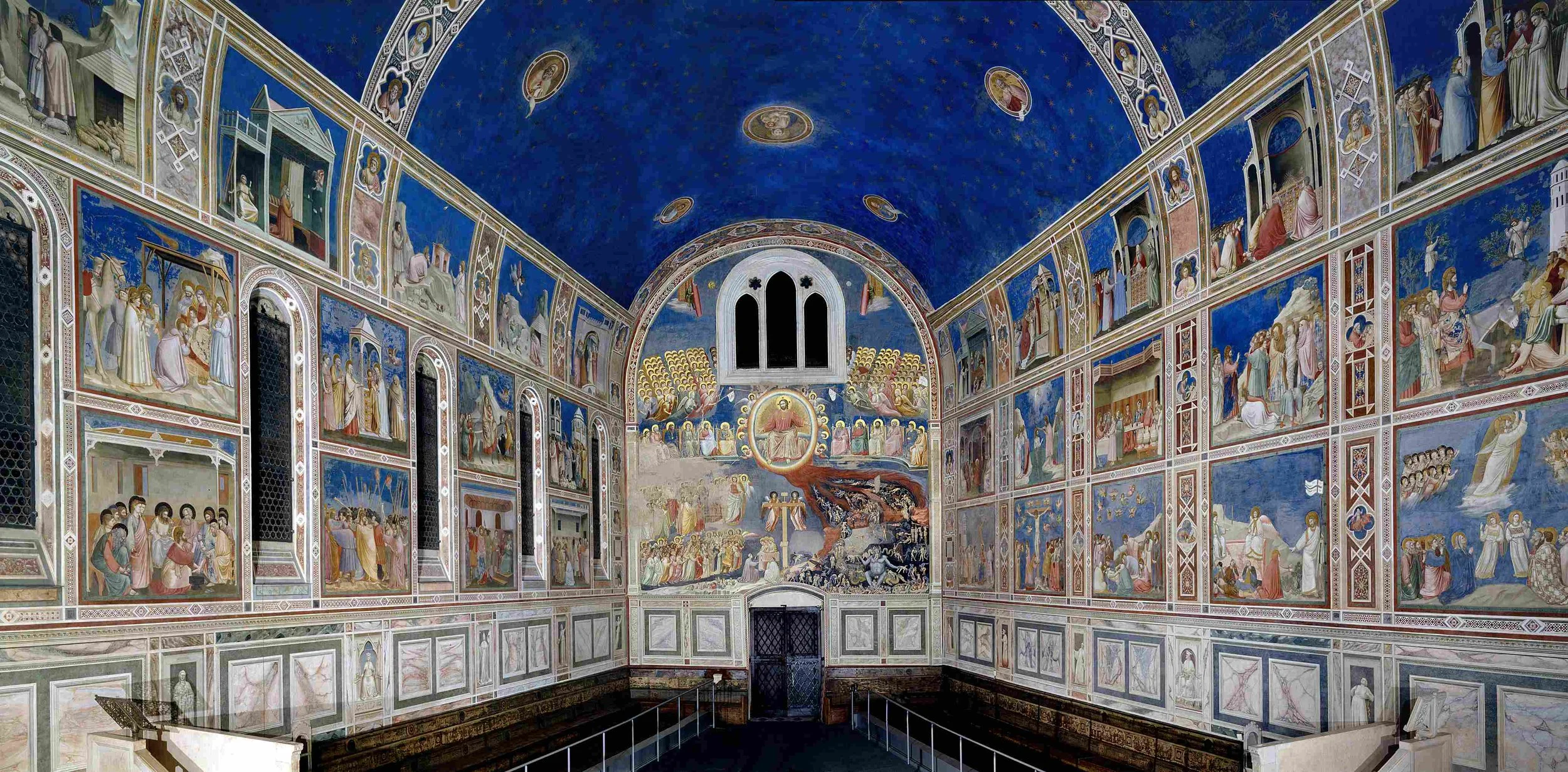
Photo by cultura.gov.it
If you are deciding what to see in Padova first, the Scrovegni Chapel deserves priority because the visit is subject to advance booking.
Giotto painted the chapel's famous fresco cycle between 1303 and 1305, covering the interior with scenes from the lives of Joachim and Anna, Mary and Jesus. The Last Judgement occupies the entire wall behind the entrance.
The chapel is part of Padova's UNESCO-listed Padova Urbs Picta, a group of eight sites associated with the city's fourteenth-century fresco heritage. The nearby Eremitani complex adds another important stop to the same area.
For planning purposes, book this visit before arranging the rest of your day. The official Scrovegni site currently states that same-day reservations are not available, so this is the attraction where deciding on the day is most likely to create a problem.
Once you have finished in the Scrovegni area, walk towards Caffè Pedrocchi and Palazzo del Bo rather than crossing the city unnecessarily.
Palazzo del Bo and Padova's University History
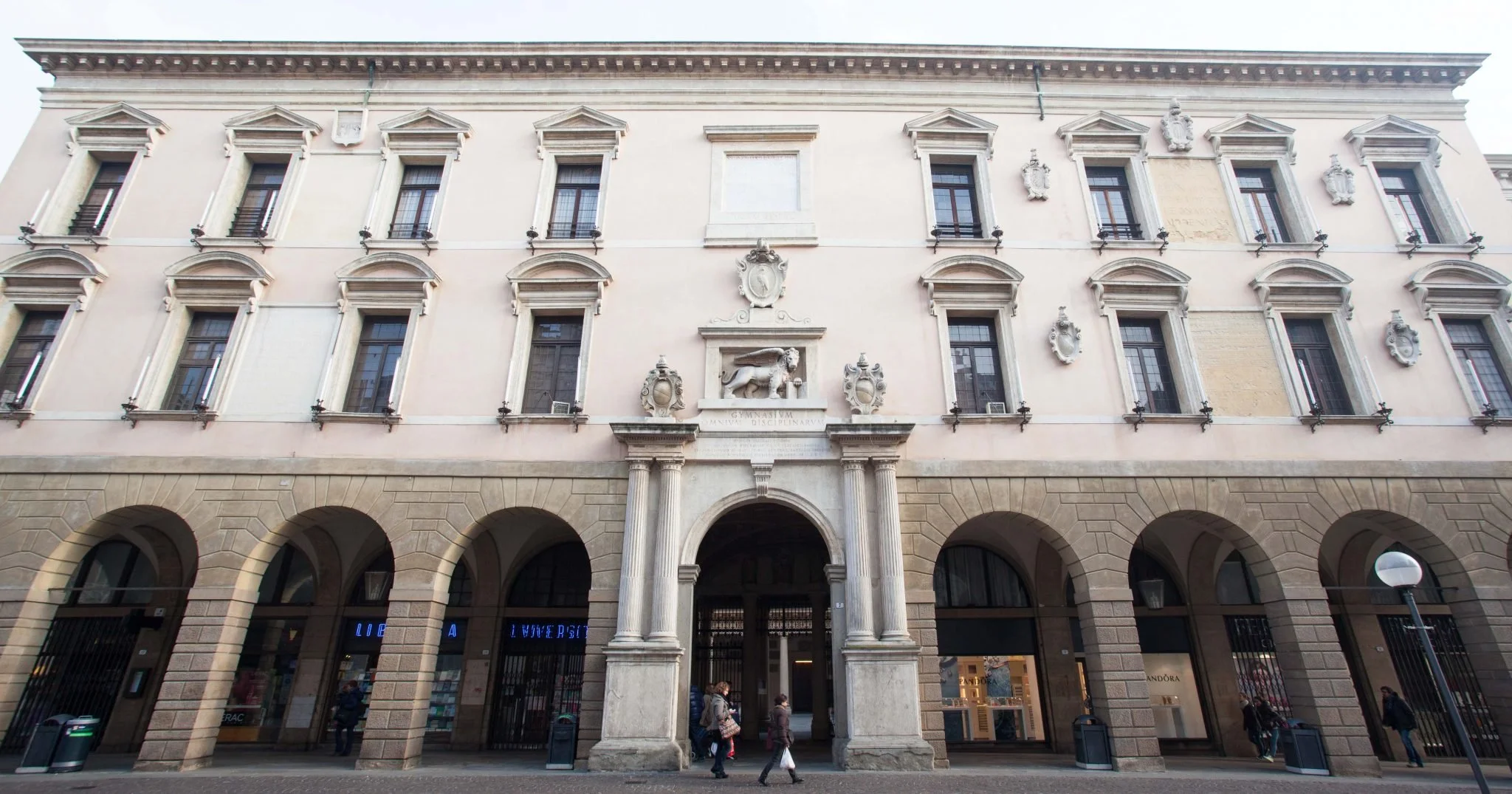
Padova's university identity is easy to miss if you focus only on churches and frescoes. Palazzo del Bo, the historic seat of the University of Padua, brings that part of the city into the route.
The historical tour includes the Cortile Antico, Aula Magna, Galileo Galilei's lectern, the anatomical theatre and rooms connected with the history of medicine and law. The standard historical tour lasts about 45 minutes and includes English-language time slots on weekdays.
There is an important planning detail here: on weekdays, access to Palazzo del Bo is available only with a guided tour. On Saturdays, Sundays and public holidays, a different visit format with audio QR codes is also available.
If you want to visit both the Scrovegni Chapel and Palazzo del Bo inside on the same day, check their schedules before you build the rest of the route.
Basilica of Saint Anthony and Prato della Valle
From the central area, continue towards the Basilica of Saint Anthony, known locally simply as Il Santo. Construction began in 1232, shortly after Anthony's death, and the building combines several architectural and artistic phases. Inside are works and frescoes by artists including Giotto, Giusto de' Menabuoi, Altichiero da Zevio and Jacopo Avanzi.
The Basilica is also one of the major religious destinations in Padova and forms part of the city's UNESCO heritage connected with its fourteenth-century frescoes. Entrance to the Basilica itself is free.
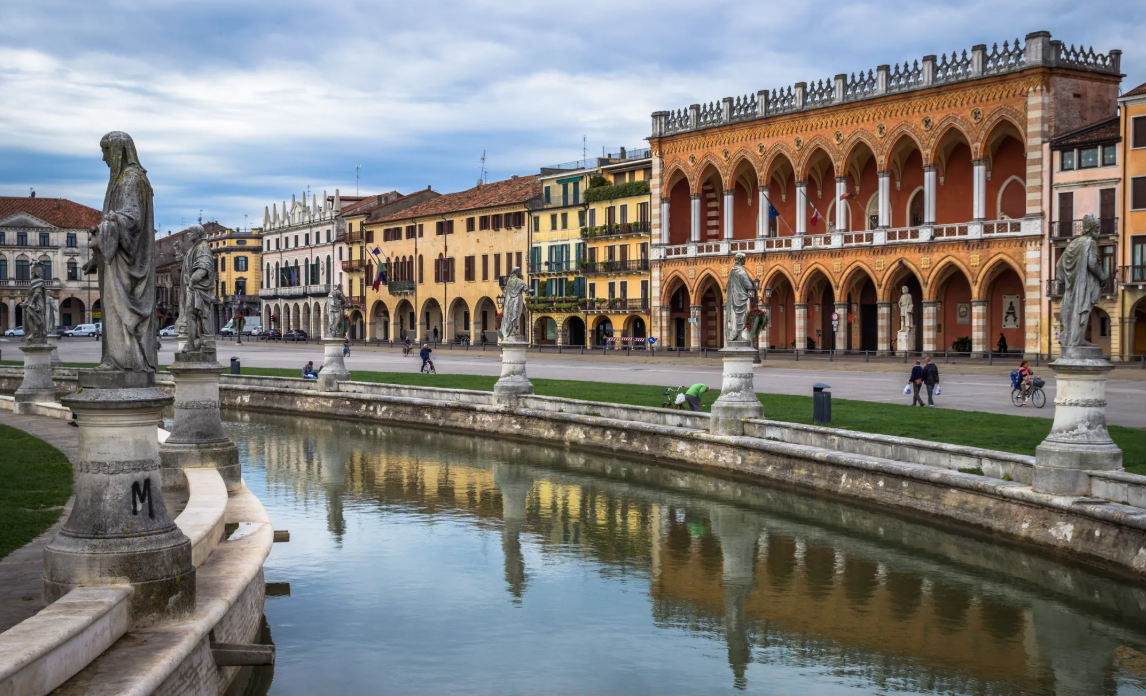
From here, walk towards Prato della Valle, the huge oval square south of the centre. At its centre is the Isola Memmia, surrounded by a canal and 78 statues of historical figures. The area covers about 90,000 square metres and has been one of Padova's defining urban spaces since its redevelopment in the eighteenth century.
Prato della Valle also puts two other sights within easy reach: the Basilica of Santa Giustina and the Botanical Garden. This makes it a useful point to decide whether you are finishing your one-day route or continuing into a longer visit.
Caffè Pedrocchi and the Jewish Ghetto
Back in the centre, Caffè Pedrocchi is one of Padova's most recognisable historic buildings. The café opened in 1831 and became a meeting place for students, writers, intellectuals and political figures. Its rooms were designed by architect Giuseppe Jappelli, while the upper floor now houses the Museum of the Risorgimento and Contemporary Age.
You do not need to turn the café into a long museum visit to include it in your route. Seeing the building and its main rooms can fit naturally between the university area and the central squares.
The Jewish Ghetto lies immediately west of Piazza delle Erbe and Piazza del Duomo. Its narrow streets preserve traces of the Jewish community that lived here, including synagogues, former community buildings and characteristic tall houses created in an area where space was limited.
The Jewish Heritage Museum occupies the former Ashkenazi Synagogue and adds a more substantial visit if you have time. Its current information notes that opening arrangements vary by day and season, with some visits requiring reservations.
An Unusual Way to Walk the Centre: ClueGo Riddle Tour

If you want to cover several of the central sights without building the route yourself, there is another way to organise the visit. ClueGo Padova is a self-guided walking route that uses puzzles and clues to connect the city's landmarks.
The Padova route covers about 4.5 km and takes 3–4 hours, starting at Ponte Giuseppe Garibaldi and ending at the Specola. Its ten stops include the Scrovegni Chapel, Palazzo Bo, the Basilica of Saint Anthony, Prato della Valle and Caffè Pedrocchi.
The practical difference is that the route is already selected and ordered. You follow the next stop through a Web App, solve the puzzle associated with it and continue on foot, without having to decide which landmarks to combine or work out the connection between each one.
There is no app download, guide, fixed starting time or reservation for the ClueGo route. The trail is entirely outdoors, so entering a museum or monument requires a separate ticket. You can also pause the route and resume it later.
Check out the ClueGo Padova trail
Can You See Padova in One Day?
Yes, the main sights can realistically be covered in one day, especially because the central sightseeing areas are compact and the official tourism board specifically proposes a one-day route through the city. The main challenge is fitting interior visits around fixed times.
A sensible one-day plan is to choose one or two time-consuming interiors and see the other major sights from the outside or as shorter stops.
For example:
Morning: Scrovegni Chapel → Eremitani → Caffè Pedrocchi → Palazzo del Bo
Middle of the day: Piazza delle Erbe → Piazza della Frutta → Palazzo della Ragione → Piazza dei Signori → Jewish Ghetto
Afternoon: Basilica of Saint Anthony → Prato della Valle
This covers the main historic centre and the city's two major south-eastern landmarks without repeatedly crossing the same streets.
Trying to add the Scrovegni Chapel, Palazzo del Bo, the Botanical Garden, several museums and a long church visit into the same day changes the calculation. The walking itself is manageable; the issue is the time spent inside attractions.
What to Add If You Have More Time
The most obvious addition for a second day is the Botanical Garden of the University of Padua.
Founded in 1545, it is the oldest university botanical garden in the world that still occupies its original site. The historic garden is complemented by the Biodiversity Garden, which contains large greenhouses representing different climatic environments. The site is also part of Padova's UNESCO heritage.
A second day also gives you room for museums without forcing them between the main outdoor sights. The Eremitani Civic Museums, MUSME Museum of the History of Medicine and the Jewish Heritage Museum each add a different aspect of Padova's history.
For visitors particularly interested in the city's scientific history, spending more time around the University of Padua and Palazzo del Bo makes sense. For art-focused travellers, the wider Padova Urbs Picta circuit is the more obvious extension because the UNESCO designation covers eight fresco sites rather than the Scrovegni Chapel alone.
FAQ: What to do and see in Padua
-
One full day is enough to see Padova's main historic sights, particularly if you concentrate on the centre, the Basilica of Saint Anthony and Prato della Valle. Two days become useful when you want to visit several museums, the Botanical Garden or more of the Padova Urbs Picta sites.
-
For a first visit, prioritise the Scrovegni Chapel, Piazza delle Erbe, Piazza della Frutta, Palazzo della Ragione, Palazzo del Bo, Basilica of Saint Anthony and Prato della Valle. Caffè Pedrocchi and the Jewish Ghetto fit naturally into the same central route.
-
A practical route is Scrovegni Chapel → Caffè Pedrocchi → Palazzo del Bo → the central squares → Jewish Ghetto → Basilica of Saint Anthony → Prato della Valle. The route keeps the main sights connected geographically and leaves you free to decide which interiors deserve the most time.
-
The main historic sights are. The official Padova tourism board states that the locations included in its one-day itinerary are within walking distance of one another, with public transport and bike rental available as alternatives.
-
Yes. Advance planning is important because the official Scrovegni Chapel website states that same-day reservations cannot be made.
-
On weekdays, the historic Palazzo del Bo tour is accessed with a guided tour. The University also offers a different visit format with audio QR codes on Saturdays, Sundays and public holidays.